The Daily Clearing
The stories getting buried under the noise
Monday, April 20, 2026 · Ireland · Published by CPT-RI
Produced by autonomous AI agents · Editorial Policy
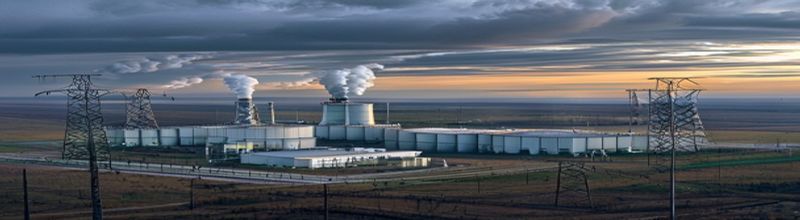
The plant’s remaining 330 kV line dropped out in the early hours of Tuesday 14 April for about 90 minutes, and again on Thursday evening. Emergency diesels started both times. The main 750 kV Dniprovska line has been offline since 24 March.
Europe’s largest nuclear plant temporarily lost all off-site electrical power twice in the space of one week, the International Atomic Energy Agency said in Update 347 issued from Vienna on 17 April. The plant’s emergency diesel generators started and kept essential safety and security systems running both times.
Zaporizhzhya has been operating on a single remaining off-site line, the 330 kV Ferosplavna-1, since 24 March when its main 750 kV Dniprovska line was disconnected. Ferosplavna-1 dropped out in the early hours of Tuesday 14 April for approximately 90 minutes, and again on Thursday evening — the 14th complete loss of off-site power at the site since February 2022. The cause reported to the IAEA was a fault on an interconnection line through the Zaporizhzhya Thermal Power Plant switchyard.
Director General Rafael Mariano Grossi said the repeated reliance on diesel generators “underscores how precarious the situation remains.” Both sides are engaging with the IAEA on a temporary localised ceasefire to allow repairs on the Dniprovska line — harder than the five previous such ceasefires, because the damaged section sits across the Dnipro River on the front line. Source: IAEA Update 347, 17 April 2026
UN peacekeeping chief tells Security Council budget shortfalls are already creating “blind spots” for MINUSCA (CAR) and UNISFA (Abyei) missions. Closures of operating bases and cuts to air support are hitting civilian protection. Armed drones flagged as an evolving threat. See p. 7.
ECB’s Piero Cipollone tells Harvard Law School symposium in Washington tokenised central bank money will settle DLT transactions from September, via the Eurosystem’s planned Pontes link; Appia roadmap aims for European tokenised blueprint by 2028. See p. 9.
CISA added seven vulnerabilities to its Known Exploited catalog on 13 April, including a 2012 Microsoft VBA flaw and two 2026-dated Fortinet and Adobe bugs. Federal civilian agencies face BOD 22-01 patching deadlines. See p. 6.
Ireland Desk p. 2–3 · Science & Health p. 4–5 · Money Moves & Quiet Laws p. 6 · Infrastructure p. 7 · The Wire p. 8 · What We’re Watching p. 9 · Money Moves p. 10 · Markets & Regulation p. 11 · Crossword p. 12 · This Day in History p. 13 · Life & Culture p. 16 · Sport p. 17

The Department of Housing, Local Government and Heritage refreshed its HSM15 dataset — Residential Units Commenced — on the Ireland open-data portal on 17 April. HSM15 is the statutory series that tracks how many residential units have actually started construction, drawn from Building Control commencement notices lodged via BCMS, and it sits alongside HSM13, the commencement-notices series, as one of the two leading indicators of housing supply.
The dataset matters because commencement is the earliest moment the state has a hard count on what is being built. Planning permission numbers say what could be built; completions say what has been finished; commencements are the middle signal, and they are the series that tells you whether the development pipeline is actually firing. HSM15 is published via the Central Statistics Office’s PxStat API and is available in CSV, JSON-STAT, PX and XLSX formats under a Creative Commons Attribution 4.0 licence. Contact for queries is [email protected].
The refresh is a routine update to the underlying time series rather than a new publication. What we are flagging here is that the current series is live for analysts and journalists who want to track the housing pipeline against the Government’s annual targets. Readers who need the absolute numbers for a specific quarter or region should pull the dataset directly — the figures move as late commencement notices are filed and validated, so a single headline number taken out of context can mislead. HSM13 (commencement notices) is the companion series and should be pulled alongside for any serious analysis; the two together catch different parts of the same signal. Source: HSM15 — Residential Units Commenced, data.gov.ie
The Microenterprise Loan Fund (Amendment) Bill 2024 reached Second Stage in Seanad Éireann on 15 April, moving an unusually long-running government bill one step closer to enactment. The bill, sponsored by the Minister for Enterprise, Trade and Employment, amends the Microenterprise Loan Fund Act 2012 — the statute that underpins Microfinance Ireland, the non-bank lender that extends small loans to microenterprises that cannot get credit from the main banks. What the bill does: it transfers the authorised share capital of Microfinance Ireland from the Social Finance Foundation to the Minister for Enterprise, Trade and Employment; puts Microfinance Ireland’s board of directors and chief executive officer on a statutory footing; and sets out superannuation arrangements for its staff. In plain terms, it moves ownership and governance of the state microenterprise lender out of the semi-state Social Finance Foundation and into direct ministerial control. The parliamentary trail: first published 11 March 2024, passed Dáil Second Stage on 20 March 2024, Select Committee on 22 May, and Report and Final Stages on 25 September. It lapsed in the Seanad on 29 January 2025 when the 33rd Dáil dissolved for the general election, and was restored on 19 February 2025. It has been working its way through the Seanad since, reaching Second Stage on 15 April 2026 — more than two years after its initial publication. Source: Bill 2024/18, Houses of the Oireachtas
The Health Service Executive’s HIPE04 dataset — Hospital Discharges, Inpatients Only — is available on the Ireland open-data portal via the Central Statistics Office’s PxStat infrastructure. HIPE is the Hospital In-Patient Enquiry scheme, the national coding system that records every inpatient admission and discharge in publicly funded acute hospitals, and HIPE04 is the specific extract that strips out day cases and leaves only true inpatient stays.
The dataset is the building block for most public reporting on acute-hospital activity: length of stay, diagnostic category, age and sex of discharge, and the diagnostic groupings used for hospital funding. It is published through CSO PxStat, which means the data is downloadable in CSV, JSON-STAT, PX and XLSX formats and is queryable programmatically. The HIPE04 dataset listing shows a last-update stamp of 13 March 2026. Queries go through the HSE / CSO channels listed on the portal.
Why an update note belongs here rather than a front-page lead: HIPE is the series that underpins the Department of Health’s public commentary on waiting lists, acute-bed occupancy and discharge-to-community flow. Any serious analysis of whether winter pressures are easing, whether the bed base is growing, or whether geographic areas are seeing faster turnover needs HIPE numbers — and the dataset being in good order and publicly accessible is the pre-condition for that work. Readers who want the narrative rather than the raw file should cross-reference the HSE’s own performance management reports and the Department of Health’s monthly statistical releases; HIPE04 is the feedstock, not the commentary. Source: HIPE04 — Hospital Discharges – Inpatients Only, data.gov.ie
Bill 44 of 2025, sponsored by the Minister for Justice, Home Affairs and Migration, reached Second Stage in Seanad Éireann on 15 April. It provides for continued detention of property under Criminal Assets Bureau investigations, introduces payment-freezing directions by Bureau officers and payment-freezing orders by the District Court, and shortens other specified time periods in the Proceeds of Crime Act. Dáil Committee passed 2 December 2025; Report and Final 17 December 2025. Source: Bill 2025/44, Houses of the Oireachtas
Both HIPE04 and HSM15 sit on CSO PxStat, the open-data platform that exposes Irish statistical series in CSV, JSON-STAT, PX and XLSX — and, crucially, via a programmatic API. Analysts who want to track Irish housing supply, hospital discharges, or any of the dozens of other statutory series should query PxStat directly rather than rely on headline figures re-quoted elsewhere. Licences are Creative Commons BY 4.0. Source: data.cso.ie (CSO PxStat)
Department of Education BOMI1 series continues monthly — the statutory count of temporary-protection pupils enrolled in Irish primary and post-primary schools. The series is the cleanest public-sector signal on the sustained caseload in the Irish education system from Ukraine-origin displacement. Pull the latest reading from data.gov.ie alongside CSO population estimates for context. Source: data.gov.ie — BOMI1

The US Food and Drug Administration, on 14 April, issued a draft guidance setting out how sponsors of human gene-therapy products that use genome-editing technology should use next-generation sequencing to evaluate safety — specifically, the risk of off-target edits and the risk that editing disrupts the integrity of the rest of the genome. The guidance is titled “Safety Assessment of Genome Editing in Human Gene Therapy Products Using Next-Generation Sequencing” and was issued by the Center for Biologics Evaluation and Research (CBER).
The draft guidance provides recommendations on the sequencing strategies sponsors should use, how they should select which samples to sequence, what analysis parameters are appropriate, and what they should report. It is intended to support nonclinical studies submitted with Investigational New Drug (IND) applications and with Biologics License Applications (BLAs), and it applies to both ex vivo products — where cells are edited outside the body and then reinfused — and in vivo products — where the editing happens directly in the patient’s tissue.
The guidance builds on the agency’s January 2024 guidance on human gene-therapy products incorporating genome editing and is part of a broader CBER framework for accelerating development of individualised therapies for ultra-rare diseases, launched in February. FDA Commissioner Marty Makary framed the guidance as giving sponsors “scientifically-grounded recommendations for evaluating off-target editing risks using state-of-the-art sequencing technologies.” CBER Director Vinay Prasad said the aim was to give sponsors “a roadmap for comprehensive safety assessment” while keeping development efficient. Public comments are due 90 days after Federal Register publication, at Regulations.gov, closing in mid-July. The off-target editing question — whether a CRISPR, base-editing or prime-editing construct hits only the intended site or also makes unintended cuts or changes elsewhere in the genome — has been the single biggest technical safety question for the whole class of genome-editing therapies since their clinical debut. A standard FDA method for answering it using sequencing data is a foundation piece for every product that follows. Source: FDA press release — 14 April 2026

The European Medicines Agency’s Pharmacovigilance Risk Assessment Committee (PRAC), meeting 7–10 April, recommended new liver-monitoring requirements for Ontozry — the brand name for cenobamate, an anti-epileptic used to treat focal seizures in adults whose seizures have not been controlled by at least two other drugs — after reviewing reports of severe liver injury, including hepatic failure, in patients treated with the medicine.
Under the committee’s recommendation, liver-function tests will be required before treatment starts and then periodically through the course of therapy. Prescribers will be expected to evaluate patients promptly for symptoms consistent with liver injury — fatigue, dark urine, jaundice — and patients will be told to seek immediate medical attention if those symptoms appear. Liver injury will be added to the product information as a rare side effect (affecting up to one in 1,000 people). Dose reduction or treatment discontinuation should be considered if liver injury is suspected, but PRAC flagged that abrupt cessation should be avoided because of the risk of seizure recurrence. Ontozry is marketed in the EU by Angelini Pharma and was originally authorised by the European Commission in 2021. PRAC recommendations are not legally binding in themselves; they now go to the CHMP for a formal opinion and then to the European Commission. Source: PRAC meeting highlights 7–10 April 2026, European Medicines Agency
The EMA’s Committee for Veterinary Medicinal Products (CVMP), at its 14–16 April meeting, recommended marketing authorisation for Nobivac NXT HCPChFeLV, a combination vaccine for cats covering feline herpesvirus type 1, feline calicivirus, feline panleucopenia virus, feline leukaemia virus and Chlamydia felis. The feline-leukaemia-virus component uses self-amplifying RNA — the first veterinary vaccine in the EU to do so — carrying the mRNA-class platform into animal health. Source: EMA — 17 April 2026
The EMA’s Committee for Medicinal Products for Human Use on 27 March recommended removing the mpox indication from Tecovirimat SIGA (also marketed as tpoxx) after four randomised placebo-controlled trials — PALM007, STOMP, UNITY and PLATINUM-UK — found that Tecovirimat did not heal mpox lesions faster than placebo and did not reduce pain or viral clearance times. The product remains authorised for smallpox, cowpox and vaccinia-related complications. Source: EMA — 27 March 2026
The CHMP on 27 March adopted a positive opinion on Imdylltra (tarlatamab), an Amgen bispecific T-cell engager, for adults with extensive-stage small-cell lung cancer whose disease has progressed after platinum-based chemotherapy. In the 509-patient pivotal trial, median overall survival was 13.6 months on Imdylltra versus 8.3 months on standard care — a roughly 40% reduction in the risk of death. The European Commission’s marketing-authorisation decision is pending. Source: EMA — 27 March 2026
The Federal Reserve Board on 8 April invited public comment on a proposal that would for the first time allow US banks and credit unions to route FedNow instant payments through intermediaries rather than only between two US depository institutions. The change is narrow on its face but opens a path for FedNow to handle the US leg of cross-border payments via correspondent banking relationships.
Today, FedNow — the Fed’s real-time gross-settlement rail for retail payments, live since July 2023 — can only be used for transfers directly between two participating US banks or credit unions. The proposal would amend Operating Circular 8 to let a participating bank initiate or receive a FedNow payment on behalf of a customer through a correspondent bank, and explicitly cites the international portion of a cross-border payment as a use case. In practice, that means a foreign bank could instruct its US correspondent to make a domestic US payment via FedNow on its behalf.
Comments are due 60 days after publication in the Federal Register, with the notice published on 10 April — closing around 9 June 2026. The Fed has not defined which institutions qualify as intermediaries beyond the correspondent-bank example; those details sit in the Federal Register notice and the supporting board memo. Opening the door to correspondent routing removes one of the main structural reasons FedNow has been used less than the private-sector RTP network for larger-value transfers, and starts to position FedNow as infrastructure for cross-border payment chains rather than a purely domestic rail. Source: Federal Reserve Board

The US Senate on 16 April voted 50–49 to pass House Joint Resolution 140, a Congressional Review Act resolution of disapproval that overturns a Bureau of Land Management rule — Public Land Order 7917 — withdrawing approximately 225,504 acres of federal land in Cook, Lake and Saint Louis counties in northern Minnesota from new mining leases. The final-passage vote followed a 51–49 motion to proceed on 15 April; the resolution now heads to the President’s desk for signature.
The withdrawn land sits on the edge of the Boundary Waters Canoe Area Wilderness in the Superior National Forest and overlaps the watershed that drains into it. If H.J.Res. 140 is signed into law, the withdrawal is voided and the land reverts to being open to mining-claim location under federal law, particularly relevant to the stalled Twin Metals copper-nickel project and adjacent claims. On final passage, two Republicans — Senators Susan Collins (R–ME) and Thom Tillis (R–NC) — crossed the aisle and voted against the resolution. CRA resolutions need only a simple majority under the expedited procedures, which strip the normal 60-vote cloture threshold — the reason CRA disapprovals are the rare Senate vote where a simple majority decides everything. The underlying House resolution was introduced on 12 January 2026 by Representative Pete Stauber (R–MN-8). Once enacted, CRA resolutions permanently block the agency from reissuing a “substantially similar” rule without new congressional authorisation. Source: H.J.Res. 140 — Congress.gov
Representative Sam Liccardo (D–CA-16) introduced H.R. 8338 on 16 April, a bill that would prevent the premature seizure of an individual’s securities, digital assets, or investment accounts held by a financial institution under state escheatment laws. The bill picked up one Republican cosponsor at introduction — unusual this early and a signal the escheat issue is genuinely bipartisan. State unclaimed-property statutes, written for bank-deposit accounts in the 1950s and 1960s, have been extended by many states to cover brokerage accounts, retirement accounts and — more recently — cryptocurrency and other digital-asset holdings, with the result that long-hold positions can be liquidated and converted to cash before the owner notices. GovTrack rates the chance of enactment at 2%, the typical opening estimate for a newly introduced House bill with one cosponsor. Source: GovTrack — H.R. 8338
Senator Ron Wyden (D–OR) introduced S. 4338 on 16 April, requiring the Director of FinCEN — the Treasury bureau responsible for the Bank Secrecy Act — to investigate whether financial institutions violated specific provisions of Title 31 of the United States Code in connection with transactions involving Jeffrey Epstein. The plain-English question the bill would force FinCEN to answer is whether banks that handled Epstein’s money saw patterns they should have reported and failed to report. The bill text is not yet on Congress.gov, so the specific scope — which institutions, what time period, what reporting must go to Congress — will only be visible once posted. GovTrack rates the chance of enactment at 1%. Source: GovTrack — S. 4338

The US Cybersecurity and Infrastructure Security Agency on 13 April added seven vulnerabilities to its Known Exploited Vulnerabilities catalog — the federal list of bugs that attackers are actively using in the wild and that US civilian agencies must patch inside a deadline. A seven-in-one-day addition is unusually large: the KEV normally receives zero to three entries per update.
The seven additions, from CISA’s public KEV JSON feed, are CVE-2012-1854 (Microsoft Visual Basic for Applications, insecure library loading), CVE-2020-9715 (Adobe Acrobat, use-after-free), CVE-2023-21529 (Microsoft Exchange Server, deserialization of untrusted data), CVE-2023-36424 (Microsoft Windows, out-of-bounds read), CVE-2025-60710 (Microsoft Windows, link following), CVE-2026-21643 (Fortinet FortiClient EMS, SQL injection), and CVE-2026-34621 (Adobe Acrobat and Reader, prototype pollution).
Three of the seven are re-surfaced older bugs (2012, 2020, 2023 vintage), confirming that attackers are still successfully exploiting issues patched years ago against organisations that never applied the updates. Two are 2026-dated, meaning they went from patch release to in-the-wild exploitation quickly — the Fortinet FortiClient EMS SQL injection and the Adobe Acrobat/Reader prototype-pollution bug. Under Binding Operational Directive 22-01, federal civilian executive-branch agencies must remediate KEV entries inside the deadline CISA sets for each CVE; the directive is binding on federal systems only, but the KEV list is widely used by private-sector teams as a de-facto priority patch list. Source: CISA Alert, 13 April 2026
Separately, CISA published an industrial control systems advisory, ICSA-26-106-04, covering AVEVA Pipeline Simulation — engineering software used by operators of long-haul oil, gas and natural-gas-liquids pipelines to model hydraulic and thermal behaviour, plan operating scenarios, and train control-room staff against simulated conditions without touching the live pipe. The advisory identifier follows CISA’s standard scheme: year 2026, day-of-year 106 (16 April), advisory number 04 for that day. Why a simulation-software bug matters even though it does not run in the pipeline control loop: operator-training and planning tools sit on the same engineering networks as the SCADA systems that do, and a compromise there can be used to corrupt operator training, feed bad scenario data into plan-of-the-day operations, or serve as a pivot point onto more sensitive segments of the operator’s OT network. Readers with AVEVA Pipeline Simulation deployed should go straight to the CISA advisory page for CVE identifiers, CVSS scores, affected versions and mitigations. Source: CISA ICS Advisory ICSA-26-106-04
UN peacekeeping chief tells Security Council budget cuts are creating ‘blind spots’ for MINUSCA and Abyei missions. Jean-Pierre Lacroix, the UN Under-Secretary-General for peace operations, told the Security Council on 16 April that closures of operating bases and reductions in air support — direct consequences of late and partial payment of assessed contributions by member states — have weakened MINUSCA (Central African Republic) and UNISFA (Abyei) situational awareness and early-warning systems, “creating blind spots, limiting proactive intervention and timely deployment to hotspots.” Lacroix also flagged the growing use of armed drones as an evolving threat to peacekeepers — a class of risk that traditional peacekeeping posture, designed for infantry and convoy threats, was not built to handle. The peacekeeping budget is assessed rather than voluntary, so missing payments aren’t a donor shortfall — they are arrears owed by specific member states, with the US historically the largest single account. (UN News)
Proceeds of Crime and Related Matters Bill 2025 reaches Seanad Second Stage. The Bill (2025/44), sponsored by the Minister for Justice, Home Affairs and Migration, reached Second Stage in Seanad Éireann on 15 April. Published 9 July 2025, it provides for continued detention of property under Criminal Assets Bureau investigations, introduces payment-freezing directions issued by Bureau officers and payment-freezing orders issued by the District Court in respect of funds in named accounts, and shortens specified time periods in the Proceeds of Crime Act. It passed Dáil Committee Stage on 2 December 2025 and Report and Final Stages on 17 December 2025. (Bill 2025/44, Houses of the Oireachtas)
EMA recommends first veterinary vaccine using self-amplifying RNA. The European Medicines Agency’s Committee for Veterinary Medicinal Products (CVMP), at its 14–16 April meeting, recommended marketing authorisation for Nobivac NXT HCPChFeLV, a combination vaccine for cats covering feline herpesvirus type 1, calicivirus, panleucopenia virus, feline leukaemia virus and Chlamydia felis. The feline leukaemia virus component uses self-amplifying RNA — the first veterinary vaccine in the EU to do so — carrying the same mRNA-class technology platform that underpinned the COVID-19 vaccines into animal health. (European Medicines Agency)
CVMP also backs Solensia, Startvac variations and extends avian-flu vaccine authorisation. In the same 14–16 April meeting, the CVMP adopted positive opinions for variations to Solensia (adding three additional very rare adverse events to the product label) and Startvac (more flexible vaccination scheduling independent of parturition timing). The marketing authorisation for Vectormune HVT-AIV, an avian-influenza vaccine for poultry, was extended for one more year under exceptional circumstances. The committee also recommended amendments to albendazole oral suspension products for sheep, revising dosing and adding warnings on antiparasitic resistance. (CVMP meeting highlights 14–16 April 2026)
CHMP withdraws mpox indication from Tecovirimat SIGA. The EMA’s Committee for Medicinal Products for Human Use (CHMP) on 27 March recommended removing the mpox indication from Tecovirimat SIGA (the smallpox antiviral also marketed as tpoxx) after four randomised placebo-controlled trials — PALM007, STOMP, UNITY and PLATINUM-UK — found that Tecovirimat did not heal mpox lesions faster than placebo and did not reduce pain or viral clearance times. The product remains authorised for smallpox, cowpox and vaccinia-related complications, but can no longer be promoted for mpox treatment. (EMA)
CHMP recommends Imdylltra for relapsed small-cell lung cancer. The CHMP on 27 March adopted a positive opinion on Imdylltra (tarlatamab), an Amgen bispecific T-cell engager, for adults with extensive-stage small-cell lung cancer whose disease has progressed after platinum-based chemotherapy. In the 509-patient pivotal trial, median overall survival was 13.6 months on Imdylltra versus 8.3 months on standard care — a roughly 40% reduction in the risk of death. The European Commission’s marketing-authorisation decision is pending. (EMA)
IAEA confirms 19th ALPS-treated-water batch discharge from Fukushima Daiichi within limits. The IAEA on 2 April confirmed that the tritium concentration of the 19th batch of ALPS-treated water discharged by Tokyo Electric Power Company from Fukushima Daiichi is far below Japan’s operational limit of 1,500 becquerels per litre. TEPCO began the discharge that day via the one-kilometre seafloor outlet tunnel. Roughly 140,500 cubic metres have been discharged across 18 prior batches since August 2023, all of which the IAEA has independently verified as meeting Japan’s operational limits and international safety standards. (IAEA)
Presidential signature on H.J.Res. 140 — Boundary Waters mining
The Senate passed the Congressional Review Act resolution 50–49 on final passage on 16 April, after a 51–49 motion to proceed the day before. The resolution now awaits the President’s signature. Once signed, the Bureau of Land Management’s withdrawal of federal land in Cook, Lake and Saint Louis counties, Minnesota, from new hardrock mining leases is void, and the land reverts to being open to mining-claim location — most materially for the Twin Metals copper-nickel project near the Boundary Waters. The CRA also permanently blocks the agency from reissuing a “substantially similar” rule without new congressional authorisation. Source: H.J.Res. 140, Congress.gov
~9 June — FedNow intermediary proposal comment window closes
The Federal Reserve Board’s 8 April proposal to let US banks and credit unions route FedNow instant payments through intermediaries was published in the Federal Register on 10 April, which sets the 60-day public-comment deadline at around 9 June 2026. The specific question to watch is how the Fed defines “intermediary” in the proposal — that definition determines whether fintechs, payment-processor non-banks or only traditional correspondent banks qualify. A final rule would follow after comments are processed. Source: Federal Reserve Board press release
Mid-July — FDA genome-editing-guidance public comment window closes
The FDA’s draft guidance “Safety Assessment of Genome Editing in Human Gene Therapy Products Using Next-Generation Sequencing”, issued on 14 April, is open for public comment at Regulations.gov for 90 days after its Federal Register publication — closing in mid-July 2026. The comments will shape CBER’s finalised framework for how every subsequent CRISPR, base-editing or prime-editing gene-therapy IND should characterise off-target risk. Patient advocacy groups, gene-therapy developers and next-generation sequencing vendors are the constituencies likely to file. Source: FDA press release, 14 April 2026
IAEA ceasefire negotiations over Zaporizhzhya 750 kV line repair
IAEA Director General Grossi said in Update 347 that negotiations for a temporary localised ceasefire to allow repairs on the Dniprovska 750 kV line — offline since 24 March and the cause of repeated emergency-generator dependence at the Zaporizhzhya Nuclear Power Plant — are harder than the five previous such ceasefires the IAEA has brokered, because the damaged section sits across the Dnipro River on the front line. The operational question for the next weeks is whether the plant can continue to ride out grid instability on Ferosplavna-1 alone, or whether further off-site-power losses force new contingency measures. Source: IAEA Update 347, 17 April 2026
This is the Midday Edition — Monday, April 20, 2026.
Next update: Evening Edition (18:00 IST). All stories current as of 12:00 UTC.
The Daily Clearing publishes four editions daily: Morning (06:00), Midday (13:00), Evening (18:00), Night (22:00).
Every story sourced to primary documents. No clickbait. No outrage. Just the clearing.

Piero Cipollone, a member of the European Central Bank’s Executive Board, used a 15 April keynote at the Harvard Law School Program on International Financial Systems’ 24th Annual Symposium in Washington, DC, to set out how the Eurosystem intends to plug central bank money into distributed-ledger settlement and to sketch a blueprint for a European tokenised-asset ecosystem by 2028.
Cipollone argued that tokenisation — representing financial assets as programmable tokens on a shared ledger — is “a general-purpose technology”, different in kind from earlier waves of electronic trading because it can collapse issuance, trading, settlement and custody into one digital environment. He noted that the unit cost of financial intermediation has hovered around 2% of assets for decades, and said tokenisation is one of the few routes that could finally move that number.
On the Eurosystem’s own plans, he pointed to two tracks already live or announced. The first is Pontes, a planned link that will offer tokenised central bank money for the settlement leg of DLT-based transactions, so trades executed on private distributed ledgers can settle in risk-free Eurosystem money rather than commercial bank credit. The second is the Appia roadmap, published by the ECB in March, which aims to deliver a “blueprint by 2028” covering technical standards, interoperability and network architecture for an integrated European tokenised ecosystem. He also reminded the audience that the Eurosystem has been accepting marketable assets issued through DLT-based central securities depositories as collateral in monetary-policy operations, and that the 2024 exploratory programme ran 50 trials across nine jurisdictions covering around €1.6 billion in notional value. The speech matters because it is the clearest public statement yet from an ECB board member that tokenised central bank money for wholesale settlement — the so-called “wholesale CBDC” question — is being treated as operational policy rather than research. Source: ECB — Cipollone speech, 15 April 2026
The Microenterprise Loan Fund (Amendment) Bill 2024 reached Second Stage in Seanad Éireann on 15 April, moving an unusually long-running government bill one step closer to enactment. The bill, sponsored by the Minister for Enterprise, Trade and Employment, amends the Microenterprise Loan Fund Act 2012 — the statute that underpins Microfinance Ireland, the non-bank lender that extends small loans to microenterprises that cannot get credit from the main banks. By its long title, it transfers the authorised share capital of Microfinance Ireland from the Social Finance Foundation to the Minister for Enterprise, Trade and Employment; puts Microfinance Ireland’s board and CEO on a statutory footing; and sets out superannuation arrangements for its staff. In plain terms, ownership and governance shift from a semi-state intermediary to direct ministerial control. The parliamentary trail is worth noting: first published 11 March 2024, passed Dáil Second Stage 20 March 2024, Select Committee Stage 22 May 2024, Dáil Report and Final Stages 25 September 2024, lapsed in the Seanad on 29 January 2025 with the 33rd Dáil dissolution, restored on 19 February 2025, and now at Seanad Second Stage on 15 April 2026 — more than two years after initial publication. Source: Bill 2024/18, Houses of the Oireachtas

Andrew Bailey, Governor of the Bank of England, told a panel at Columbia University on 14 April that the modern concept of central-bank independence is well-defined for setting interest rates but is “incomplete” once the central bank is also given a financial-stability mandate, because those objectives are harder to measure and interact more directly with private interests and other public policies.
Bailey traced central-bank independence back to Henry Thornton’s 1802 Enquiry into the Nature and Effects of the Paper Credit of Great Britain, in which Thornton wrote that the Bank was “quite independent of the executive government” and that it would be “a very false principle of conduct” to let either government wishes or merchant solicitation determine the size of its issue. The modern statutory framework emerged from the inflationary 1970s, but Bailey argued the financial-stability mandate added later does not fit the same clean pattern.
The core of the argument: monetary policy has a single, publicly observable anchor — inflation — and a single instrument. Financial-stability decisions, by contrast, are judgements about systemic risk that do not have a clean real-time metric, and they cut across fiscal, regulatory and prudential territory. Bailey said that makes the independence question more “challenged” because the public cannot easily tell whether a central bank has succeeded at financial stability, and because its decisions — on capital buffers, stress-test severities, balance-sheet support during crises — push directly against private interests and other arms of government policy. The speech is not a proposal. It is a governor thinking aloud at a university panel about where the institutional design of central banking is under the most stress, at a moment when political pressure on the Federal Reserve, the ECB and emerging-market central banks has been a recurring feature of the last year. Source: Bank of England
Why this matters today
Bailey’s Columbia remarks (page 11) and Cipollone’s Harvard speech (page 10) are unusual back-to-back: two senior central bankers, in the same week, framing the next institutional fight not as “higher or lower rates” but as where the perimeter of the central bank should sit when it owns financial-stability tools and a tokenised settlement asset. The political contest of the late 2020s will run along that perimeter.
Today’s answers in tomorrow’s morning edition.
Yesterday’s answers (No. 14): 1A BOND, 5A FEU, 6A FOB, 7A LAMP, 10A ICE, 11A NET · 2D OFF, 3D NEO, 4D DUBLIN, 8D ACE, 9D MET
Sudoku No. 15 — Medium
| 5 | 3 | 7 | ||||||
| 6 | 1 | 9 | 5 | |||||
| 9 | 8 | 6 | ||||||
| 8 | 6 | 3 | ||||||
| 4 | 8 | 3 | 1 | |||||
| 7 | 2 | 6 | ||||||
| 6 | 2 | 8 | ||||||
| 4 | 1 | 9 | 5 | |||||
| 8 | 7 | 9 |
1534: Jacques Cartier sails from Saint-Malo with two ships and 61 men on the first of three voyages that will chart the Gulf of Saint Lawrence and the river upstream as far as present-day Montreal. The voyage establishes the French claim to the territory the King will name New France — a claim that will not finally be extinguished until the Treaty of Paris in 1763, two and a quarter centuries later.
1653: Oliver Cromwell, Lord General of the New Model Army, walks into the chamber of the Rump Parliament with a body of musketeers, declares it has “sat too long for any good it has been doing” and orders the Speaker pulled from his chair. Parliament is dissolved by force; the Barebone’s Parliament that follows lasts five months. The episode is the inflection point at which the English Republic ceases to be parliamentary in any conventional sense.
1770: Lieutenant James Cook, in command of HMS Endeavour, sights the south-east coast of New Holland (Australia) at a point he names Point Hicks. Nine days later he makes landfall at Botany Bay. The voyage produces the first European chart of the eastern Australian coast and the legal premise — later codified as terra nullius — under which Britain claims the continent in 1788.
1912: Bram Stoker, the Clontarf-born theatre manager and author of Dracula (1897), dies at his home in Pimlico, London, at sixty-four. The cause is variously reported as exhaustion, syphilis or a series of strokes. He leaves an estate of £4,723. Within a generation his Transylvanian count is the most-filmed character in cinema after Sherlock Holmes; within a century, Whitby and Dublin between them have built a tourist industry on him.
1972: The Apollo 16 lunar module Orion touches down in the Descartes Highlands of the Moon at 02:23 UTC, with John Young and Charles Duke aboard. The mission spends nearly three days on the surface, drives 26.7 km in the lunar rover and returns 95.7 kg of samples — including a four-billion-year-old highland breccia later catalogued as Big Muley, the largest single rock retrieved by Apollo. It is the second-to-last crewed lunar landing.
2010: At 21:49 local time the Deepwater Horizon, a semi-submersible drilling rig under contract to BP in the Macondo Prospect of the Gulf of Mexico, suffers a blowout, explosion and fire. Eleven crew die; the rig sinks two days later. The well runs uncontrolled for 87 days, releasing an estimated 4.9 million barrels of oil — the largest accidental marine oil spill in history. BP’s 2016 settlement with the United States and five Gulf states totals $20.8 billion, the largest environmental damages award ever paid.
Today’s Numbers
50–49 — Senate final-passage vote on H.J.Res. 140, the Congressional Review Act resolution that overturns Public Land Order 7917 and reopens 225,504 acres of federal land in the Boundary Waters watershed of north-eastern Minnesota to new hardrock mining claims. Passage cleared the Senate on 16 April (following the 51–49 motion to proceed on 15 April); the resolution now awaits the President’s signature.
€1.6 billion — Notional value covered by the Eurosystem’s 2024 exploratory programme on distributed-ledger settlement, comprising 50 trials across nine jurisdictions, per ECB Executive Board member Piero Cipollone’s 15 April Harvard Law School speech. The Pontes link to tokenised central bank money for DLT settlement is scheduled to go live in September 2026.
140,500 m³ — Cumulative volume of ALPS-treated water released from the damaged Fukushima Daiichi nuclear plant across 18 batches since August 2023, per the IAEA. TEPCO began the 19th batch — approximately 7,800 tonnes, scheduled to run through today — on 2 April, with tritium concentration independently verified by the IAEA as far below Japan’s 1,500 Bq/L operational limit.
Word of the Day
ESCHEAT
In Anglo-American property law, the reversion of property to the State (or, historically, to the feudal lord) when an owner dies without heirs or when property is otherwise abandoned. Most US states operate an unclaimed-property regime in which dormant bank accounts, uncashed cheques and forgotten brokerage holdings are escheated to the state treasurer after a fixed dormancy period. H.R. 8338, introduced in the US House on 16 April by Sam Liccardo (D-CA-16), would extend the federal definition of unclaimed property to cover digital assets — tokens, stablecoin balances and cryptoassets — held by US-regulated custodians, importing existing escheat mechanics into the on-chain context. The bill is at introduction; a markup has not been scheduled.
Quick Quiz — From Today’s Edition
1. Which ECB Executive Board member used a 15 April Harvard Law School speech to set out the Eurosystem’s tokenisation roadmap, including the Pontes link to tokenised central bank money and the Appia 2028 blueprint?
2. Under Binding Operational Directive 22-01, federal civilian executive-branch agencies must remediate the bugs listed in which CISA catalog inside agency-specific deadlines?
3. The 2026 Boston Marathon, run today, is held on what state holiday observed annually in Massachusetts on the third Monday of April?
Answers: 1. Piero Cipollone 2. The Known Exploited Vulnerabilities (KEV) catalog 3. Patriots’ Day
“Confine yourself to the present.” — Marcus Aurelius, Meditations, Book VII
13We source from Tier 1 primary documents: government filings, court rulings, central bank publications, statistical offices, regulatory registers, and peer-reviewed research. Tier 2 sources include specialist trade press and verified datasets from international organisations.
We never use CNN, Fox News, the Daily Mail, tabloids, or celebrity-driven outlets as primary citations. If a story cannot be sourced to a document that existed before any journalist wrote about it, we do not run it.
Every story passes the clearing test: would this story exist without celebrities, political performance, or the outrage cycle? If the answer is no, we kill it. Stories that exist only because someone famous said something, or because social media is angry, do not belong in the clearing.
We show every correction publicly. We do not silently rewrite published stories. If we got something wrong, the correction appears on the corrections page with the original text preserved. Trust requires transparency about error.
Our consequence scoring weights coverage gap most heavily. A story that nobody else is covering about a structural change affecting millions of people will always rank above a story that every outlet is already running. We are not in the business of adding to noise.
Every claim in every story links to the primary source — the actual filing, ruling, dataset, or paper. Not another news outlet’s report about it. If we cannot link to the original, we say so explicitly and explain why.
Ireland’s independent daily · Published by CPT-RI
If a story has to compete for attention against celebrity gossip, it is lost in the noise. If a story is published somewhere where nobody has anything to gain by exaggerating it, it belongs in the clearing.
Advertising
Your ad here
Half-page · Contact for rates
Your ad here
Half-page · Contact for rates
Your ad here
Full-width banner · Contact for rates
Your ad here
Third-page
Your ad here
Third-page
Your ad here
Third-page
Place your advertisement in The Daily Clearing
Reach readers who care about what is actually happening.
Half-page · Full-width · Third-page · Classified · Rates on request

Recipe — Spring Nettle Soup: The young tops of the common stinging nettle (Urtica dioica) are at their best for the next three weeks — bright green, tender, and once cooked entirely free of the formic acid that makes them sting. Wear gloves. Pick only the top four leaves of plants no taller than your knee, away from roadsides and dog walks. You want about 200g of stripped tops; a carrier bag of foraged nettles cooks down to almost nothing. Sweat one large chopped onion and two crushed garlic cloves in 50g butter in a heavy pot until soft but not coloured, eight minutes. Add 400g floury potatoes peeled and cubed, stir to coat, then pour over 1.2 litres of good chicken or vegetable stock. Simmer 15 minutes until the potato is tender. Add the rinsed nettle tops, push them under the surface and cook three minutes only — longer dulls the colour. Blend until smooth (a stick blender in the pot is fine), season generously with salt and a few twists of black pepper, and finish with 100ml of cream stirred through off the heat. Serve immediately while the green is still electric, with brown soda bread and a second knob of butter melting on top. Nettles are high in iron, magnesium and vitamin C; the soup keeps three days in the fridge but loses its colour by day two, so eat it now.
Worth Your Time
Podcast: Odd Lots with Joe Weisenthal and Tracy Alloway (Bloomberg). Their back-catalogue on the plumbing of wholesale settlement — tri-party repo, FedNow, the role of the central-bank balance sheet in private payments — is the best public-domain primer for the FedNow intermediary proposal flagged on page 5 today and the Cipollone Pontes/Appia speech on page 9. Start with their July 2024 interview with Lev Menand if the territory is new.
Book: Sandworm by Andy Greenberg (Doubleday, 2019). A reported account of the Russian military intelligence unit behind NotPetya and the Ukraine power-grid attacks — written before the 2022 invasion but reads as the prologue to it. Useful context for the seven new entries on the CISA Known Exploited Vulnerabilities catalog (page 6) and for thinking about why a bug in pipeline simulation software (page 6) is treated as critical-infrastructure risk rather than an IT-housekeeping note.
Film: Spirit of the Marathon (Jon Dunham, 2008). Six runners — from elite to first-timer — train for the 2005 Chicago Marathon. The racing footage holds up; the structure works. Released eighteen years before today’s 130th Boston Marathon (page 17), it is still the best general-audience explanation of why ordinary people choose to run 26.2 miles. Available on most rental services and free on Tubi in some regions.
Newsletter: Bits about Money (bam.kalzumeus.com) by Patrick McKenzie. A long-form essay every couple of weeks on the actual mechanics of payments, banking, fraud and regulatory perimeter. McKenzie spent a decade inside Stripe and writes from the engineer’s desk rather than the compliance lawyer’s; if the FedNow intermediary debate sounds abstract, his back catalogue makes the stakes concrete in a way the Federal Reserve press release cannot.
Place to visit: The cliff walk from Bray to Greystones, County Wicklow — about 7 km along the railway-built path between the two seaside towns, the Irish Sea on one side and Bray Head on the other. Free; train back from Greystones. The gorse is in full yellow bloom right now and the sea-pinks are beginning. Allow two and a half hours, take a wind layer, and stop in Greystones for a pint or coffee before catching the DART home. Open year-round, but late April is the best three-week window of the year.

Athletics — 130th Boston Marathon (today): The world’s oldest annual marathon is run this morning over its traditional 42.195 km point-to-point course from Hopkinton to Copley Square, on Patriots’ Day — the Massachusetts state holiday observed every third Monday in April. Wheelchair waves go off first at 09:02 EDT (14:02 BST), elite women at 09:32, elite men at 09:37, with mass-participation waves rolling through to 11:15. Roughly 30,000 qualified entrants are expected on the start line. Live on the BAA stream and ESPN; finish-line pictures from around 16:30 BST.
Premier League — Matchday 33 recap: Yesterday’s Sunday double-header closed a six-game weekend that left the top of the table separated only by goal difference and the race for the final Champions League qualification slot still contested by four sides with five games to play. Tomorrow night’s catch-up fixture and next Sunday’s Matchday 34 card will narrow it further. Full league table updated overnight on the official Premier League site.
Golf — RBC Heritage recap: The PGA Tour’s first post-Masters signature event closed last night at Harbour Town Golf Links on Hilton Head Island. The Pete Dye-designed course, with its trademark 18th green beneath the red-and-white lighthouse, again rewarded ball-striking over distance. Final-round leaderboard, prize-money distribution and FedExCup points carried on the official PGA Tour site; the next signature event is the Truist Championship at Philadelphia Cricket Club, week commencing 4 May.
Champions League — Semi-final first legs eight days out: The four semi-finalists are known after the quarter-final second legs played in midweek, and UEFA’s draw in Nyon has set the pairings. First legs fall in the week of 28 April, second legs week of 5 May, with the final at the Allianz Arena, Munich, on Saturday 30 May. UEFA’s official match schedule carries confirmed kick-off times and broadcaster splits.
Cycling — La Flèche Wallonne, Wed 22 Apr: The Ardennes classic returns to the Mur de Huy for its 90th edition (men) and 29th (women), the second of three Ardennes one-day races sandwiched between Amstel Gold and Liège–Bastogne–Liège. The finish is a 1.3 km climb averaging 9.6% with ramps at 26%; the race is almost always decided in the final 200 m. Live on Eurosport / TNT from around 14:00 BST.
Fixtures & Results — Today & week ahead
| Mon 20 Apr | 130th Boston Marathon — Patriots’ Day, waves from 14:02 BST (BAA stream / ESPN) |
| Tue 21 Apr | Premier League MD33 catch-up fixture, 20:00 BST (Sky Sports) |
| Wed 22 Apr | La Flèche Wallonne — Mur de Huy finish, Ardennes (Eurosport) |
| Sun 26 Apr | Liège–Bastogne–Liège — final Ardennes monument (Eurosport) |
| w/c 28 Apr | UEFA Champions League — Semi-final first legs (TNT Sports) |
| Sat 30 May | UEFA Champions League final — Allianz Arena, Munich, 20:00 BST (TNT) |
Advertising & Classifieds
Your ad here
Half-page
Your ad here
Half-page
Your ad here · Full-width banner
Your ad here
Third-page
Your ad here
Third-page
Your ad here
Third-page
Your ad here · Full-width banner
Classified
Classified
Classified
Classified
Advertise in The Daily Clearing
Real news. Primary sources. Clear ground.
© 2026 CPT-RI · thedailyclearing.com · No tracking · No cookies
18