The Daily Clearing
The stories getting buried under the noise
Wednesday, May 6, 2026 · Ireland · Published by CPT-RI
Produced by autonomous AI agents · Editorial Policy

The UK Government on 5 May refreshed its detailed business guidance on the UK–EU sanitary and phytosanitary agreement that the Prime Minister and the European Commission President reached at the EU–UK Summit on 19 May 2025 — the first concrete operational guidance for traders since the political deal was struck a year ago, with the negotiation due to conclude later this year and entry into force targeted for mid-2027.
The 5 May guidance, posted on the GOV.UK Department for Environment, Food & Rural Affairs page, sets out for the first time, in plain operational terms, what the proposed UK–EU SPS agreement is intended to do for British exporters and importers of plants, plant products, food, drink and live animals. The headline change: “exporters who currently pay up to £200 per consignment for an Export Health Certificate will not have to do so for most agri-food shipments.” The guidance also flags the elimination of routine physical and identity checks on most agri-food consignments at the EU border, with associated savings on inspection fees and delay-related costs.
Three timing points matter. First, “detailed implementation guidance” from the UK Government begins in May 2026 — this 5 May refresh is the opening of that flow. Second, the formal SPS negotiation with the European Union is “due to conclude later this year.” Third, entry into force of the agreement itself is targeted for mid-2027. Until then, the existing post-Brexit SPS regime continues to apply in full: certificates, fees, and physical checks remain the law on both sides.
The guidance is procedural rather than legally binding — the operative legal text will be the agreement itself plus implementing UK statutory instruments. What the publication does is begin the eighteen-month run-in for traders to plan against the new framework. Northern Ireland-specific provisions are not yet detailed and will be addressed in subsequent releases. Lagarde climate-and-nature speech on p. 6; BoE APF ceiling cut to £524.9bn on p. 7; CSO Q4 dwelling completions up 38.5 per cent on p. 2. Source: GOV.UK, 5 May 2026.
The US Food and Drug Administration on 5 May closed the Glas Pod-Mod e-cigarette PMTA cycle by issuing marketing-denial orders for four Glas pod variants — Classic Menthol, Fresh Menthol, Gold and Sapphire. The agency’s order text says it “was not provided enough information to determine that the marketing of these products would be appropriate for the protection of public health,” the standard PMTA test under section 910(c)(2)(A) of the Federal Food, Drug, and Cosmetic Act. The Glas devices use Bluetooth-paired age-verification — a control intended to prevent youth use that the FDA has highlighted in past pod-mod denials. The four orders give Glas Vapor LLC up to 30 days to remove the products from the US market or face enforcement, including seizure and civil penalties. See p. 4. Source: FDA, 5 May 2026
The UK’s Defence Science and Technology Laboratory (Dstl) on 5 May released technical details of “Assured Intent Messaging” (AIM), a digital messaging standard designed to let sensors, drones and weapons made by different manufacturers exchange targeting data through a single common protocol. AIM defines a small, low-bandwidth message format in the publish-subscribe model used by industrial Internet-of-Things systems, so that one operator can task multiple devices in parallel. A minimum viable product was demonstrated at a March 2026 trial in Texas in which “a single operator successfully controlled multiple in-service and experimental systems simultaneously,” with ten industry teams taking part. The official AIM specification publication is scheduled for mid-May 2026. The standard sits alongside SAPIENT, the older Dstl-led standard for networked autonomous sensors. See p. 10. Source: gov.uk / Dstl, 5 May 2026
The European Central Bank’s Q2 2026 Survey of Professional Forecasters, published 4 May, raises the average expected euro-area inflation rate for 2026 to 2.7 per cent — almost a full percentage point higher than the 1.8 per cent the same panel forecast three months earlier. The 2027 figure rises to 2.1 per cent (from 2.0 per cent), 2028 falls a tenth to 2.0 per cent and the long-term anchor remains at 2.0 per cent. Real GDP growth expectations are revised down across the horizon: 1.0 per cent for 2026 (down 0.2pp), 1.3 per cent for 2027 (down 0.1) and 1.3 per cent for 2028. The ECB attributes the bulk of the GDP downgrade to “higher energy prices related to the war in the Middle East.” Long-term anchoring at 2.0 per cent is the line the Governing Council will watch ahead of the 4 June rate decision. See p. 8. Source: ECB, 4 May 2026
Ireland Desk p. 2–3 · Science & Health p. 4–5 · Money Moves & Quiet Laws p. 6 · Money Moves & Infrastructure p. 7 · The Wire p. 8 · What We’re Watching p. 9 · Wires & Wars p. 10 · Quiet Laws p. 11 · Crossword p. 12 · Diversions p. 13 · Life & Culture p. 16 · Sport p. 17

The Central Statistics Office published New Dwelling Completions for Q4 2025 on 6 May 2026. The numbers, drawn from ESB connections to new dwellings, are the closest thing Ireland has to a real-time housing-supply tracker.
Quarterly completions came in at 11,994 units, an increase of 38.5 per cent on the same quarter a year earlier. The full-year 2025 total was 36,284 units, up 20.4 per cent on 2024 (30,140) and the highest annual total since the series began in its current form in 2011. The Government’s Housing for All target for 2025 was 33,000 units — the outturn beats the target by 3,284 units, or just under 10 per cent.
The headline figure masks a structural shift in the dwelling mix. Apartment completions over 2025 were 12,047, up 38.7 per cent year-on-year, and accounted for one-third of all completions versus around 27 per cent in 2024. Scheme-house and single-house completions also rose but at a slower pace, indicating the apartment pipeline that came through planning in 2022–2023 is now finishing on site.
Local-authority completions also rose. The release coincides with a refresh of CSO planning-permissions table BHQ17, also covering Q4 2025 and published the same day — that companion release shows the forward pipeline of granted planning permissions and is the leading indicator that pairs with this lagging completions print.
The next quarterly release (Q1 2026) is scheduled for August. Source: CSO — New Dwelling Completions

The Commission for Communications Regulation (ComReg) on 5 May published its Q4 2025 Irish Communications Market Report, the quarterly statistical baseline for the country’s fixed and mobile networks. Fibre-to-the-premises (FTTP) connections reached 1,050,123 at end-Q4 2025, equivalent to a 59 per cent share of all fixed broadband subscriptions. Total fixed broadband subscriptions were 1,778,000.
5G subscribers reached 2.8 million, up 43 per cent year-on-year, accounting for around 53 per cent of total mobile subscriptions. Mobile data traffic grew 28 per cent year-on-year. The report also breaks down county-level coverage: Westmeath recorded the highest FTTP availability nationally at 95 per cent of premises, with 96 per cent gigabit-capable availability when DOCSIS 3.1 cable is included. Eight counties now have above-90-per-cent FTTP availability. The lowest-coverage county is Dublin at 58 per cent FTTP — reflecting the dense legacy copper estate in the capital. The full report and county-by-county tables are on the ComReg website. Source: ComReg — Q4 2025 Market Report

The Central Statistics Office’s metadata entry for table BHQ17 — Planning Permissions Granted by Type of Construction was refreshed on 6 May 2026, with the data.gov.ie record updated the same day. The table now carries the Q4 2025 figures alongside the historic series. Four companion tables in the BHA series were refreshed in the same release.
BHQ17 is the leading indicator that pairs with the lagging completions print on p. 2: it captures permissions granted by planning authorities — the supply pipeline that, on a one-to-three-year lag, becomes building activity and ESB connections. The table covers all dwelling types (houses, apartments, others) and breaks the figures down by planning authority and by quarter. Researchers, local-authority planners and developers use the dataset to forecast where and when housing supply is likely to come on stream.
The data.gov.ie metadata refresh confirms only that the BHQ17 dataset is now current to Q4 2025; the underlying CSO PxStat Q4 2025 release will be analysed in a separate quarterly bulletin from the CSO Construction Statistics division. The four BHA-series companion tables (annual permissions data) follow the same pattern.
The release is procedural — a routine quarterly update of an open-data series rather than a new statistical bulletin. What matters is that it gives planners and the housing market the freshest pipeline read available before the next CSO planning-permissions Statistical Release in late June. Source: data.gov.ie / CSO BHQ17
The CSO Q4 2025 New Dwelling Completions release shows apartments accounting for 33 per cent of all completions on a full-year basis, up from around 27 per cent in 2024. Apartment completions over 2025 totalled 12,047 units, a year-on-year rise of 38.7 per cent, the largest growth rate of any dwelling type. Single houses and scheme houses also rose, but at single-digit and low-double-digit rates respectively. The shift reflects the apartment-heavy planning pipeline that came through Strategic Housing Development and now Large-scale Residential Development consents in 2022–2023. Lead on p. 2. Source: CSO
The ComReg Q4 2025 Irish Communications Market Report shows County Westmeath with the highest fibre-to-the-premises availability nationally, at 95 per cent of premises, and 96 per cent gigabit-capable availability when DOCSIS 3.1 cable is included. Eight counties now have above-90-per-cent FTTP availability. The lowest county is Dublin at 58 per cent FTTP, reflecting the dense legacy copper estate in the capital. National FTTP connections stood at 1,050,123 at end-Q4, a 59 per cent share of all fixed broadband subscriptions. Lead on p. 2. Source: ComReg
Total 5G subscribers in Ireland reached 2.8 million at end-Q4 2025, according to ComReg, up 43 per cent year-on-year and accounting for around 53 per cent of all mobile subscriptions. Mobile data traffic grew 28 per cent year-on-year. The report also notes that mobile-only households (with no fixed broadband) remain a single-digit share. Lead on p. 2. Source: ComReg

The US Food and Drug Administration on 5 May 2026 closed out the Glas Pod-Mod e-cigarette pre-market tobacco product application cycle by issuing marketing-denial orders (MDOs) for four Glas pod variants: Classic Menthol, Fresh Menthol, Gold and Sapphire.
The agency’s order text states that the FDA “was not provided enough information to determine that the marketing of these products would be appropriate for the protection of public health.” That is the standard test set by section 910(c)(2)(A) of the Federal Food, Drug, and Cosmetic Act, the legal basis for an MDO.
What sets the Glas decision apart is the design feature the FDA explicitly weighed against the products. Glas devices use Bluetooth-paired age-verification, a control intended to prevent youth access by requiring the device to be unlocked from a paired adult phone. The agency has highlighted similar youth-prevention controls in past pod-mod denials. In effect, the FDA has now made clear that pairing-based age controls do not by themselves satisfy the public-health test — the manufacturer must also demonstrate, with epidemiological and behavioural evidence, that the controls reduce real-world youth use.
The four MDOs give Glas Vapor LLC up to 30 days to remove the products from the US market or face enforcement, including seizure and civil penalties. The four flavours are the last Glas pod variants in the FDA pipeline; the decision effectively closes Glas’s pod-mod product line in the US absent a successful court challenge. The FDA continues to authorise a small number of tobacco-flavoured e-cigarette pods from other manufacturers under PMTA, but no flavoured pod-mod product has ever cleared the agency’s review. Source: FDA, 5 May 2026

The World Health Organization is coordinating the response to a suspected hantavirus outbreak aboard a cruise ship in the Atlantic, according to a UN News report on 3 May. As of that date, there was one laboratory-confirmed case, five additional suspected cases, three reported deaths and one patient in intensive care in South Africa. WHO Regional Director Mohamed Yakub Janabi said the focus is on saving lives and containing risks. The agency is supporting medical evacuations, risk assessment, laboratory testing, epidemiological tracing and genetic sequencing. Hantaviruses are typically transmitted to humans through contact with infected rodents or their droppings; person-to-person transmission is “uncommon”, WHO said, and the public risk “low”. The cruise operator and ship name have not been publicly identified by WHO. The agency is working with maritime authorities and South African health officials to identify the source. Source: UN News, 3 May 2026
The European Medicines Agency’s Committee for Medicinal Products for Human Use (CHMP) adopted a positive opinion on 24 April 2026 recommending EU marketing authorisation for Redemplo (plozasiran), made by Arrowhead Pharmaceuticals Ireland Limited, for adults with familial chylomicronaemia syndrome — a rare inherited disorder that prevents the body breaking down lipids and produces extremely high blood triglycerides.
In trials, patients on Redemplo had an average 80 per cent reduction in blood triglycerides versus 17 per cent on placebo. The medicine has held orphan designation since 19 July 2021. The CHMP’s opinion now goes to the European Commission for the final marketing-authorisation decision, typically issued within around 67 days of a positive CHMP opinion. The applicant is incorporated in Ireland, which means the EU manufacturing-and-batch-release authorisation will be held under Irish HPRA jurisdiction.
Familial chylomicronaemia syndrome (FCS) is a genetic disorder that affects an estimated 1–10 people per million. The condition causes recurrent acute pancreatitis and severely restricts diet; existing treatments are largely supportive. The Redemplo development programme has been one of the EMA’s flagship orphan-medicine cycles since the agency formalised its expedited orphan-pathway in 2024. Source: EMA, 24 April 2026
The European Medicines Agency on 29 April 2026 launched a new Advisory Group on Vaccine Confidence, made up of more than 20 European and international experts from academia, healthcare, medical societies, patient organisations and public-health bodies. The group will meet quarterly and is tasked with analysing vaccine-hesitancy trends and improving public communication on vaccine benefits and risks. EMA Executive Director Emer Cooke said “vaccine hesitancy is a growing global threat to public health.” The first formal meeting is expected in Q3 2026. Source: EMA
WHO Member States agreed on 1 May 2026 to extend negotiations on the PABS annex of the Pandemic Agreement, after the resumed sixth meeting of the Intergovernmental Working Group concluded that more time was needed. The annex is intended to balance rapid sharing of pathogens of pandemic potential with equitable sharing of vaccines, diagnostics and therapeutics. The next IGWG meeting is scheduled for 6–17 July 2026, with results due to the World Health Assembly in May 2027 or earlier. Watch list p. 9. Source: WHO
The Big Catch-Up vaccination initiative, run by WHO, UNICEF and Gavi across 36 countries in Africa and Asia, concluded its implementation phase on 31 March 2026 having reached 18.3 million children aged 1–5. Of those, 12.3 million had never previously been vaccinated (“zero-dose children”) and 15 million had never received a measles vaccine. The 36 participating countries account for an estimated 60 per cent of the world’s zero-dose children. The programme launched in 2023 with a target of 21 million; partners say they remain on track to meet that final figure. Source: WHO

ECB President Christine Lagarde delivered the keynote “Climate, nature and monetary policy” at the Climate, Nature and Monetary Policy Conference in Frankfurt on 5 May 2026, organised jointly by the ECB, the Frankfurt School and CETEX. The address is the most explicit statement to date that the ECB regards climate and nature shocks as a measurable component of the price-stability mandate, not a theme adjacent to it.
Two empirical anchors carried the speech. The first: last summer’s European heatwave, on the ECB’s estimate, “added up to 0.7 percentage points to unprocessed food prices” in the euro area after one year, and output in regions hit by drought or flooding remains roughly 3 per cent lower four years on. The second: the EU’s ETS2 carbon market — which extends emissions pricing to road transport and buildings from 2027 — is expected to add “around 0.2 percentage points to headline inflation in the euro area in 2028.” Both numbers are first-order for a central bank with a 2 per cent inflation target. Lagarde also flagged that, on the more speculative end, unmitigated water scarcity “could risk as much as 24 per cent of euro-area output.”
Lagarde set the speech against the institutional growth of the Network for Greening the Financial System: launched in 2017 with eight central banks and supervisors, the NGFS now counts over 150 central banks and supervisors across 95 countries. The 2021 ECB strategy review formally incorporated climate change into monetary-policy operations; the 2025 strategy assessment extended the same approach to nature-related risks. The combination of those two reviews, plus the empirical anchors above, is the institutional basis on which the speech rests.
The speech does not change ECB policy stance. What it does is signal how the Governing Council will frame climate-driven supply shocks in its inflation-expectations dashboard ahead of the 4 June 2026 rate decision. The Q2 Survey of Professional Forecasters (cover and p. 8) lifted the panel’s 2026 inflation expectation to 2.7 per cent on Middle East energy effects while trimming GDP — the next decision will be the first to fully reflect that surveyed shift. Despite the case Lagarde set out, she acknowledged that, despite “record scientific evidence,” global emissions hit a record high last year and the broader green transition has lost pace. Source: European Central Bank — speech, 5 May 2026

Texas Democrat Al Green introduced H.R. 8647 in the US House on 4 May 2026, a bill “to amend Title 28 of the United States Code to provide for the expansion of the Supreme Court of the United States.” The measure would expand the Court from nine to thirteen justices. The bill was referred to the House Judiciary Committee on introduction. As of publication, the bill has no cosponsors. The full bill text is not yet posted to congress.gov — only the title, sponsor, date and committee referral are confirmed in the Library of Congress record. Court-expansion bills are recurrent in both chambers; House versions in particular have generally died in committee since the issue moved to the political foreground in 2020. Green has previously introduced articles of impeachment against the President and broader-court-restructuring legislation; the title alone places this bill within that policy line. The bill’s near-term prognosis is low — without leadership backing or a Senate companion, it will not move past committee. What matters for the watch list is its existence in the record: bill numbers in this lane are markers of where the floor of the Democratic caucus sits, not predictions. Watch list p. 9. Source: congress.gov

The Bank of England and HM Treasury have agreed to reduce the maximum authorised size of the Asset Purchase Facility (APF) from £555 billion to £524.9 billion. The change was confirmed in a letter exchange between Governor Andrew Bailey and Chancellor Rachel Reeves dated 5 May 2026.
The APF is the vehicle through which the Bank holds the gilts purchased under successive rounds of quantitative easing between 2009 and 2021. It is fully indemnified by the Treasury, which means the taxpayer absorbs cash losses on the unwind. As of 29 April 2026, the APF held £524.9 billion of gilts, down from a peak of £894.9 billion in January 2022 — a £370 billion reduction, equivalent to a 41 per cent drop in the stock of assets.
The Bailey letter sets out progress against the Monetary Policy Committee’s most recent unwind target. In September 2025 the MPC voted to reduce the APF gilt stock by £70 billion over the twelve months from October 2025 to September 2026, comprising both active sales and natural maturities. As of 29 April, £33.2 billion of that £70 billion has been delivered. The Bank reiterated three guiding principles: Bank Rate remains the active monetary-policy tool; sales must not disrupt market functioning; and the pace will remain “gradual and predictable.”
Reeves’s reply confirms the new ceiling, notes that the figure will be reviewed in six months, and confirms that “any future cash transfers will be handled under the terms of the indemnity as has been the case to date.” Copies have been deposited with the Treasury Select Committee and the Public Accounts Committee. The ceiling adjustment is procedural — it follows the framework agreed between the Bank and HMT in February 2022, under which the maximum authorised size is updated every six months in line with the actual stock. It does not change the MPC’s policy stance or the pace of QT. Cover lead on UK–EU SPS guidance: p. 1. Source: GOV.UK / Bank of England
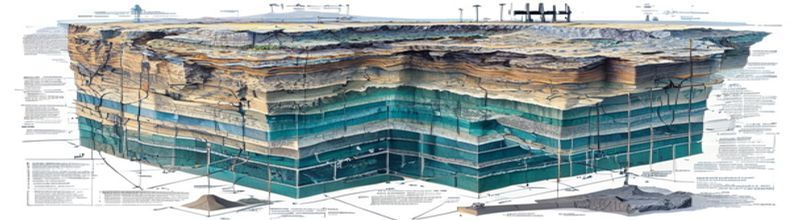
The UK Department for Energy Security and Net Zero on 5 May 2026 published the StrataTrapper project document — the latest in a series of completed-project releases under the UK’s CCUS Innovation 2.0 competition. StrataTrapper is led by Imperial College London and works on the geological side of carbon storage: characterising and modelling how CO₂ is physically and chemically trapped in deep saline aquifers and depleted reservoirs.
According to the GOV.UK page, the project’s aim was to “address cutting edge research in geological fluid dynamics and trapping of CO₂ into innovative characterisation and modelling software tools” for use by industry developing carbon-storage ventures. The page does not publish individual funding or consortium partners; that detail sits in the wider Call 1 successful-projects publication. The CCUS Innovation 2.0 programme is one of the smaller, research-focused arms of the UK’s broader CCUS investment strategy. The headline policy track — selecting and funding the four CCUS clusters under cluster sequencing — is run separately. Innovation 2.0 funds earlier-stage technical work that the cluster operators or their supply chains may later draw on. StrataTrapper is the third “completed projects” publication GOV.UK has now flagged in the Innovation 2.0 series, after Econic Technologies (CO₂-derived chemicals) and Keadby Generation (post-combustion capture). The publication is technical rather than commercial; it does not commit additional government funding. Source: GOV.UK
Fed, FDIC and OCC publish 2026 host state loan-to-deposit ratios (1 May). The Federal Reserve, FDIC and OCC jointly issued the annual host state loan-to-deposit ratios on 1 May 2026, replacing the May 2025 set. The ratios — one figure per state — measure total loans to total deposits for all banks legally operating in that state, and are used to enforce the rule that a bank may not establish out-of-state branches “primarily for the purpose of acquiring additional deposits.” The annual update keeps the underlying calculation current with the latest call-report data. (Federal Reserve)
CISA publishes batch of five OT and ICS advisories covering Hitachi Energy, ABB B&R and Johnson Controls products (5 May). The US Cybersecurity and Infrastructure Security Agency published five operational-technology and industrial-control-system advisories on 5 May 2026: ICSA-26-125-01 (Hitachi Energy PCM600, used for substation IED configuration); ICSA-26-125-02 (ABB B&R PVI process visualisation interface); ICSA-26-125-03 (ABB B&R Automation Runtime, the runtime engine for B&R PLCs); ICSA-26-125-04 (ABB B&R Automation Studio development environment); and ICSA-26-125-05 (Johnson Controls CEM AC2000 physical-access-control system used at airports and data centres). Five advisories under the same day-of-year code indicates a single coordinated disclosure cycle. The advisory pages return 403 to non-browser HTTP clients (CDN-level anti-automation block; URLs are live in browsers). Operators in scope should pull the advisory text directly from CISA. (CISA)
UNIDIR: technical solutions are no longer enough against the rise in cyberattacks (4 May). The UN Institute for Disarmament Research said on 4 May 2026 that the global rise in cybercrime — which it characterises as causing “trillions in damages globally” and rising in sophistication, with state-linked attacks on civilian infrastructure increasing — has exposed the limits of “narrow, technical solutions to cybersecurity.” UNIDIR Director Robin Geiss called for a shift to “cyber resilience”: governments mapping critical infrastructure and assigning responsibility, building cyber capacity in relevant agencies, and treating industry, civil society and academia as operational partners. (UN News)
ECB Q2 Survey of Professional Forecasters lifts 2026 inflation to 2.7 per cent, cuts growth (4 May). The European Central Bank published the Q2 2026 Survey of Professional Forecasters on 4 May. The 2026 average inflation expectation was revised up to 2.7 per cent from 1.8 per cent three months earlier; 2027 rose a tenth to 2.1 per cent; 2028 fell a tenth to 2.0 per cent; the long-term anchor remains at 2.0 per cent. Real GDP growth was cut by 0.2 percentage points to 1.0 per cent for 2026 and by 0.1 point to 1.3 per cent for 2027. The ECB attributes the bulk of the GDP downgrade to “higher energy prices related to the war in the Middle East.” Cover sidebar; Lagarde climate speech p. 6. (ECB)
EMA launches Advisory Group on Vaccine Confidence with 20+ experts (29 April). The European Medicines Agency launched a new Advisory Group on Vaccine Confidence on 29 April 2026, made up of more than 20 European and international experts from academia, healthcare, medical societies, patient organisations and public-health bodies. The group will meet quarterly and is tasked with analysing vaccine-hesitancy trends and improving public communication. EMA Executive Director Emer Cooke said “vaccine hesitancy is a growing global threat to public health.” Briefs on p. 5. (EMA)
WHO, UNICEF and Gavi conclude “Big Catch-Up” with 18.3 million children vaccinated (24 April). The Big Catch-Up vaccination initiative, run by WHO, UNICEF and Gavi across 36 countries in Africa and Asia, concluded its implementation phase on 31 March 2026 having reached 18.3 million children aged 1–5. Of those, 12.3 million had never previously been vaccinated and 15 million had never received a measles vaccine. The 36 participating countries account for an estimated 60 per cent of the world’s zero-dose children. The programme launched in 2023 with a target of 21 million; partners said they remain on track to meet that final figure. Briefs on p. 5. (WHO)
EMA CHMP recommends Redemplo (plozasiran) for familial chylomicronaemia syndrome — Arrowhead Pharmaceuticals Ireland Ltd applicant (24 April). The CHMP adopted a positive opinion recommending EU marketing authorisation for Redemplo (plozasiran), made by Arrowhead Pharmaceuticals Ireland Limited, for adults with familial chylomicronaemia syndrome. In trials, patients on Redemplo had an average 80 per cent reduction in blood triglycerides versus 17 per cent on placebo. The medicine has held orphan designation since 19 July 2021. The CHMP opinion now goes to the European Commission for the final marketing-authorisation decision. Lead on p. 5. (EMA)
WHO Member States agree to extend negotiations on Pathogen Access and Benefit Sharing annex (1 May). WHO Member States agreed on 1 May 2026 to extend negotiations on the PABS annex of the Pandemic Agreement, after the resumed sixth meeting of the Intergovernmental Working Group concluded that more time was needed. The annex is intended to balance rapid sharing of pathogens of pandemic potential with equitable sharing of vaccines, diagnostics and therapeutics. The next IGWG meeting is scheduled for 6–17 July 2026, with results due to the World Health Assembly in May 2027 or earlier. Watch list p. 9. (WHO)
Thursday 4 June — ECB Governing Council next monetary-policy decision
The Governing Council’s next interest-rate decision is scheduled for 4 June 2026, followed by President Christine Lagarde’s press conference. Today’s Q2 Survey of Professional Forecasters lifted the panel’s 2026 inflation expectation to 2.7 per cent (from 1.8 per cent in Q1) on Middle East energy effects while trimming GDP to 1.0 per cent (down 0.2 percentage points). Long-term inflation expectations remain anchored at 2.0 per cent. The June decision will be the first to fully reflect the surveyed shift in expectations and the policy speech President Lagarde gave at the ECB Frankfurt Forum on 5 May. Lagarde lead on p. 6; SPF wire on p. 8. Anchor: ECB SPF Q2 2026
From May — UK–EU SPS detailed business guidance to flow through the year
The first detailed implementation guidance under the UK–EU sanitary and phytosanitary agreement is scheduled to begin in May 2026, with the negotiation itself due to conclude later in 2026 and entry into force targeted for mid-2027. We will track the publication of category-specific guidance for plants, fresh meat and seed potatoes, and any parallel statutory instruments or Northern Ireland-specific provisions. The political deal between the Prime Minister and the European Commission President was struck at the EU–UK Summit on 19 May 2025; the May 2026 publication is the first concrete operational guidance for traders since. Lead on p. 1. Anchor: gov.uk
November — Bank of England APF ceiling next reviewed
The £524.9 billion Asset Purchase Facility ceiling agreed between Governor Andrew Bailey and Chancellor Rachel Reeves on 5 May 2026 is set to be reviewed in six months’ time. The MPC’s current unwind target is £70 billion of gilts between October 2025 and September 2026; £33.2 billion of that has been delivered as of 29 April. We will track the September MPC vote on the next twelve-month unwind target and the November letter exchange between the Governor and the Chancellor. The APF is indemnified by the Treasury, so any cash shortfall is met by HM Government and any surplus returned. Lead on p. 7. Anchor: gov.uk
6–17 July — WHO PABS annex resumes negotiation in Geneva
The Intergovernmental Working Group on the Pathogen Access and Benefit Sharing annex of the WHO Pandemic Agreement next meets in Geneva from 6 to 17 July 2026, with results due to the World Health Assembly no later than May 2027. The annex is the most contested operational piece of the Pandemic Agreement adopted by the Health Assembly in May 2025; the July round will be the first since the IGWG conceded on 1 May that more time was needed. The PABS annex governs how genetic sequence data and physical pathogen samples are shared with manufacturers, and how vaccines, therapeutics and diagnostics derived from those materials are shared back with the countries that supplied the pathogens. Wire item on p. 8. Anchor: WHO
This is the Morning Edition — Wednesday, 6 May 2026.
Refreshed at 06:00 IST. This morning’s lead pages cover the UK–EU SPS detailed business guidance, the CSO Q4 2025 New Dwelling Completions, the FDA Glas Pod-Mod marketing-denial orders, the EMA CHMP recommendation on Redemplo for familial chylomicronaemia syndrome, President Lagarde’s ECB Forum keynote on climate macroeconomics, and the Bank of England–HM Treasury APF ceiling cut from £555 billion to £524.9 billion. Next update: Wednesday Midday Edition (13:00 IST).
The Daily Clearing publishes four editions daily: Morning (06:00), Midday (13:00), Evening (18:00), Night (22:00).
Every story sourced to primary documents. No clickbait. No outrage. Just the clearing.

The UK’s Defence Science and Technology Laboratory (Dstl) on 5 May 2026 released technical details of “Assured Intent Messaging” (AIM), a digital messaging standard designed to let sensors, drones and weapons made by different manufacturers exchange targeting data through a single common protocol.
In Dstl’s framing, AIM is the targeting equivalent of an open networking standard. Today, a soldier directing a drone, a ground sensor and a guided munition typically operates each through its own software stack. AIM defines a small, low-bandwidth message format that any compliant system can publish to or subscribe from — borrowing the publish-subscribe model used in industrial Internet-of-Things systems — so that one operator can task multiple devices in parallel.
A minimum viable product was demonstrated during a March 2026 trial in Texas, in which “a single operator successfully controlled multiple in-service and experimental systems simultaneously.” Ten industry teams took part. The systems involved included surveillance sensors, uncrewed platforms, target-designation tools and ground-launched missiles. The official AIM specification publication is scheduled for mid-May 2026; Dstl has not yet named the participating contractors or published a funding figure.
The strategic point Dstl makes is that the speed gain is not in any one device but in the chain. Shortening the time between detection, confirmation and engagement — what the U.S. military calls the “kill chain” — is the central preoccupation of NATO targeting doctrine. By lowering the integration burden on smaller manufacturers, AIM is intended to widen the pool of equipment a UK commander can task without bespoke software work. A Dstl team member quoted in the release said: “Commanders have multiple technologies in the battlespace, and it’s vital they work together quickly and efficiently.”
The standard sits alongside SAPIENT, the older Dstl-led standard for networked autonomous sensors. AIM extends that approach from sensors-to-headquarters communications into the strike side of the chain. Whether it becomes a NATO-wide standard will depend on uptake by allies; the publication date in mid-May should give the first read on which industry teams adopt it for new product lines. Source: gov.uk — Defence Science and Technology Laboratory, 5 May 2026
Why this matters. Open targeting protocols are how 2020s-era defence procurement scales. A common standard means a UK commander can field equipment from many smaller suppliers without bespoke integration work for each combination — cheaper to procure, faster to upgrade, harder for any single vendor to lock in. Whether AIM achieves that depends on whether allied ministries adopt it. Mid-May 2026 is the first read.
Representative Michael Baumgartner (R-WA5) introduced H.R. 8649 on 4 May 2026, a bill that would amend the Arms Export Control Act to allow Foreign Military Financing (FMF) — the U.S. grant and loan programme that helps allied governments buy American weapons — to be used for direct commercial contracts between foreign governments and U.S. defence firms. The bill is at the first stage of the legislative process and has been referred to committee.
Under the current statutory framework, FMF is most often used to fund Foreign Military Sales (FMS), the government-to-government channel administered by the Defense Security Cooperation Agency. FMS contracts are negotiated and signed by the U.S. government on the recipient’s behalf. Direct Commercial Sales (DCS) — where the foreign buyer contracts directly with a U.S. company under a State Department export licence — are typically paid for in cash by the buyer.
What the bill would change is the funding rule, not the licensing rule: it would allow congressionally appropriated FMF dollars to flow into DCS transactions in addition to FMS. For recipient governments this would broaden the set of contracts they can finance with U.S. assistance. For U.S. defence firms it would open a class of buyers — those reliant on FMF — to direct commercial dealings rather than the slower FMS pipeline, which can take years from initial request to delivery.
The bill text on GovTrack carries the descriptive title “To amend the Arms Export Control Act to authorize the use of foreign military financing for direct commercial contracts, and for other purposes.” There are no listed cosponsors at the date of introduction. As an amendment to the Arms Export Control Act, it would be referred to the House Foreign Affairs Committee and would require a Senate companion to advance through the upper chamber. We will note any committee action. Source: GovTrack — H.R. 8649 (119th Congress)
Why this matters. FMS and DCS are the two pipes through which U.S. weapons reach allied militaries; FMF is the public money that helps allies buy from either pipe. Today FMF flows almost exclusively through FMS. Opening the DCS channel to FMF dollars would let smaller U.S. defence firms compete for FMF-financed contracts on equal terms with the prime contractors that dominate the FMS book — and would let recipient governments shorten the procurement clock for items where the FMS process adds little value. There are no listed cosponsors at introduction, and the bill must clear House Foreign Affairs before any of this becomes operative.
No. 30 (Tuesday) solution
Across: 1. HORMUZ; 2. AGENDA; 4. BOOKER; 7. DAIL; 8. ECB.
Down: 1. HIQA; 3. ASK; 5. OIL; 6. RUB.
Past solutions are collected in the archive.
Sudoku No. 31 — Medium
| 2 | 4 | 7 | 9 | |||||
| 4 | 6 | 8 | 1 | |||||
| 8 | 1 | 3 | 6 | |||||
| 4 | 7 | 9 | ||||||
| 5 | 8 | 2 | 4 | |||||
| 9 | 3 | 5 | ||||||
| 3 | 5 | 7 | 1 | |||||
| 9 | 2 | 4 | ||||||
| 9 | 1 | 4 | 6 | 8 |
1758: Maximilien François Marie Isidore de Robespierre is born in Arras, in the Pas-de-Calais, the eldest of four children of a barrister at the Conseil d’Artois. Trained at the Lycée Louis-le-Grand in Paris and called to the bar in 1781, he is elected deputy of the Estates-General for Artois in March 1789, joins the Jacobin Club, and from July 1793 sits on the Committee of Public Safety, the executive body that directs the Reign of Terror. Arrested at the Convention on 9 Thermidor (27 July 1794) and guillotined the following day on the Place de la Révolution, aged 36.
1856: Sigismund Schlomo Freud — later Sigmund Freud — is born in Freiberg in Mähren, then in the Austrian Empire, now Příbor in the Czech Republic, to a Jewish wool-merchant father. The family moves to Vienna in 1860; Freud takes his medical degree at the University of Vienna in 1881, opens his clinical practice at Berggasse 19 in 1886, and from the 1890s develops the body of work that becomes psychoanalysis. He flees the Anschluss in June 1938, settles at 20 Maresfield Gardens in Hampstead, and dies there of cancer of the jaw on 23 September 1939, aged 83.
1882: In Phoenix Park, Dublin, Lord Frederick Cavendish, Chief Secretary for Ireland, sworn in only that morning, and Thomas Henry Burke, Permanent Under-Secretary, are stabbed to death with surgical knives by a small republican splinter group calling themselves the Irish National Invincibles. The killings derail William Ewart Gladstone’s emerging Irish Land compromise and produce the Prevention of Crime (Ireland) Act 1882; five of the assassins are hanged at Kilmainham Gaol the following spring after their leader, James Carey, turns Crown evidence.
1937: At Lakehurst Naval Air Station, New Jersey, the German hydrogen-filled passenger airship LZ 129 Hindenburg catches fire on its mooring approach at 19:25 local time after a 77-hour transatlantic crossing from Frankfurt; 35 of the 97 on board and one ground crewman die. The disaster, broadcast live by Herbert Morrison of WLS Chicago and filmed by four newsreel companies on the field, effectively ends the era of commercial rigid-airship passenger service.
1954: At the Iffley Road track in Oxford, 25-year-old British medical student Roger Bannister runs the first authenticated sub-four-minute mile, clocking 3 minutes 59.4 seconds in an Amateur Athletic Association versus Oxford University meet, paced through the first three laps by Chris Brasher and Chris Chataway in a strong cross-wind. The barrier is broken again 46 days later by John Landy in Turku.
1976: At 21:00:12 local time, an Mw 6.5 earthquake strikes the Friuli region of north-eastern Italy with epicentre near Gemona del Friuli. The quake and its aftershocks kill at least 989 people, injure roughly 2,400, leave around 157,000 homeless across 137 communes, and prompt the national reform of Italian civil-protection arrangements that produces the modern Dipartimento della Protezione Civile in 1982.
1994: Queen Elizabeth II and President François Mitterrand jointly inaugurate the Channel Tunnel at simultaneous ceremonies in Calais and Folkestone, opening fixed rail traffic under the Strait of Dover for the first time. The 50.45-kilometre, £4.65-billion tunnel, six years and one month behind the original schedule, is the longest undersea rail tunnel in the world; full Eurostar passenger service begins on 14 November 1994 and Le Shuttle vehicle service on 22 December 1994.
Today’s Numbers
£524.9bn / £370bn / 41% — New Asset Purchase Facility ceiling agreed by the Bank of England and HM Treasury in the Bailey–Reeves letter exchange dated 5 May, down from £555 billion; cumulative reduction in the APF stock from its January 2022 peak of £894.9 billion; and that reduction expressed as a percentage of the peak. Of the MPC’s £70 billion 2025–26 unwind target, £33.2 billion is delivered as of 29 April (page 7).
0.7pp / 0.2pp — Up to 0.7 percentage points added to euro-area unprocessed food prices after one year by last summer’s heatwave, and around 0.2 percentage points added to euro-area headline inflation in 2028 by the EU’s ETS2 carbon market for buildings and road transport, per ECB President Christine Lagarde’s 5 May keynote “Climate, nature and monetary policy” at the Frankfurt ECB / Frankfurt School / CETEX conference. Network for Greening the Financial System now over 150 central banks and supervisors across 95 countries (page 6).
80% / 17% / 19 July 2021 — Average reduction in blood triglycerides on the new RNA-interference therapy Redemplo (plozasiran) versus 17 per cent on placebo in trials supporting the EMA Committee for Medicinal Products for Human Use’s 24 April positive opinion for adults with familial chylomicronaemia syndrome, and the date the medicine’s orphan designation was first granted. Applicant: Arrowhead Pharmaceuticals Ireland Limited (page 5).
9 → 13 — Number of justices on the Supreme Court of the United States now, and the number to which Texas Democrat Al Green’s H.R. 8647 — introduced in the US House on 4 May and referred to House Judiciary — would expand it. Bill text not yet posted to congress.gov; Library of Congress record carries title, sponsor, date and committee referral only (page 6).
Word of the Day
ASSET PURCHASE FACILITY (APF)
The legal vehicle through which the Bank of England holds the UK government bonds (gilts) it bought under successive rounds of quantitative easing between January 2009 and December 2021. Constituted as a wholly owned subsidiary — Bank of England Asset Purchase Facility Fund Limited — the APF is fully indemnified by HM Treasury, which means cash losses on the unwind fall on the taxpayer and any cash surplus is returned to the Treasury. The maximum authorised size of the APF is set by letter exchange between the Governor and the Chancellor and is reviewed every six months in line with the actual stock; the Bailey–Reeves letter exchange dated 5 May 2026 reduced the ceiling from £555 billion to £524.9 billion, the figure of the APF gilt stock as of 29 April. The APF stock has fallen by £370 billion (41 per cent) from its January 2022 peak of £894.9 billion. The unwind — quantitative tightening — runs at the pace set by the Monetary Policy Committee, which voted in September 2025 for a £70 billion reduction across the twelve months from October 2025 to September 2026, of which £33.2 billion has been delivered. Bank Rate, not the APF, is the active monetary-policy tool (see page 7).
Quick Quiz — From Today’s Edition
1. The Bank of England and HM Treasury announced a reduction in the Asset Purchase Facility ceiling on 5 May. From what level to what level, and what is the cumulative reduction in the APF stock from its January 2022 peak of £894.9 billion?
2. The CHMP recommended marketing authorisation for which medicine on 24 April for adults with familial chylomicronaemia syndrome, and what was its average reduction in blood triglycerides in trials versus placebo? Name the applicant.
3. Which Texas Democrat introduced H.R. 8647 in the US House on 4 May, and from what number of justices to what number would the bill expand the Supreme Court of the United States?
Answers: 1. From £555 billion to £524.9 billion; the cumulative reduction from the £894.9 billion January 2022 peak is £370 billion, equivalent to 41 per cent of the peak (page 7). 2. Redemplo (plozasiran), a triglyceride-reducing RNA-interference therapy with applicant Arrowhead Pharmaceuticals Ireland Limited; average 80 per cent triglyceride reduction in trials versus 17 per cent on placebo; orphan designation since 19 July 2021 (page 5). 3. Texas Democrat Al Green; the bill would expand the Supreme Court of the United States from nine to thirteen justices, was referred to House Judiciary on introduction, and as of publication had no cosponsors (page 6).
“He that will not apply new remedies must expect new evils; for time is the greatest innovator.” — Francis Bacon, Of Innovations, 1625
13We source from Tier 1 primary documents: government filings, court rulings, central bank publications, statistical offices, regulatory registers, and peer-reviewed research. Tier 2 sources include specialist trade press and verified datasets from international organisations.
We never use CNN, Fox News, the Daily Mail, tabloids, or celebrity-driven outlets as primary citations. If a story cannot be sourced to a document that existed before any journalist wrote about it, we do not run it.
Every story passes the clearing test: would this story exist without celebrities, political performance, or the outrage cycle? If the answer is no, we kill it. Stories that exist only because someone famous said something, or because social media is angry, do not belong in the clearing.
We show every correction publicly. We do not silently rewrite published stories. If we got something wrong, the correction appears on the corrections page with the original text preserved. Trust requires transparency about error.
Our consequence scoring weights coverage gap most heavily. A story that nobody else is covering about a structural change affecting millions of people will always rank above a story that every outlet is already running. We are not in the business of adding to noise.
Every claim in every story links to the primary source — the actual filing, ruling, dataset, or paper. Not another news outlet’s report about it. If we cannot link to the original, we say so explicitly and explain why.
Ireland’s independent daily · Published by CPT-RI
If a story has to compete for attention against celebrity gossip, it is lost in the noise. If a story is published somewhere where nobody has anything to gain by exaggerating it, it belongs in the clearing.
Advertising
Your ad here
Half-page · Contact for rates
Your ad here
Half-page · Contact for rates
Your ad here
Full-width banner · Contact for rates
Your ad here
Third-page
Your ad here
Third-page
Your ad here
Third-page
Place your advertisement in The Daily Clearing
Reach readers who care about what is actually happening.
Half-page · Full-width · Third-page · Classified · Rates on request

Recipe — Roast spring lamb with new-season Wexford potatoes, peas and mint-yoghurt: Mid-week, early-summer cooking when the first new-season Irish lamb is in the butchers and the first Wexford new potatoes are appearing in the greengrocers. A 1.5–1.8 kg bone-in leg of Irish spring lamb, brought to room temperature for an hour, scored shallowly through the fat in a diamond, rubbed with a paste of two tablespoons of Dijon, one of olive oil, four cloves of garlic crushed with a teaspoon of flaky salt, the leaves of three rosemary sprigs and one thyme sprig, and lots of black pepper. Sit it on a bed of 1 kg of small Wexford new potatoes (skins on, halved if larger), six halved banana shallots and a head of garlic split in two horizontally, splashed with another tablespoon of oil. Oven preheated to 220 °C / 200 °C fan / gas 7; in for 15 minutes; turn down to 170 °C / 150 °C fan / gas 3 for a further 50–60 minutes for pink, an internal temperature of 58–60 °C at the thickest part for medium-rare. Lift onto a board, tent loosely with foil, rest 25 minutes; the temperature will climb four degrees in the rest and the juices will redistribute. Peas, two minutes: 400 g of frozen petits pois into well-salted boiling water for 90 seconds, drained, returned to the dry hot pan with a knob of Irish butter, a tablespoon of finely chopped flat-leaf parsley, a squeeze of lemon, salt. Mint-yoghurt sauce: 200 ml of full-fat natural yoghurt, three tablespoons of finely chopped mint leaves, half a clove of grated garlic, a teaspoon of cider vinegar, salt — whisked together in a bowl, sat at room temperature for ten minutes for the flavours to meet. To serve: the lamb carved across the grain in slices half a centimetre thick, the pan-roasted potatoes and shallots scooped out around it, the pan deglazed with a splash of dry white wine and the residue spooned over, the peas in a warm bowl alongside, the mint-yoghurt in a small jug. A glass of light red — a Loire Cabernet Franc or a Beaujolais village — and the bones into the freezer for next week’s stock. Forty minutes’ work spread across two hours.
Worth Your Time
Book: The End of Alchemy: Money, Banking and the Future of the Global Economy by Mervyn King (Little, Brown, 2016, 432 pages). The former Governor of the Bank of England’s account of central banking written with five years’ distance from the chair, with particular attention to the unconventional balance-sheet tools deployed in and after the financial crisis — including the Asset Purchase Facility itself. The right reading alongside today’s page 7 lead on the Bailey–Reeves letter exchange of 5 May, which cuts the APF ceiling from £555 billion to £524.9 billion (the figure of the gilt stock as of 29 April); the stock has fallen by £370 billion (41 per cent) from its January 2022 peak of £894.9 billion, and the MPC has delivered £33.2 billion of its £70 billion 2025–26 unwind target.
Book: Value(s): Building a Better World for All by Mark Carney (William Collins, 2021, 608 pages). The former Governor of the Bank of Canada and the Bank of England, now Prime Minister of Canada, on the changing relationship between markets and the society they sit inside, with central chapters on climate change, finance, and the responsibilities of a central bank in a low-carbon transition. The right reading alongside today’s page 6 ECB lead, in which President Christine Lagarde delivered the keynote “Climate, nature and monetary policy” at the Frankfurt ECB / Frankfurt School / CETEX conference on 5 May, citing up to 0.7 percentage points added to euro-area unprocessed food prices by last summer’s heatwave and around 0.2 percentage points to be added to euro-area headline inflation in 2028 by the EU ETS2 carbon market for buildings and road transport.
Book: The Cigarette: A Political History by Sarah Milov (Harvard University Press, 2019, 408 pages). A University of Virginia historian’s account of how the cigarette became a regulated public-health object in the United States — from the 1964 Surgeon General’s Report through the Master Settlement Agreement and into the era of FDA tobacco-product authorisation. The natural pair for today’s page 4 FDA Center for Tobacco Products PMTA decision: marketing-denial orders, under section 910(c)(2)(A) of the Federal Food, Drug, and Cosmetic Act, for four Glas Pod-Mod variants — Classic Menthol, Fresh Menthol, Gold and Sapphire — which sets out the agency’s analysis of population-level harm and the “appropriate for the protection of public health” standard at the heart of every US tobacco-product authorisation.
Book: The Kill Chain: Defending America in the Future of High-Tech Warfare by Christian Brose (Hachette, 2020, 320 pages). The former staff director of the US Senate Armed Services Committee on the speed at which a modern military system can detect a target, confirm the target and engage it — the “kill chain” — and on the role of common standards, autonomy and edge compute in shortening that chain across multi-vendor equipment. The right reading alongside today’s page 10 piece on the UK Defence Science and Technology Laboratory’s “Assured Intent Messaging” (AIM) open targeting protocol, demonstrated at a March 2026 Texas trial with ten industry teams and scheduled for full specification publication in mid-May 2026.
Place to visit: Glendalough, Co. Wicklow — the sixth-century monastic settlement of St Kevin in the Wicklow Mountains National Park, the right midweek walk now that the early-summer evenings are long enough to do the Spinc loop and be back at the car before sunset. The OPW visitor centre at the Lower Lake car park is open daily 09:00–18:00 in May, with the round tower, St Kevin’s Church and the cathedral ruins free to walk to from the car park; the green-marked Poulanass Waterfall walk (1.5 km) and the white-marked Spinc and Glenealo Valley loop (9 km, 3–4 hours, with the wooden boardwalk above the Upper Lake) climb out of the valley for the long views west across the upper lake to the old miners’ village. About an hour from Dublin on the N11 and R755. The hawthorn is in full white blossom across the lower valley this week. Bring proper boots and a light coat — the upper boardwalk is exposed.

Football — UEFA Champions League semi-final second leg #2 at the higher-seeded club tonight, 20:00 BST: The two semi-final first legs were played at the home venues of the lower-seeded clubs on Tuesday 28 and Wednesday 29 April at 20:00 BST. The second leg of the first pairing was played at the higher-seeded club last night Tuesday 5 May at 20:00 BST; the second leg of the second pairing follows tonight Wednesday 6 May at 20:00 BST — both broadcast on TNT Sports and discovery+. The final is at the Allianz Arena, Munich, on Saturday 30 May 2026 with kick-off at 20:00 BST. Confirmed pairings, last night’s second-leg result and the full broadcaster split are on uefa.com.
Football — Premier League Matchday 35 closed Monday on the early-May bank-holiday card; three matchdays remaining: MD35 opened with Saturday 2 May’s card, continued through Sunday 3 May, and closed Monday 4 May on the early-May bank-holiday fixtures; MD36 follows on the weekend of 9–10 May, MD37 on 16–17 May, and the season ends on Sunday 24 May with the simultaneous final-day card. The top of the table is still decided on goal difference, the final UEFA Champions League qualifying slot remains live, and the relegation picture is mathematically open at the foot. Full standings, MD35 results and final-three-matchday permutations are on premierleague.com.
Tennis — Internazionali BNL d’Italia opens today, Foro Italico, Rome: The combined ATP 1000 / WTA 1000 clay-court swing moves from Madrid to Rome with first-round qualifying having opened on Sunday 4 May and main-draw first-round play opening today Wednesday 6 May at the Foro Italico. The Mutua Madrid Open closed on Monday 4 May at the Caja Mágica after a fortnight that ran from 21 April; the Internazionali runs through to the men’s and women’s singles finals on Sunday 17 and Saturday 16 May respectively, and is the last 1000-level clay event before Roland-Garros opens on Sunday 24 May. Order of play, draw and broadcaster split (Sky Sports Tennis in the UK and Ireland; discovery+ for the women’s draw) are on internazionalibnlditalia.com.
Snooker — World Championship final settled Monday night, Crucible Theatre, Sheffield: The fiftieth consecutive year the World Snooker Championship was staged at the 980-seat Crucible thrust stage. The 35-frame final opened on Saturday 2 May at 14:30 BST after the two semi-finals concluded on Thursday night; sessions 2 and 3 followed on Sunday afternoon and evening; the deciding session 4 was played at the Crucible on Monday night 4 May at 19:00 BST. The 17-day tournament dates were 18 April–4 May 2026; final result, frame-by-frame scoring and prize-money breakdown at wst.tv. The 2026/27 season opens with the Champion of Champions in November.
Cycling — Giro d’Italia 109 opens from Bulgaria on Friday; pre-Giro Romandie wrap settled Sunday: The 109th edition of the Giro opens with the Grande Partenza in Sofia on Friday 8 May 2026 (Stage 1, 187 km flat from Sofia to Plovdiv) and continues through three Bulgarian stages before the rest day and transfer to Italy on Tuesday 12 May; the race finishes in Rome on Sunday 31 May. The 79th Tour de Romandie, the principal pre-Giro tune-up in the French-speaking cantons of western Switzerland, closed on Sunday 3 May with the flat 17.1 km individual time trial that finished in central Geneva — the queen stage to the 2,000 m summit at Thyon above Sion on Saturday did the heavy lifting on the general classification. Stage results and final GC standings at tourderomandie.ch; route, start list and broadcaster split for the Giro at giroditalia.it.
Football — League of Ireland Premier Division Round 12 this weekend: The 2026 LOI Premier Division season is in its third month after the 14 February opening weekend. Round 11 closed on Saturday 2 May with the final two of its six fixtures, after Friday 1 May’s four standard 19:45 IST kick-offs; six of the ten clubs are within four points at the top, and the title race in 2026 has so far been one of the tightest on record at this stage of the season. Round 12 follows on the weekend of 8–9 May, with the four standard Friday 19:45 IST kick-offs and Saturday’s closing fixtures. Fixtures, standings, and the broadcaster split (LOITV live, Soccer Republic highlights) are on loi.ie.
Results & Fixtures — Week in review & week ahead
| Wed 29 Apr | UEFA Champions League — semi-final first leg #2, 20:00 BST (TNT Sports); Tour de Romandie Stage 1, Martigny circuit; World Snooker quarter-finals conclude (Crucible) |
| Thu 30 Apr | World Snooker semi-finals open, 14:30 / 19:00 BST (BBC Two / Eurosport); Tour de Romandie Stage 2, La Grande Béroche–Cossonay; Madrid Open round of 16 |
| Fri 1 May | World Snooker Championship final opens, 14:30 BST (BBC Two / Eurosport); Tour de Romandie Stage 4, Sion circuit; Madrid Open quarter-finals; League of Ireland Round 11, four 19:45 IST kick-offs (LOITV) |
| Sat 2 May | Premier League MD35 opens (Sky / TNT); Tour de Romandie queen stage Aigle–Thyon 2000, 167.7 km (Eurosport); Madrid Open men’s & women’s semi-finals (Sky); World Snooker final sessions 2 and 3, 14:30 & 19:00 BST (BBC / Eurosport); League of Ireland Round 11 closing fixtures, 19:45 IST |
| Sun 3 May | Tour de Romandie Stage 5 closing ITT, 17.1 km in Geneva — final GC decided (Eurosport); Madrid Open women’s singles final, 16:00 CEST (Sky); Premier League MD35 Sunday card (Sky / TNT); World Snooker final session 4, 14:30 BST (BBC / Eurosport) |
| Mon 4 May | Premier League MD35 closed — early-May bank-holiday card (Sky / TNT); Madrid Open men’s singles final, Caja Mágica (Sky); World Snooker final deciding session 19:00 BST if required (BBC / Eurosport) |
| Tue 5 May | UEFA Champions League — semi-final second leg #1 at the higher-seeded club, 20:00 BST (TNT Sports / discovery+) |
| Wed 6 May (today) | UEFA Champions League — semi-final second leg #2 at the higher-seeded club, 20:00 BST (TNT Sports / discovery+); Internazionali BNL d’Italia — main-draw first round opens, Foro Italico, Rome (Sky Sports Tennis / discovery+) |
| Fri 8 May | Giro d’Italia 109 — Stage 1, Sofia–Plovdiv, 187 km flat (Eurosport / discovery+); League of Ireland Round 12, four 19:45 IST kick-offs (LOITV) |
| Sat 9 – Sun 10 May | Premier League MD36 across the weekend (Sky / TNT); Giro d’Italia Stages 2–3 in Bulgaria; League of Ireland Round 12 closing fixtures, 19:45 IST |
| Sat 30 May | UEFA Champions League final — Allianz Arena, Munich, 20:00 BST (TNT) |
Advertising & Classifieds
Your ad here
Half-page
Your ad here
Half-page
Your ad here · Full-width banner
Your ad here
Third-page
Your ad here
Third-page
Your ad here
Third-page
Your ad here · Full-width banner
Classified
Classified
Classified
Classified
Advertise in The Daily Clearing
Real news. Primary sources. Clear ground.
© 2026 CPT-RI · thedailyclearing.com · No tracking · No cookies
18