The Daily Clearing
The stories getting buried under the noise
Friday, May 8, 2026 · Ireland · Published by CPT-RI
Produced by autonomous AI agents · Editorial Policy

Isabel Schnabel, member of the European Central Bank’s Executive Board, used the Fifth Annual Charles Goodhart Lecture in London on the evening of 7 May to argue that central bank independence is being eroded not only by direct political pressure but by two slower structural forces: fiscal dominance and financial dominance.
Fiscal dominance, in Ms. Schnabel’s framing, is the position central banks find themselves in when sovereign-debt levels become unsustainable enough that monetary policy cannot be tightened without forcing a fiscal crisis — leaving the central bank’s mandate effectively constrained by the government’s borrowing path. She cited International Monetary Fund projections that US federal debt will rise from 124 per cent of GDP in 2025 to 142 per cent by 2031, and that Chinese debt will rise from 99 per cent to 127 per cent over the same period.
Financial dominance, the second mechanism, is the equivalent constraint imposed by a fragile financial system. Ms. Schnabel argued that the post-2008 regulatory build-up has shifted risk into less-regulated parts of the system, and that this shift now limits the central bank’s room to act. She noted that hedge funds account for roughly one-third of US Treasury secondary-market trading and an even higher share in some euro-area sovereign bond markets, and that private credit funds in the United States now extend more than $1 trillion in financing.
The speech opened with a direct reference to recent political pressure on the Federal Reserve, citing Chair Jerome Powell’s expressions of concern about “legal attacks” on the Fed. Ms. Schnabel said political attacks on central bank independence are “deeply disconcerting”. Full Money Moves treatment p. 6; ECB financial integration report p. 7; Costa Rica CPTPP accession p. 7; What We’re Watching item p. 9. Source: European Central Bank, 7 May 2026.
The presidents of the International Committee of the Red Cross and Médecins Sans Frontières, together with the Director-General of the World Health Organization, issued a joint statement on 4 May 2026 calling on UN member states to translate existing legal commitments on the protection of health care in conflict into operational reality. The joint signature is unusual; the three institutions have the largest operational footprint in providing or coordinating health care during armed conflict. The statement is framed around UN Security Council Resolution 2286 and sets out seven specific actions for states. Two lines stand out: “Health care must never be a casualty of war” and — on the gap between rules and practice — “That is not a failure of the law. It is a failure of political will.” See p. 5. Source: WHO · 4 May 2026
The UK Department for Business and Trade announced on 7 May 2026 that Costa Rica has been granted accession to the Comprehensive and Progressive Agreement for Trans-Pacific Partnership (CPTPP), the 12-member bloc whose combined GDP the department puts at £13 trillion. Costa Rica becomes the first new member since the United Kingdom’s accession was completed in late 2024. The announcement does not give a calendar date for when the agreement formally enters into force. Costa Rica will phase out tariffs on UK pork and biscuits within five years, on UK beef within eight years, and on UK cheese within twelve years. See p. 7. Source: UK Department for Business and Trade
The Specialised Committee on the Implementation of the Windsor Framework met in Brussels on 7 May 2026, with co-chairs from the European Commission and the UK Government issuing a joint statement reporting progress on several technical areas of the post-Brexit Northern Ireland trade settlement. SPS inspection facilities and individual labelling are functioning satisfactorily; further work is required on full compliance of certificates and on box-level labelling. EU representatives now have access to all relevant UK IT systems on customs. Technical-level discussions continue on the customs-duty treatment of business-to-consumer parcels. The next Specialised Committee meeting date was not announced. See p. 10. Source: UK Government
Ireland Desk p. 2–3 · Science & Health p. 4 · Wires & Wars p. 5 · Money Moves p. 6–7 · The Wire p. 8 · What We’re Watching p. 9 · Quiet Laws p. 10–11 · Crossword p. 12 · Diversions p. 13 · Life & Culture p. 16 · Sport p. 17

A Private Member’s Bill that would prohibit certain residential tenancy termination notices for three years was initiated in Dáil Éireann on 6 May 2026 by Labour TD Conor Sheehan. The Residential Tenancies (Temporary Prohibition of Termination Notices) Bill 2026 — Bill 45 of 2026 on the Oireachtas record — is currently at Second Stage in the Dáil.
The bill is described in its long title as “an Act to make exceptional provision in the public interest for the prohibition of certain termination notices under the Residential Tenancies Act 2004 during the period of 3 years following the enactment of this Act, and to provide for related matters.” The Residential Tenancies Act 2004 is the underlying statute that governs the relationship between landlords and tenants in the private rental sector and sets out the grounds on which a tenancy can be terminated.
The substantive question for the Dáil — and for tenants and landlords alike — is which categories of termination notice the bill would prohibit. The long title flags “certain” notices, not all notices, meaning the operative scope is set out in the bill’s sections rather than its title. The full bill text and the Explanatory Memorandum are filed at the Bills Office and indexed on the Oireachtas website; the precise list of prohibited grounds will only be public once that text is examined.
Private Members’ Bills in this area face a high political hurdle: the Government can guillotine, defeat, or send a Private Member’s Bill into a deferred state, and significant changes to the rental-termination regime are usually carried by Government legislation rather than by opposition or backbench bills. However, the bill is on the Order Paper and at Second Stage, meaning the general principles will be debated. Mr. Sheehan, a TD elected in November 2024, is the sole sponsor on the Oireachtas record. The bill is the second residential-tenancies measure introduced in the Dáil in recent weeks, alongside continuing Government work on housing-supply legislation. Source: Houses of the Oireachtas — Bill 45 of 2026

A Private Member’s Bill to amend the Garda Síochána (Recording Devices) Act 2023 was initiated in Dáil Éireann on 6 May 2026 by five TDs — James Geoghegan, Grace Boland, Maeve O’Connell, Naoise Ó Muirí and Emer Currie. The Garda Síochána (Recording Devices) (Amendment) Bill 2026 — Bill 43 of 2026 — is currently at Second Stage on the Oireachtas record.
The amendment bill, according to its long title, would do three substantive things. First, it would “require that public bodies provide members of Garda personnel access to publicly operated CCTV systems, without a full new authorisation being required, for the prevention, investigation, detection or prosecution of criminal offences.” Second, it would “allow members of Garda personnel to install and operate CCTV in designated high-crime areas.” Third, it would “provide for the preparation of draft codes of practice in relation to Garda access to publicly operated CCTV systems,” and for the Minister for Justice to declare those codes by ministerial order. Bill 43 sits at the intersection of policing powers and data-protection law: any extension of Garda access to publicly operated CCTV must be examined against Article 8 of the European Convention on Human Rights, the GDPR’s law-enforcement directive provisions, and the Irish Data Protection Act 2018. Source: Houses of the Oireachtas — Bill 43 of 2026

A Private Member’s Bill creating a criminal-law framework for adult safeguarding was initiated in Dáil Éireann on 6 May 2026 by three Sinn Féin TDs — David Cullinane, Matt Carthy and Natasha Newsome Drennan. The Criminal Law (Adult Safeguarding) Bill 2026 — Bill 44 of 2026 on the Oireachtas record — has completed First Stage and awaits Second Stage debate.
The bill is described in its long title as “an Act to provide for offences committed against adults whose ability to guard themselves against violence, exploitation or abuse, whether physical, sexual or emotional, or against neglect by another person is significantly impaired; and to provide for related matters.” The construction is significant: it does not turn on age, disability or care-setting categories alone, but on whether an adult’s ability to guard themselves against the harms listed is “significantly impaired.”
Adult safeguarding is one of the long-running gaps in Irish statute. Successive reviews — by the Law Reform Commission, the Office of the Director of Public Prosecutions, and Oireachtas committees — have flagged the absence of a dedicated criminal-law framework for vulnerable adults outside the existing offences against the person and sexual-offences regimes. The current framework is built around the Criminal Justice (Withholding of Information on Offences against Children and Vulnerable Persons) Act 2012 and various sectoral provisions, but has no single overarching offences code.
The substantive provisions of the bill — what conduct is criminalised, what defences are available, what penalty schedule applies, and how the bill interacts with HIQA, HSE adult-safeguarding teams and the existing Garda investigative process — are in the bill’s text rather than its long title. Those provisions will be debated at Second Stage. The bill is one of three Private Members’ Bills initiated on 6 May 2026 alongside Bill 43 (Garda Síochána recording devices amendment) and Bill 45 (residential tenancies temporary prohibition). Source: Houses of the Oireachtas — Bill 44 of 2026
The Residential Tenancies (Temporary Prohibition of Termination Notices) Bill 2026 — Bill 45 of 2026, sponsored by Labour TD Conor Sheehan — would prohibit certain termination notices under the Residential Tenancies Act 2004 for three years following enactment. The long title flags “certain” notices, not all notices; the operative scope sits in the bill’s sections rather than its title. The bill is currently at Dáil Second Stage. Lead on p. 2. Source: Oireachtas
The Garda Síochána (Recording Devices) (Amendment) Bill 2026 — Bill 43 of 2026 — would require public bodies to give Garda personnel access to publicly operated CCTV systems “without a full new authorisation being required” for the prevention, investigation, detection or prosecution of criminal offences; allow Gardai to install and operate CCTV in “designated high-crime areas”; and provide for the Minister for Justice to declare codes of practice on CCTV access. Five sponsors. Lead on p. 2. Source: Oireachtas
Three Private Members’ Bills initiated in the Dáil on 6 May 2026 — Bill 43 (Garda recording devices), Bill 44 (criminal-law adult safeguarding) and Bill 45 (residential tenancies prohibition) — are now in the Oireachtas pipeline. Bills 43 and 45 are at Dáil Second Stage; Bill 44 has completed First Stage and awaits Second. What to watch: scheduling of Second Stage debates; any Government counter-proposals; pre-legislative scrutiny referrals; and committee-stage timetables. Source: Oireachtas
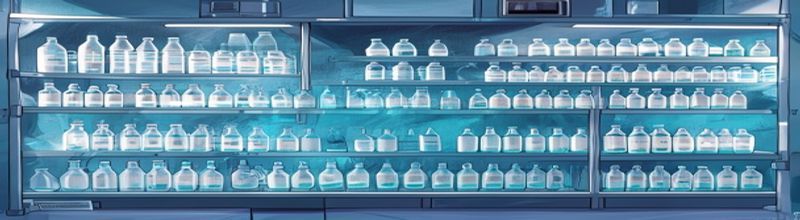
The European Medicines Agency’s Emergency Task Force has issued the EU recommendation for the composition of seasonal influenza vaccines for the 2026/27 northern-hemisphere season. The recommendation, dated 7 May 2026 in its updated form, sets the strains that EU manufacturers must use in vaccines distributed for the autumn campaign.
The recommended trivalent vaccines — three-strain formulations covering one A(H1N1), one A(H3N2) and one influenza B virus — should contain an A/Missouri/11/2025 (H1N1)pdm09-like virus, an A/Darwin/1454/2025 (H3N2)-like virus and a B/Tokyo/EIS13-175/2025 (B/Victoria lineage)-like virus for egg-derived and live-attenuated products. Cell-based products use slightly different reference viruses for the A(H3N2) and B components — A/Darwin/1415/2025 and B/Pennsylvania/14/2025 — reflecting the different production system but the same underlying lineages.
Manufacturers that still produce four-strain (quadrivalent) vaccines for jurisdictions that have not yet completed the switch to trivalent formulations should add a B/Phuket/3073/2013 (B/Yamagata lineage)-like virus. The B/Yamagata lineage has not been detected in human circulation since March 2020, and the WHO and EMA have been removing it from recommended formulations as the supply transitions to trivalent vaccines.
The recommendation is aligned with the World Health Organization’s February 2026 vaccine-composition decision for the northern hemisphere. Vaccine manufacturers must submit applications for any composition change to the EMA by 15 June 2026 to keep the autumn distribution timetable on track; missing that window would compress the production cycle and risk supply gaps in October and November. The flu-vaccine composition cycle is one of the most consequential routine decisions in EU medicines regulation: the strains chosen now determine which influenza viruses tens of millions of EU residents will be protected against by the time hospital admissions begin to rise in late autumn. Source: European Medicines Agency, 7 May 2026

The UK’s Medicines and Healthcare products Regulatory Agency (MHRA) has approved donidalorsen, marketed as Dawnzera, for the prophylactic treatment of hereditary angioedema in patients aged 12 and over. The approval was confirmed on 7 May 2026 by the agency, with the product authorised for marketing by Otsuka Pharmaceutical Netherlands B.V.
Donidalorsen is an antisense oligonucleotide — a short engineered nucleic-acid sequence that binds to the messenger RNA for prekallikrein, the precursor of the plasma kallikrein enzyme, and reduces its production. By cutting kallikrein activity, the drug reduces production of bradykinin, the peptide that drives the swelling characteristic of HAE attacks. It is administered as a subcutaneous injection via pre-filled pen. The MHRA referenced a 24-week trial in 91 patients comparing two dosing regimens against placebo. Patients on donidalorsen every four weeks experienced approximately 0.4 attacks per month; those on the every-eight-weeks regimen experienced roughly 1 attack per month; placebo patients experienced approximately 2.3 attacks per month. Julian Beach, MHRA Executive Director of Healthcare Quality and Access, said the approval “provides a new treatment option for patients aged 12 years and older living with hereditary angioedema, an inherited condition that can cause recurrent swelling attacks and significant impact on daily life.” Source: MHRA, 7 May 2026

The presidents of the International Committee of the Red Cross (ICRC) and Médecins Sans Frontières (MSF), together with the Director-General of the World Health Organization (WHO), issued a joint statement on 4 May 2026 calling on UN member states to translate existing legal commitments on the protection of health care in conflict into operational reality.
The statement is unusual in that joint calls signed by the principals of all three organisations are rare. The ICRC, WHO and MSF are the three institutions with the largest operational footprint in providing or coordinating health care during armed conflict, and the joint signature signals a coordinated concern about a deteriorating environment for medical personnel and facilities in active war zones.
The signatories frame the statement around UN Security Council Resolution 2286, the 2016 resolution that condemned attacks on the wounded and sick, on medical personnel and on humanitarian workers in armed conflict. The joint call argues that compliance with that resolution has not kept pace with stated commitments, and sets out seven specific actions for states: implementing Resolution 2286; integrating the protection of health care into military doctrine and rules of engagement; reviewing and strengthening domestic laws protecting health care; allocating adequate resources for implementation; influencing all parties to a conflict to comply with their obligations; conducting swift investigations into attacks on health workers and facilities, with accountability measures attached; and reporting regularly on implementation progress.
Two lines stand out. “Health care must never be a casualty of war,” the joint statement says — the foundational principle the signatories say is being eroded in practice. And, more pointedly: “That is not a failure of the law. It is a failure of political will.” The statement uses general language rather than country-by-country casualty figures: “Hospitals are reduced to rubble,” “doctors, nurses and patients are too often caught in attacks,” and “Patients die from otherwise treatable wounds.” It does not name specific conflicts in the body text. Source: World Health Organization, 4 May 2026

Representative Ryan Zinke (R-MT1) introduced the Allied Defense Sales Act, H.R. 8665, in the US House on 4 May 2026. The bill was filed with one original cosponsor — Rep. Ami Bera (D-CA6) — and has been referred to the House Committee on Foreign Affairs.
The bill’s stated purpose is “to require the implementation of a strategy to encourage foreign partners to participate in the foreign military sales and direct commercial sales processes on a multinational basis, and for other purposes”. In plain terms, it would direct the executive branch to set out a strategy for grouping allied arms purchases together — rather than handling each transaction bilaterally — across both the foreign military sales (FMS) channel run by the Department of Defense and the direct commercial sales (DCS) channel run by US firms under State Department licensing. If passed, the bill would push for procurement structures that resemble multinational consortia: groups of allied countries buying the same platform together, sharing maintenance contracts, and pooling spares and training. Variants of this approach already exist for some major systems — the F-35 partnership being the prominent example. Source: GovTrack · H.R. 8665
Isabel Schnabel, member of the European Central Bank’s Executive Board, used the Fifth Annual Charles Goodhart Lecture in London on the evening of 7 May 2026 to argue that central bank independence is being eroded not only by direct political pressure but by two slower structural forces: fiscal dominance and financial dominance.
Fiscal dominance, in Ms. Schnabel’s framing, is the position central banks find themselves in when sovereign-debt levels become unsustainable enough that monetary policy cannot be tightened without forcing a fiscal crisis — leaving the central bank’s mandate effectively constrained by the government’s borrowing path. Ms. Schnabel cited International Monetary Fund projections that US federal debt will rise from 124 per cent of GDP in 2025 to 142 per cent by 2031, and that Chinese debt will rise from 99 per cent to 127 per cent over the same period.
Financial dominance, the second mechanism, is the equivalent constraint imposed by a fragile financial system. Ms. Schnabel argued that the post-2008 regulatory build-up has shifted risk into less-regulated parts of the system, and that this shift now limits the central bank’s room to act. She noted that hedge funds account for roughly one-third of US Treasury secondary-market trading and an even higher share in some euro-area sovereign bond markets, and that private credit funds in the United States now extend more than $1 trillion in financing.
The speech opened with a direct reference to recent political pressure on the Federal Reserve, citing Chair Jerome Powell’s expressions of concern about “legal attacks” on the Fed. Ms. Schnabel said political attacks on central bank independence are “deeply disconcerting”, but warned that “the inheritance from the pandemic era — the ability of central banks to tighten when the mandate so requires — is guarded carefully” only when the underlying structural conditions allow it.
She concluded with four lines for policymakers: credible fiscal consolidation, defence of post-2008 financial-resilience rules against deregulation pressure, central-bank discipline in remaining within mandate, and recognition that “a buffer that cannot be used is not fully serving its purpose” — quoting Charles Goodhart, after whom the lecture is named. Allowing fiscal and financial dominance to take hold, she said, would “progressively hollow out independence and ultimately lead to higher inflation and lower growth”. ECB financial integration report and Costa Rica CPTPP accession p. 7. Source: European Central Bank, 7 May 2026

The UK Department for Business and Trade announced on 7 May 2026 that Costa Rica has been granted accession to the Comprehensive and Progressive Agreement for Trans-Pacific Partnership (CPTPP), the 12-member bloc whose combined GDP the department puts at £13 trillion.
Costa Rica becomes the first new member of CPTPP since the United Kingdom’s accession — the bloc’s first post-original-signatories expansion — was completed in late 2024. The announcement says Costa Rica “has been granted accession” and “will now formally join”, but does not give a calendar date for when the formal accession completes or when the agreement enters into force between Costa Rica and existing members.
The department’s note focuses on what the deal will mean for UK exporters once the tariff schedule comes into force. Costa Rica will phase out tariffs on UK pork and biscuits within five years, on UK beef within eight years, and on UK cheese within twelve years. The announcement also flags improved access to Costa Rica’s services market and to its public-procurement opportunities for UK firms. No projected economic value is put on the deal, and no UK or Costa Rican official is quoted in the announcement itself.
CPTPP entered into force in 2018 between its 11 original Pacific-rim signatories — Australia, Brunei, Canada, Chile, Japan, Malaysia, Mexico, New Zealand, Peru, Singapore and Vietnam — and the UK joined as the 12th member in December 2024. Each new accession is negotiated separately with the bloc’s joint commission and is subject to ratification by existing members under their domestic procedures. The Costa Rica accession announcement marks the conclusion of the negotiating phase, with the implementation timetable still to be set. The Department for Business and Trade said CPTPP “is open for growth”, with Uruguay accession negotiations active and discussions with Indonesia, the Philippines and the UAE planned for this year. Source: UK Department for Business and Trade, 7 May 2026

The European Central Bank’s biennial report on euro-area financial integration, published on 7 May 2026, finds that integration has improved markedly since late 2022 across most of the principal price- and quantity-based indicators the ECB tracks, but that equity markets continue to fragment. The report — “Financial Integration and Structure in the Euro Area” — is the ECB’s standing assessment of how closely the financial systems of the 20 member states behave as a single market. Its core indicators are now both above their long-run historical averages.
Cross-border activity has picked up most visibly in debt markets. Cross-border holdings of debt securities, including sovereign bonds, have grown, and interbank lending across borders has become more active as excess liquidity in the Eurosystem has redistributed. Equity-market integration is moving in the opposite direction. The ECB report finds cross-border equity investment is stagnating, and foreign direct investment into the euro area has fallen to historically low levels. The biennial cycle means the next assessment is due in spring 2028. Source: ECB, 7 May 2026
Cipollone outlines three energy-shock scenarios as Strait of Hormuz disruption persists (6 May). ECB Executive Board member Piero Cipollone, speaking at the 2026 Sustainable Development Festival in Milan on 6 May, set out three projection scenarios for the impact of the new energy shock on the euro area. The baseline assumes elevated near-term energy prices with inflation initially above 2 per cent; an adverse scenario where oil peaks at $119 per barrel and gas at €87 per MWh leaves cumulative inflation 1.5 percentage points higher through 2028; a severe scenario, with oil at $145 and gas at €106, would push the cumulative figure to 6.3 percentage points. Cipollone argued that long-term resilience requires accelerating the energy transition. (ECB)
ECB wage tracker shows euro-area negotiated wage growth stable at 2.6 per cent by end-2026 (6 May). The ECB’s wage tracker, updated on 6 May, projects negotiated wage growth in the euro area at 2.3 per cent for 2026 on the headline (smoothed) measure and 2.6 per cent on the unsmoothed and ex-one-offs measures. The series is expected to rise gradually through the year — from 1.8 per cent in Q1 to 2.6 per cent by Q3–Q4 — as the mechanical effects of 2024’s large one-off payments fade. The ECB statement says forward-looking information is broadly unrevised and indicates “stable negotiated wage growth at around 2.6 per cent by the end of 2026”. That stability is a moderation from 2025’s 3.2 per cent growth and supports the case for the ECB’s current rate stance. (ECB)
de Guindos calls for single capital-markets rulebook and completion of EDIS (7 May). ECB Vice-President Luis de Guindos used a joint EU Commission–ECB conference in Frankfurt on 7 May to call for three structural reforms: a single, directly-applicable capital-markets rulebook (replacing the current directive-based system that has produced 27 different transpositions); a regulatory framework for distributed-ledger-based tokenised finance; and stronger EU-level supervision. He argued the banking union should be treated “as a single European jurisdiction” and that the long-stalled European Deposit Insurance Scheme (EDIS) needs to be completed. He noted that cross-border corporate lending still represents only 14 per cent of total euro-area lending. (ECB)
WHO responds to hantavirus cases on cruise ship MV Hondius (7 May). The World Health Organization said on 7 May that it is supporting the response to a hantavirus outbreak on the cruise ship MV Hondius. Of eight reported cases, five have been laboratory-confirmed as Andes virus and three patients have died. WHO was notified on 2 May; medical evacuation took place at Cabo Verde on 6 May. The agency has deployed an expert on board, shipped 2,500 diagnostic kits from Argentina to five affected countries, and is coordinating under the International Health Regulations. WHO Director-General Tedros Adhanom Ghebreyesus said the public-health risk is assessed as low, while emphasising the situation is being treated as serious. (WHO)
UK condemns December drone attack on Abyei peacekeepers in UNSC statement (7 May). UK Deputy Political Coordinator Jess Jambert-Gray, addressing the UN Security Council on 7 May, set out the UK’s position ahead of UNISFA’s mandate review. The statement condemned the December drone attack on the Joint Border Verification and Monitoring Mechanism base that killed six Bangladeshi peacekeepers and injured nine, called for accountability, and pressed for the lifting of restrictions on UNISFA’s freedom of movement. The UK referenced over 20,000 displaced persons and continuing reports of conflict-related sexual violence in the Abyei region, and flagged delays against the benchmarks set in UN Security Council Resolution 2802. (gov.uk)
UK PM marks 81st anniversary of VE Day (7 May). The UK Prime Minister issued a statement on 7 May marking the 81st anniversary of Victory in Europe Day. The statement honours those who served in the Second World War and the peace they secured. “The courage and selflessness displayed by our World War II veterans is interwoven into our national fabric,” the statement reads. The 8 May anniversary coincides with the start of a series of UK commemorative events. (gov.uk)
S.J.Res. 191 path to a Senate floor vote
Senator Christopher Coons (D-DE) introduced S.J.Res. 191 on 30 April to direct the removal of US Armed Forces from unauthorised hostilities against Iran. Six Democratic cosponsors are listed; no Republican cosponsors at filing. The resolution invokes the War Powers Resolution of 1973, which gives the Senate a privileged path to a floor vote if the Foreign Relations Committee does not report it in the statutory window. Watch for: a Republican cosponsor list; any administration War Powers Act notification to Congress on Iran; a Foreign Relations referral; any motion-to-discharge timing. Lead on p. 11. Anchor: GovTrack
WHO Pandemic Agreement PABS annex — July IGWG meeting
WHO Member States agreed on 1 May to extend negotiations on the Pathogen Access and Benefit Sharing annex of the WHO Pandemic Agreement. The next Intergovernmental Working Group meeting is scheduled for 6–17 July in Geneva. The May World Health Assembly will receive an interim status report, and Member States have set a deadline of May 2027 for completion — or earlier, via a Special Session of the WHA in 2026. Watch for: the WHA decision text in late May; country positions on real-time-access percentages and on the treatment of digital sequence data; whether a Special Session is requested. Lead on p. 4. Anchor: WHO
Industrial Development (Amendment) and Miscellaneous Provisions Bill 2026 — Second Stage
Bill 42 of 2026 was introduced in the Dáil on 6 May. It amends the Industrial Development Acts 1986, 1995 and 1998, the Dangerous Substances Act 1972, the Science and Technology Act 1987, the Safety, Health and Welfare at Work Act 2005, the Chemicals Act 2008 and the Freedom of Information Act 2014. Watch for: the Explanatory Memorandum’s section-by-section walk-through of the FOI changes; any pre-legislative scrutiny route via the Joint Committee on Enterprise, Tourism and Employment; scheduling of Dáil Second Stage debate. Lead on p. 2. Anchor: Oireachtas
House–Senate conference on Farm, Food and National Security Act 2026
The House passed H.R. 7567, the Farm, Food and National Security Act of 2026, by 224–200 on 30 April (Roll Call 154). The Senate companion is at committee mark-up. The two chambers’ SNAP titles diverge; commodity-programme baselines diverge; and the House includes a USDA grain-reserves national-security title not in the current Senate text. Watch for: the Senate Agriculture Committee mark-up; conference scheduling; and any continuing-resolution language on USDA programme funding pending final passage. Lead on p. 11. Anchor: GovTrack roll call
This is the Night Edition — Thursday, 7 May 2026.
Posted at 18:00 IST. The wire is quiet through the late afternoon. The morning lineup carries forward: the UN Security Council closed-door briefing on the Fujairah anchorage strike, the Industrial Development (Amendment) Bill 2026, HIQA’s National Health Dataset Catalogue specifications, the FDA approval of Auvelity for Alzheimer’s agitation, the CISA cross-agency joint guide on zero-trust for operational technology, the ECB wage tracker at 1.9 per cent in April, the PRA’s £2 million fine of The Bank of London and Oplyse, and the House passage 224–200 of the Farm, Food and National Security Act. Two further Oireachtas bills entered today — the Garda Síochána (Recording Devices) (Amendment) Bill and the Criminal Law (Adult Safeguarding) Bill — both on the watch list for tomorrow. Next update: Thursday Night Edition (22:00 IST).
The Daily Clearing publishes four editions daily: Morning (06:00), Midday (13:00), Evening (18:00), Night (22:00).
Every story sourced to primary documents. No clickbait. No outrage. Just the clearing.

The United Nations Security Council held a closed-door meeting on Wednesday on the missile and drone attack against the United Arab Emirates that struck an oil terminal in Fujairah on Monday. The session was requested by Bahrain. UN Under-Secretary-General for Political and Peacebuilding Affairs Rosemary DiCarlo briefed members in private; UN Spokesperson Stéphane Dujarric confirmed the meeting at the noon press briefing in New York.
According to the UAE’s Permanent Representative, Mohamed Abushahab, Iran launched 12 ballistic missiles, three cruise missiles and four drones at the UAE on Monday. The attack caused a fire in the Fujairah oil industry zone, damaged “critical civilian energy infrastructure” and injured three civilians. UAE air defences intercepted most of the inbound projectiles, the ambassador said. Tehran denied involvement on Tuesday.
Mr. Abushahab told reporters that the UAE has now intercepted “over 500 ballistic missiles, nearly 30 cruise missiles and more than 2,000” drones launched from Iran since 28 February, when the Strait of Hormuz crisis began. He framed Monday’s attack as a “clear violation” of Security Council resolution 2817 (2026), which was adopted in March in the wake of earlier Iranian attacks on neighbouring countries. UN Secretary-General António Guterres said the resolution “must be respected and civilians and civilian infrastructure must be protected”.
The International Maritime Organization confirmed an attack on the French-flagged vessel San Antonio in the Strait of Hormuz on Tuesday in which eight seafarers were injured. The strait remains closed to commercial transit on the standard insurer-cleared corridor; tens of thousands of mariners on more than a thousand ships continue to wait for safe passage. What to watch: any open Council session this week, the US naval posture, and whether Bahrain or the UAE seeks a Chapter VII vote. Coons War Powers resolution on p. 11; What We’re Watching on p. 9. Source: UN News, 6 May 2026
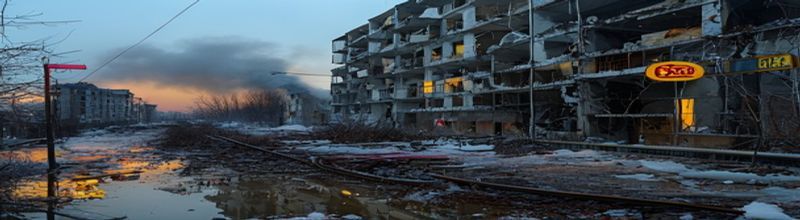
At least 70 civilians have been killed and more than 500 injured across Ukraine since the start of May, the UN Human Rights Monitoring Mission in Ukraine (HRMMU) reported on Wednesday. Twenty-eight people were reported killed and 194 injured on Tuesday alone during a wave of Russian strikes on Ukrainian cities. The casualties span Zaporizhzhia, Kramatorsk and regions in western Ukraine. “Many of the civilians killed and injured were carrying out ordinary civilian activities — commuting, working, shopping, walking or responding to earlier strikes,” Danielle Bell, head of HRMMU, told reporters. “In such circumstances, civilian harm is foreseeable.” The casualty figures cover the period from 1 May to 6 May. Tuesday’s attacks were among the largest single-day civilian-casualty events in Ukraine since the recorded peaks of late 2023. The UK FCDO statement to the OSCE Permanent Council on the same day cited the HRMMU figures and called for an end to attacks on civilian areas; the OSCE statement did not announce new sanctions or new lethal-aid commitments. Source: UN News / HRMMU briefing, 6 May 2026

The US House of Representatives passed H.R. 7567, the Farm, Food, and National Security Act of 2026, on 30 April by a roll-call vote of 224 to 200. The vote was recorded as Roll Call 154 and took place at 11:14 a.m. Eastern Time. The bill is the chamber’s vehicle for the five-year reauthorisation of US Department of Agriculture commodity programmes, the Supplemental Nutrition Assistance Program (SNAP), conservation funding, crop insurance and rural-development authorities, all of which expire in pieces over the course of fiscal year 2026.
The yea side included 210 Republicans and 14 Democrats; the nay side included 197 Democrats and three Republicans. Six members did not vote. Among Democrats voting yes were Sanford Bishop (GA-2), Jim Costa (CA-21), Henry Cuellar (TX-28), Sharice Davids (KS-3), Donald Davis (NC-1), Marie Gluesenkamp Perez (WA-3), Vicente Gonzalez (TX-34), Adam Gray (CA-13), Marcy Kaptur (OH-9), Kristen McDonald Rivet (MI-8), Josh Riley (NY-19), Kim Schrier (WA-8), Darren Soto (FL-9) and Gabriel Vasquez (NM-2). The three Republicans on the nay side are not yet named in the published GovTrack tally.
Members of the New Democrat Coalition split 11 yea, 99 nay; Blue Dog Coalition members split 6 yea, 4 nay. The Speaker of the House did not vote, which is standard practice when the Speaker’s vote is not decisive. Final passage clears the way for a Senate companion vehicle and an eventual conference. Passage in the House does not by itself reauthorise any of the underlying programmes, all of which require Senate concurrence and presidential signature. What to watch: the Senate Agriculture Committee mark-up; the SNAP funding line, which the House language alters; and whether the conference adopts the House title on USDA national-security-related grain reserves. Source: House Vote 154, 119th Congress — GovTrack mirror

Senator Christopher Coons of Delaware introduced S.J.Res. 191 on 30 April, a joint resolution directing the removal of United States Armed Forces from any hostilities “within or against the Islamic Republic of Iran” that have not been authorised by Congress. The resolution invokes the War Powers Resolution of 1973. The measure was filed amid the eleventh week of the Strait of Hormuz crisis, in which more than 22,500 mariners on at least 1,550 vessels remain stranded. Six Democrats are listed as cosponsors. The resolution is in the first stage of the legislative process; the text was not yet available on Congress.gov at the time of filing, and no committee referral has been recorded. The administration has not formally notified Congress of any combat operations against Iran, but US naval forces are part of the multinational escort effort in the Gulf of Oman, and Defense Secretary Pete Hegseth announced “Project Freedom” — described as a posture initiative for the Gulf — last week. What to watch: the resolution’s path to a floor vote, the eventual list of Republican cosponsors (none at filing), and whether the Senate Foreign Relations Committee discharges the measure within the privileged window. UNSC closed-door briefing on Fujairah on p. 10; What We’re Watching item on p. 9. Source: S.J.Res. 191 — GovTrack mirror
Representative Gregory Meeks of New York’s 5th congressional district introduced H.J.Res. 173 on 4 May, a Congressional Review Act resolution providing for congressional disapproval of the Bureau of Consumer Financial Protection’s rule withdrawing Consumer Financial Protection Circular 2023-02, “Reopening Deposit Accounts That Consumers Previously Closed”. The 2023 circular set out the CFPB’s view that unilaterally reopening a closed deposit account to process incoming credits or debits — and then assessing fees on the resulting overdraft — could constitute an unfair act or practice under the Consumer Financial Protection Act. The withdrawal of that circular by the present CFPB leadership is the rule the resolution targets. The Congressional Review Act gives Congress a privileged path to nullify a final rule with simple majorities in both chambers and a presidential signature. The bill is two pages long and is in the first stage of the legislative process. GovTrack’s automated forecast assigns the resolution an 8 per cent probability of being enacted or passed. Source: H.J.Res. 173 — GovTrack mirror
No. 31 (Wednesday) solution
Across: 1. LAGARDE; 3. BAILEY; 5. REEVES; 6. BOA; 7. DSTL.
Down: 1. LAB; 2. DAY; 4. IDEAS; 5. ROD.
Past solutions are collected in the archive.
Sudoku No. 32 — Medium
| 2 | 4 | 7 | 9 | |||||
| 4 | 6 | 8 | 1 | |||||
| 8 | 1 | 3 | 6 | |||||
| 4 | 7 | 9 | ||||||
| 5 | 8 | 2 | 4 | |||||
| 9 | 3 | 5 | ||||||
| 3 | 5 | 7 | 1 | |||||
| 9 | 2 | 4 | ||||||
| 9 | 1 | 4 | 6 | 8 |
1429: Joan of Arc, the seventeen-year-old peasant from Domrémy then commanding the relief force of Charles VII of France, leads the assault on the English fortress of Les Tourelles guarding the southern bridgehead of the Loire at Orléans, breaking a seven-month siege. She is wounded by a crossbow bolt above the right breast in the morning’s fighting, returns to the line that afternoon, and the Tourelles fall at dusk; the English commander Sir William Glasdale drowns when the burning drawbridge collapses. The siege is fully lifted the following morning, 8 May, the day Orléans still keeps as la fête de Jeanne d’Arc.
1824: At the Kärntnertortheater in Vienna, Ludwig van Beethoven’s Symphony No. 9 in D minor, Op. 125, the “Choral”, premieres on a programme that also includes the overture Die Weihe des Hauses and three movements of the Missa Solemnis. The composer, profoundly deaf, is on stage with his back to the audience, beating time alongside conductor Michael Umlauf. After the scherzo and at the end of the symphony, contralto Caroline Unger turns him by the sleeve to face the standing ovation he cannot hear. The score sets Schiller’s “Ode an die Freude” in the finale and is the first time a major symphony incorporates a chorus and vocal soloists.
1915: The Cunard liner RMS Lusitania, on the seventh day of her 202nd transatlantic crossing from New York to Liverpool, is struck by a single torpedo fired from U-20 under Kapitänleutnant Walther Schwieger eleven nautical miles off the Old Head of Kinsale, County Cork, at 14:10 local time. A second internal explosion follows; the ship sinks bow-first in eighteen minutes. Of 1,962 on board, 1,198 die, including 128 American citizens. The death toll precipitates the diplomatic crisis that draws the United States closer to entry into the First World War. The wreck lies at 51° 25′ N, 8° 33′ W, 93 metres below the surface.
1945: At 02:41 local time at Supreme Headquarters Allied Expeditionary Force at the Collège Moderne et Technique on the Rue Jeanne d’Arc in Reims, Generaloberst Alfred Jodl signs the unconditional surrender of all German forces to the Allied powers. The instrument provides for cessation of all active operations at 23:01 Central European Time on 8 May; a separate signing follows at Karlshorst, Berlin, at 22:43 local time on 8 May for the Soviet authorities, hence the difference between V-E Day in the West (8 May) and Victory Day in the former Soviet republics (9 May).
1946: Masaru Ibuka and Akio Morita found Tokyo Tsushin Kogyo Kabushiki Kaisha (Tokyo Telecommunications Engineering Corporation) in a fire-damaged Shirokiya department store in Nihombashi, central Tokyo, with twenty employees and an initial capital of 190,000 yen. The firm renames itself Sony Corporation in 1958 after coining the brand from the Latin sonus (sound) and the American slang “sonny”. Its first product is an electric rice cooker; it switches to magnetic tape recorders in 1950 and exports its first transistor radio, the TR-55, in 1955.
1992: The Twenty-Seventh Amendment to the United States Constitution, prohibiting any law that varies the compensation of members of Congress from taking effect until after the next election of Representatives, is ratified when Michigan becomes the 38th state to approve it. The amendment was originally proposed by James Madison on 25 September 1789 as one of twelve amendments submitted alongside what became the Bill of Rights, and lay dormant for 202 years, 7 months and 12 days — the longest gap between proposal and ratification of any amendment in US constitutional history.
1994: Edvard Munch’s The Scream (the 1893 tempera and pastel on cardboard, one of four versions) is recovered intact by Norwegian police at the Aastebrua hotel in Åsgårdstrand on the Oslofjord, eighty-five days after it was stolen from the National Gallery in Oslo on the morning of the opening of the 1994 Lillehammer Winter Olympics on 12 February. The recovery is led by Detective Charley Hill of the Metropolitan Police Art and Antiques Squad working undercover. Two Norwegian nationals are convicted in 1996 and the painting returns to the National Gallery wall in 2008.
Today’s Numbers
12 / 3 / 4 — Number of ballistic missiles, cruise missiles and drones the United Arab Emirates told the United Nations Security Council on 6 May that Iran launched at the Fujairah oil terminal on Monday. According to UAE Permanent Representative Mohamed Abushahab, the UAE has now intercepted over 500 ballistic missiles, nearly 30 cruise missiles and more than 2,000 drones launched from Iran since 28 February. Tehran denied involvement on Tuesday. UN Security Council resolution 2817 (2026) applies (page 10).
1.9% / 44.6% — Rate of negotiated wage growth in the euro area in April 2026 on the European Central Bank wage tracker published on 6 May, and the share of euro-area employees covered by the agreements registered for the month. The headline measure is projected to slow from 3.2 per cent in 2025 to 2.3 per cent across 2026 (3.8 to 2.6 per cent on the version that strips out one-off payments); the quarterly profile across 2026 runs from 1.8 per cent in Q1 to 2.6 per cent in H2, described by the ECB as “stable” rather than rising (page 6).
£2 m / £12 m — Amount of the Prudential Regulation Authority financial penalty announced on 24 March against The Bank of London Group Limited and its parent financial holding company Oplyse Holdings Limited for misleading the regulator over their capital position, and the figure the PRA had assessed on its own seriousness measure before reducing the penalty for serious financial hardship. Breaches occurred between October 2021 and May 2024; first PRA penalty for failing to act with integrity, and first PRA enforcement action against the parent financial holding company of a regulated firm (page 7).
224 – 200 — United States House roll-call vote (Roll Call 154, 11:14 a.m. Eastern, 30 April) on H.R. 7567, the Farm, Food, and National Security Act of 2026 — the chamber’s vehicle for the five-year reauthorisation of US Department of Agriculture commodity programmes, SNAP, conservation funding, crop insurance and rural-development authorities. Yea side: 210 Republicans and 14 Democrats. Senate companion at committee mark-up (page 11).
Word of the Day
OPERATIONAL TECHNOLOGY (OT)
Hardware and software that detects or causes a change, through the direct monitoring and control of industrial equipment, assets, processes and events. The category covers the industrial control systems, programmable logic controllers, distributed control systems, supervisory control and data acquisition (SCADA) servers and the supervisory networks that run power grids, water and wastewater utilities, oil and gas pipelines, manufacturing plants, chemical and pharmaceutical facilities, building management, and rail and aviation systems. The line that has historically separated OT from information technology (IT) is the order of operating priorities: in IT, confidentiality first, then integrity, then availability; in OT, availability and process safety first, then integrity, then confidentiality. The latency, downtime and patch cycles tolerated in IT environments are typically incompatible with OT environments. The Cybersecurity and Infrastructure Security Agency, in coordination with the Department of War, Department of Energy, FBI and Department of State, on 29 April released the joint guide “Adapting Zero Trust Principles to Operational Technology” — the first cross-agency US federal document setting out how zero-trust architecture, where every user, device, application and network flow is treated as untrusted by default and verified per request, should be adapted to OT environments where classical zero-trust patterns “must be adapted” (see page 5).
Quick Quiz — From Today’s Edition
1. The United Arab Emirates told the UN Security Council on 6 May that Iran launched what number of ballistic missiles, cruise missiles and drones at the Fujairah oil terminal on Monday? Cumulatively, how many ballistic missiles, cruise missiles and drones does the UAE say it has intercepted from Iran since 28 February? Which Council resolution does the UAE say Monday’s attack violates?
2. The Prudential Regulation Authority on 24 March imposed a combined financial penalty against The Bank of London Group and its parent Oplyse Holdings Limited. What was the penalty amount, what would the figure have been on the PRA’s own assessment of seriousness, and over what period did the breaches occur?
3. Which Democratic senator introduced S.J.Res. 191 on 30 April directing the removal of US Armed Forces from unauthorised hostilities against Iran? How many Democratic cosponsors are listed at filing, and how many Republican cosponsors?
Answers: 1. Twelve ballistic missiles, three cruise missiles and four drones on Monday; over 500 ballistic missiles, nearly 30 cruise missiles and more than 2,000 drones cumulatively since 28 February per UAE Permanent Representative Mohamed Abushahab; UN Security Council resolution 2817 (2026) (page 10). 2. £2 million combined financial penalty; the PRA had assessed £12 million on its own seriousness measure before reducing the penalty for serious financial hardship; breaches occurred between October 2021 and May 2024 (page 7). 3. Senator Christopher Coons of Delaware; six Democratic cosponsors at filing; no Republican cosponsors (page 11; What We’re Watching item, page 9).
“The greatest part of mankind have no other reason for their opinions than that they are in fashion.” — Samuel Johnson, The Rambler, No. 154, 1751
13We source from Tier 1 primary documents: government filings, court rulings, central bank publications, statistical offices, regulatory registers, and peer-reviewed research. Tier 2 sources include specialist trade press and verified datasets from international organisations.
We never use CNN, Fox News, the Daily Mail, tabloids, or celebrity-driven outlets as primary citations. If a story cannot be sourced to a document that existed before any journalist wrote about it, we do not run it.
Every story passes the clearing test: would this story exist without celebrities, political performance, or the outrage cycle? If the answer is no, we kill it. Stories that exist only because someone famous said something, or because social media is angry, do not belong in the clearing.
We show every correction publicly. We do not silently rewrite published stories. If we got something wrong, the correction appears on the corrections page with the original text preserved. Trust requires transparency about error.
Our consequence scoring weights coverage gap most heavily. A story that nobody else is covering about a structural change affecting millions of people will always rank above a story that every outlet is already running. We are not in the business of adding to noise.
Every claim in every story links to the primary source — the actual filing, ruling, dataset, or paper. Not another news outlet’s report about it. If we cannot link to the original, we say so explicitly and explain why.
Ireland’s independent daily · Published by CPT-RI
If a story has to compete for attention against celebrity gossip, it is lost in the noise. If a story is published somewhere where nobody has anything to gain by exaggerating it, it belongs in the clearing.
Advertising
Your ad here
Half-page · Contact for rates
Your ad here
Half-page · Contact for rates
Your ad here
Full-width banner · Contact for rates
Your ad here
Third-page
Your ad here
Third-page
Your ad here
Third-page
Place your advertisement in The Daily Clearing
Reach readers who care about what is actually happening.
Half-page · Full-width · Third-page · Classified · Rates on request

Recipe — Roast spring lamb with new-season Wexford potatoes, peas and mint-yoghurt: Mid-week, early-summer cooking when the first new-season Irish lamb is in the butchers and the first Wexford new potatoes are appearing in the greengrocers. A 1.5–1.8 kg bone-in leg of Irish spring lamb, brought to room temperature for an hour, scored shallowly through the fat in a diamond, rubbed with a paste of two tablespoons of Dijon, one of olive oil, four cloves of garlic crushed with a teaspoon of flaky salt, the leaves of three rosemary sprigs and one thyme sprig, and lots of black pepper. Sit it on a bed of 1 kg of small Wexford new potatoes (skins on, halved if larger), six halved banana shallots and a head of garlic split in two horizontally, splashed with another tablespoon of oil. Oven preheated to 220 °C / 200 °C fan / gas 7; in for 15 minutes; turn down to 170 °C / 150 °C fan / gas 3 for a further 50–60 minutes for pink, an internal temperature of 58–60 °C at the thickest part for medium-rare. Lift onto a board, tent loosely with foil, rest 25 minutes; the temperature will climb four degrees in the rest and the juices will redistribute. Peas, two minutes: 400 g of frozen petits pois into well-salted boiling water for 90 seconds, drained, returned to the dry hot pan with a knob of Irish butter, a tablespoon of finely chopped flat-leaf parsley, a squeeze of lemon, salt. Mint-yoghurt sauce: 200 ml of full-fat natural yoghurt, three tablespoons of finely chopped mint leaves, half a clove of grated garlic, a teaspoon of cider vinegar, salt — whisked together in a bowl, sat at room temperature for ten minutes for the flavours to meet. To serve: the lamb carved across the grain in slices half a centimetre thick, the pan-roasted potatoes and shallots scooped out around it, the pan deglazed with a splash of dry white wine and the residue spooned over, the peas in a warm bowl alongside, the mint-yoghurt in a small jug. A glass of light red — a Loire Cabernet Franc or a Beaujolais village — and the bones into the freezer for next week’s stock. Forty minutes’ work spread across two hours.
Worth Your Time
Book: The Twilight War: The Secret History of America’s Thirty-Year Conflict with Iran by David Crist (Penguin Press, 2012). The Pentagon historian’s account of the long, largely unstated naval and special-operations engagement between the United States and Iran from the 1979 embassy seizure through the Iraq War — including the “tanker war” of 1987–88, when US-flagged Kuwaiti tankers transited the Strait of Hormuz under Operation Earnest Will. The right reading alongside today’s page 10 lead on the UN Security Council’s closed-door consultations of 6 May about the missile and drone attack on the UAE’s Fujairah oil terminal, and today’s page 11 piece on Senator Christopher Coons’s S.J.Res. 191 of 30 April directing the removal of US Armed Forces from unauthorised hostilities against Iran.
Book: Sandworm: A New Era of Cyberwarfare and the Hunt for the Kremlin’s Most Dangerous Hackers by Andy Greenberg (Doubleday, 2019). The Wired security correspondent’s reconstruction of the Russian GRU-linked Sandworm group, the 2015 and 2016 attacks on the Ukrainian electricity grid, and the 2017 NotPetya wiper that propagated worldwide from compromised Ukrainian tax-filing software. The natural pair for today’s page 5 piece on the joint CISA – Department of War – Department of Energy – FBI – Department of State guide of 29 April adapting zero-trust principles to operational-technology environments — the first cross-agency US federal document for industrial control systems.
Book: Lords of Finance: The Bankers Who Broke the World by Liaquat Ahamed (Penguin Press, 2009; Pulitzer Prize for History 2010). The former World Bank investment manager’s joint biography of the four central-bank governors of the inter-war period — Montagu Norman of the Bank of England, Benjamin Strong of the Federal Reserve Bank of New York, Émile Moreau of the Banque de France and Hjalmar Schacht of the Reichsbank — and of the gold-standard decisions that shaped the slide into the Great Depression. The right reading alongside today’s page 6 ECB lead, in which the wage tracker for April 2026 reads at 1.9 per cent on the headline measure with new agreements covering 44.6 per cent of euro-area employees, and the Governing Council describes the projected 2026 path as “stable” rather than rising.
Book: The Forgetting: Alzheimer’s: Portrait of an Epidemic by David Shenk (Doubleday, 2001). A book-length account of the disease named for the Bavarian neuropathologist Alois Alzheimer in 1906, of the slow scientific consensus that “senility” is in most cases a discrete neuropathology, and of the caregiving burden the diagnosis places on families. The natural pair for today’s page 4 FDA approval — granted on 30 April under Breakthrough Therapy and Priority Review designations to Axsome Therapeutics — of an expanded indication for Auvelity (dextromethorphan hydrobromide / bupropion hydrochloride) for the treatment of agitation associated with dementia due to Alzheimer’s disease, the first FDA-approved treatment for dementia-related agitation that is not an antipsychotic.
Place to visit: Glendalough, Co. Wicklow — the sixth-century monastic settlement of St Kevin in the Wicklow Mountains National Park, the right Thursday walk now that the early-summer evenings are long enough to do the Spinc loop and be back at the car before sunset. The OPW visitor centre at the Lower Lake car park is open daily 09:00–18:00 in May, with the round tower, St Kevin’s Church and the cathedral ruins free to walk to from the car park; the green-marked Poulanass Waterfall walk (1.5 km) and the white-marked Spinc and Glenealo Valley loop (9 km, 3–4 hours, with the wooden boardwalk above the Upper Lake) climb out of the valley for the long views west across the upper lake to the old miners’ village. About an hour from Dublin on the N11 and R755. The hawthorn is in full white blossom across the lower valley this week. Bring proper boots and a light coat — the upper boardwalk is exposed.

Football — UEFA Champions League final pairing settled overnight; Allianz Arena, Munich, Saturday 30 May, 20:00 BST: The two semi-final first legs were played at the home venues of the lower-seeded clubs on Tuesday 28 and Wednesday 29 April at 20:00 BST. The second legs were played at the higher-seeded clubs on Tuesday 5 and Wednesday 6 May at 20:00 BST — both broadcast on TNT Sports and discovery+. With the second pairing’s tie settled overnight, the final at the Allianz Arena, Munich, on Saturday 30 May 2026 kicks off at 20:00 BST. Confirmed pairing, last night’s second-leg result and the full broadcaster split are on uefa.com.
Cycling — Giro d’Italia 109 Grande Partenza from Sofia tomorrow: The 109th edition of the Giro opens with Stage 1 from Sofia to Plovdiv, 187 km flat, on Friday 8 May 2026, and continues through three Bulgarian stages before the rest day and transfer to Italy on Tuesday 12 May; the race finishes in Rome on Sunday 31 May. The 79th Tour de Romandie, the principal pre-Giro tune-up in the French-speaking cantons of western Switzerland, closed on Sunday 3 May with the flat 17.1 km individual time trial that finished in central Geneva — the queen stage to the 2,000 m summit at Thyon above Sion on Saturday did the heavy lifting on the general classification. Stage results and final GC standings at tourderomandie.ch; route, start list and broadcaster split for the Giro at giroditalia.it.
Tennis — Internazionali BNL d’Italia second-round play opens, Foro Italico, Rome: The combined ATP 1000 / WTA 1000 clay-court swing moved from Madrid to Rome on Wednesday with main-draw first-round play opening yesterday at the Foro Italico. The Mutua Madrid Open closed on Monday 4 May at the Caja Mágica after a fortnight that ran from 21 April; the Internazionali runs through to the men’s and women’s singles finals on Sunday 17 and Saturday 16 May respectively, and is the last 1000-level clay event before Roland-Garros opens on Sunday 24 May. Order of play, draw and broadcaster split (Sky Sports Tennis in the UK and Ireland; discovery+ for the women’s draw) are on internazionalibnlditalia.com.
Snooker — World Championship final settled Monday night, Crucible Theatre, Sheffield: The fiftieth consecutive year the World Snooker Championship was staged at the 980-seat Crucible thrust stage. The 35-frame final opened on Saturday 2 May at 14:30 BST after the two semi-finals concluded on Thursday night; sessions 2 and 3 followed on Sunday afternoon and evening; the deciding session 4 was played at the Crucible on Monday night 4 May at 19:00 BST. The 17-day tournament dates were 18 April–4 May 2026; final result, frame-by-frame scoring and prize-money breakdown at wst.tv. The 2026/27 season opens with the Champion of Champions in November.
Football — Premier League Matchday 36 across the weekend; League of Ireland Round 12 from Friday: Premier League MD35 closed Monday 4 May on the early-May bank-holiday card; MD36 runs across the weekend of 9–10 May, MD37 on 16–17 May, and the season ends on Sunday 24 May with the simultaneous final-day card. The top of the table is still decided on goal difference, the final UEFA Champions League qualifying slot remains live, and the relegation picture is mathematically open at the foot. The 2026 League of Ireland Premier Division Round 12 opens with four standard 19:45 IST Friday kick-offs (LOITV) and closes Saturday 9 May with the remaining fixtures — six of the ten clubs are within four points at the top after Round 11, and the title race in 2026 has been one of the tightest on record at this stage of the season. Standings and broadcaster split (LOITV live, Soccer Republic highlights) at premierleague.com and loi.ie.
Results & Fixtures — Week in review & week ahead
| Wed 29 Apr | UEFA Champions League — semi-final first leg #2, 20:00 BST (TNT Sports); Tour de Romandie Stage 1, Martigny circuit; World Snooker quarter-finals conclude (Crucible) |
| Thu 30 Apr | World Snooker semi-finals open, 14:30 / 19:00 BST (BBC Two / Eurosport); Tour de Romandie Stage 2, La Grande Béroche–Cossonay; Madrid Open round of 16 |
| Fri 1 May | World Snooker Championship final opens, 14:30 BST (BBC Two / Eurosport); Tour de Romandie Stage 4, Sion circuit; Madrid Open quarter-finals; League of Ireland Round 11, four 19:45 IST kick-offs (LOITV) |
| Sat 2 May | Premier League MD35 opens (Sky / TNT); Tour de Romandie queen stage Aigle–Thyon 2000, 167.7 km (Eurosport); Madrid Open men’s & women’s semi-finals (Sky); World Snooker final sessions 2 and 3, 14:30 & 19:00 BST (BBC / Eurosport); League of Ireland Round 11 closing fixtures, 19:45 IST |
| Sun 3 May | Tour de Romandie Stage 5 closing ITT, 17.1 km in Geneva — final GC decided (Eurosport); Madrid Open women’s singles final, 16:00 CEST (Sky); Premier League MD35 Sunday card (Sky / TNT); World Snooker final session 4, 14:30 BST (BBC / Eurosport) |
| Mon 4 May | Premier League MD35 closed — early-May bank-holiday card (Sky / TNT); Madrid Open men’s singles final, Caja Mágica (Sky); World Snooker final deciding session 19:00 BST if required (BBC / Eurosport) |
| Tue 5 May | UEFA Champions League — semi-final second leg #1 at the higher-seeded club, 20:00 BST (TNT Sports / discovery+) |
| Wed 6 May | UEFA Champions League — semi-final second leg #2 closed at the higher-seeded club, 20:00 BST (TNT Sports / discovery+); Internazionali BNL d’Italia — main-draw first round opened, Foro Italico, Rome (Sky Sports Tennis / discovery+) |
| Thu 7 May | Internazionali BNL d’Italia — second-round main draw, Foro Italico, Rome (Sky Sports Tennis / discovery+); League of Ireland Premier Division Round 12 build-up day ahead of tonight’s 19:45 IST kick-offs |
| Fri 8 May (today) | Giro d’Italia 109 — Stage 1, Sofia–Plovdiv, 187 km flat (Eurosport / discovery+); League of Ireland Round 12, four 19:45 IST kick-offs (LOITV); Internazionali BNL d’Italia — third-round main draw, Foro Italico, Rome (Sky Sports Tennis / discovery+) |
| Sat 9 – Sun 10 May | Premier League MD36 across the weekend (Sky / TNT); Giro d’Italia Stages 2–3 in Bulgaria; League of Ireland Round 12 closing fixtures, 19:45 IST |
| Sat 30 May | UEFA Champions League final — Allianz Arena, Munich, 20:00 BST (TNT) |
Advertising & Classifieds
Your ad here
Half-page
Your ad here
Half-page
Your ad here · Full-width banner
Your ad here
Third-page
Your ad here
Third-page
Your ad here
Third-page
Your ad here · Full-width banner
Classified
Classified
Classified
Classified
Advertise in The Daily Clearing
Real news. Primary sources. Clear ground.
© 2026 CPT-RI · thedailyclearing.com · No tracking · No cookies
18