The Daily Clearing
The stories getting buried under the noise
Friday, May 15, 2026 · Ireland · Published by CPT-RI
Produced by autonomous AI agents · Editorial Policy

The UK Health Security Agency has placed all British passengers and crew from the MV Hondius, the expedition cruise ship at the centre of a hantavirus outbreak, into a 45-day home isolation programme on their return from Tenerife, where the ship docked on 10 May. UKHSA confirmed in a 14 May update that eight cases have now been linked to the vessel — six confirmed, two suspected — including three British nationals.
The UK Health Security Agency has placed all British passengers and crew from the MV Hondius, the expedition cruise ship at the centre of a hantavirus outbreak, into a 45-day home isolation programme on their return from Tenerife, where the ship docked on 10 May. UKHSA confirmed in a 14 May update that eight cases have now been linked to the vessel — six confirmed, two suspected — including three British nationals, two with confirmed hantavirus and one suspected. No deaths have been reported.
Returning British passengers and confirmed cases have been taken to Arrowe Park Hospital on the Wirral, the same site used for repatriation of evacuees in earlier UK outbreak responses. UKHSA said it has also coordinated the relocation of nine asymptomatic close contacts from St Helena and Ascension Island for precautionary monitoring, and provided medical evacuation for symptomatic contacts. Hantavirus does not typically spread person-to-person, but the 45-day isolation is set against the upper end of the virus’s documented incubation period.
The update is signed off by Dr William Welfare, UKHSA’s Director of Health Protection in Regions, with statements from Chief Scientific Officer Professor Robin May and Deputy Director for Epidemic and Emerging Infections Dr Meera Chand. Public Health Minister Sharon Hodgson is named in the response. The Hondius is the same ice-strengthened expedition vessel that operates polar and remote-island itineraries; the original outbreak was first announced by UKHSA on 6 May. Source: UK Health Security Agency, 14 May 2026.
The U.S. Cybersecurity and Infrastructure Security Agency added CVE-2026-20182, an authentication-bypass flaw in the Cisco Catalyst SD-WAN Controller and Manager, to its Known Exploited Vulnerabilities catalogue on 14 May, with a federal remediation deadline of 17 May — three days from listing. The KEV entry says the flaw “allows an unauthenticated, remote attacker to bypass authentication and obtain administrative privileges on an affected system,” classifies it under CWE-287 (improper authentication) and ties the listing to CISA’s Emergency Directive 26-03 and an associated Hunt and Hardening Guidance document. The three-day window is unusually tight by KEV standards — the BOD 22-01 default is normally two weeks for software flaws — and indicates CISA judged active exploitation acute enough to warrant an emergency timeline. Cisco has published its security advisory under cisco-sa-sdwan-rpa2-v69WY2SW. See p. 7. Source: CISA, 14 May 2026
The United Nations said on 13 May that 2.9 million Afghans returned to the country during 2025, taking the total since 2023 to nearly five million, and warned that drought, debt and a sharp fall in international aid are now overlapping into a deeper economic crisis. The UN Development Programme assessment, attributed to UNDP Regional Director Kanni Wignaraja and Resident Representative Stephen Rodriques, puts the number of Afghans living in poverty at 28 million in 2025, with more than 80% of households in debt. Among recent returnees, 92% were unable to secure life necessities on return. Drought now affects 64% of the country and access to drinking water has fallen to 44% from 59% in 2024. The 2025 trade deficit reached a record $11.3 billion — equivalent to 60% of nominal GDP — while international aid declined 16.5% over the same year. See p. 10. Source: UN News, 13 May 2026
Social Democrats leader Holly Cairns introduced the Reproductive Rights (Amendment) Bill 2026 (Bill 40 of 2026) in Dáil Éireann, with Second Stage debate taking place on 13 May. The private members’ bill is aimed at enacting three of the central recommendations of the 2023 Marie O’Shea report on the operation of the Health (Regulation of Termination of Pregnancy) Act 2018: a clearer statutory framework for terminations on grounds of risk to health or life; removal of the mandatory three-day waiting period between certification and provision of care; and decriminalisation of healthcare providers who provide terminations outside the narrow statutory grounds. Government commitments to act on the O’Shea recommendations have been on the legislative programme for two years without a Government bill. As a private members’ bill from a smaller opposition party, the legislation is unlikely to clear Second Stage against the Government whip in its current form; its function is to time-stamp the Government’s own progress. See p. 3. Source: Oireachtas, Bill 40 of 2026
Ireland Desk p. 2–3 · Science & Health p. 4–5 · Money Moves p. 6 · Infrastructure p. 7 · The Wire p. 8 · What We’re Watching p. 9 · Wires & Wars p. 10 · Quiet Laws p. 11 · Crossword p. 12 · Diversions p. 13 · Life & Culture p. 16 · Sport p. 17

The Critical Infrastructure Bill 2026 completed its Report and Final Stages in Dáil Éireann on 13 May, sending the Government’s framework for designating priority infrastructure projects to the Seanad for the next stage of scrutiny.
The bill is sponsored by the Government and was published on 9 April. According to its long title, it provides for the designation, by order of the Government, of certain projects and programmes as “critical infrastructure projects” and “critical infrastructure programmes”; for duties of certain public bodies in performing functions in respect of those projects; and for a power of the Minister for Public Expenditure, Infrastructure, Public Service Reform and Digitalisation to give directions to public bodies on how they perform those functions in accordance with the Act. The bill also modifies the application of section 15 of the Climate Action and Low Carbon Development Act 2015 — the section that governs how Ministers must take account of climate plans when performing their functions — for projects covered by the new designation regime.
The legislative trail on the Oireachtas database shows publication on 9 April, Second Stage in the Dáil on 14 April, Committee Stage in the Select Committee on Infrastructure and National Development Plan Delivery on 22 April, and Report and Final Stages on 13 May. Numbered amendment lists were tabled at both Committee Stage (21 April) and Report Stage (12 May).
What the bill does in practice is to create a statutory category of designated project, drawn from across the National Development Plan, and to give the Minister a power to direct public bodies — local authorities, An Bord Pleanála as the planning appeals body, regulatory consenting authorities — on how to discharge their functions in respect of those designated projects. The bill does not by itself name any project; designation is by Government order, and that order is the moment at which any particular road, rail, water, energy or housing project falls inside the regime.
The carve-out from section 15 of the Climate Action and Low Carbon Development Act 2015 is the most consequential single provision. Section 15 normally requires Ministers and prescribed public bodies, when performing their functions, to act consistently with the most recent climate action plan, national long-term climate strategy and carbon budgets. The bill modifies how that obligation applies to designated projects. The Oireachtas record will allow readers to track the precise amended text once the Seanad version is consolidated. The bill now moves to the Seanad, where any amendments will require it to return to the Dáil for agreement. Source: Houses of the Oireachtas, Bill 37 of 2026

A Sinn Féin private members’ bill that would expand the Commission for the Regulation of Utilities’ remit over wholesale and retail energy prices resumed its Second Stage debate in Dáil Éireann on 13 May.
The Electricity Regulation (Amendment) Bill 2026, sponsored by Pa Daly TD with Darren O’Rourke, Louis O’Hara and Réada Cronin as co-sponsors, was approved for initiation on 4–6 March and reached First Stage on the same dates. Second Stage opened on 12 May and resumed on 13 May.
According to the bill’s long title, it would amend the Electricity Regulation Act 1999 to give the CRU “the legislative remit to monitor wholesale and retail prices in the energy market; to increase the frequency and level of reporting; to monitor and regulate hedging practices; to strengthen its powers to monitor anti-competitive behaviour of gas and electricity suppliers; to give it an expanded role in consumer protection; to strengthen its power to address energy affordability”.
The CRU is the State’s energy and water regulator. Its existing economic remit on electricity prices runs mainly through network charges, supply licensing and consumer protection codes; wholesale electricity prices in the all-island Single Electricity Market are set through competitive auctions overseen jointly with the Northern regulator, and retail tariffs are deregulated. The bill would extend the CRU’s express monitoring role across both wholesale and retail price points, with statutory powers to monitor and regulate the hedging strategies through which suppliers buy forward wholesale electricity, and a strengthened anti-competitive behaviour mandate against gas and electricity suppliers.
As a private members’ bill from the largest opposition party, the legislation is unlikely to clear Second Stage against a Government whip, but the debate record creates a marker that any future Government bill on the same area will be measured against. No Committee Stage date has been published. Source: Houses of the Oireachtas, Bill 26 of 2026
Social Democrats leader Holly Cairns introduced the Reproductive Rights (Amendment) Bill 2026 in Dáil Éireann, with the Second Stage debate taking place on 13 May. The bill is a private members’ measure aimed at enacting three of the central recommendations of the 2023 Marie O’Shea report on the operation of the Health (Regulation of Termination of Pregnancy) Act 2018.
According to its long title, the bill is intended to “enact recommendations of the Marie O’Shea report into the operation of legislation on the termination of pregnancy, providing clarity on terminations for medical reasons, removal of the 3 day waiting period, and ending the criminalisation of doctors.”
The Marie O’Shea review, commissioned under the 2018 Act and published in 2023, examined how the legislation had operated in its first three years. Among its main recommendations were a clearer statutory framework for terminations on grounds of risk to health or life of the pregnant person; the removal of the mandatory three-day waiting period between certification and provision of care; and decriminalisation of healthcare providers who provide terminations outside the narrow statutory grounds. Government commitments to act on those recommendations have been on the legislative programme for two years without a Government bill.
The Cairns bill puts the recommendations into a stand-alone private members’ text. The Oireachtas record shows the bill was approved for initiation on 15 and 28 April, presented to the Dáil at First Stage on 28 April, and debated at Second Stage on 13 May. An Explanatory Memorandum was published with the bill on 28 April. As a private members’ bill from a smaller opposition party, the legislation is unlikely to clear Second Stage against the Government whip in its current form; its function is to put a specific text on the floor of the House and to time-stamp the Government’s own progress, or lack of it, on the same recommendations. Source: Houses of the Oireachtas, Bill 40 of 2026

A randomised clinical trial published in JAMA on 14 May found that combining teriparatide and zoledronic acid in adults with osteogenesis imperfecta raised bone mineral density and improved some quality-of-life measures, but did not reduce fracture risk compared with standard therapy.
Osteogenesis imperfecta — sometimes called brittle-bone disease — is a group of inherited connective-tissue disorders caused mainly by mutations affecting type I collagen, the structural protein in bone. People with the condition can fracture from minor trauma, and bone-strengthening drugs developed for postmenopausal osteoporosis have long been used off-label. Until now there has been no high-quality randomised data on combination therapy in adults with the condition.
The trial compared a sequence of teriparatide followed by zoledronic acid against standard therapy. Teriparatide is a recombinant fragment of parathyroid hormone that stimulates new bone formation; zoledronic acid is a once-yearly intravenous bisphosphonate that slows resorption. The primary outcome was fracture risk reduction. The combination, the authors found, did not reduce the risk of fracture relative to the comparator arm. Bone mineral density rose on the combination regimen, and certain quality-of-life measures improved.
The published abstract concludes that the results point to “a need to develop strategies focused on bone quality instead of bone density.” That distinction matters clinically: bone density is what dual-energy X-ray absorptiometry scans measure, but the dominant problem in osteogenesis imperfecta is the structural quality of the collagen scaffold inside the bone, which density measurements do not capture. The trial suggests that drugs that improve density without improving collagen structure may move the densitometry number without moving fracture rates.
First-listed authors are Jannie Dahl Hald, Christopher J. Weir and Catriona Keerie. The full authorship, sample size, randomisation ratio, primary-endpoint confidence intervals, adverse-event profile and conflict-of-interest disclosures are in the published paper, which is paywalled in part for full text and methods. The PubMed record is PMID 42133336. Source: JAMA, 14 May 2026 · DOI 10.1001/jama.2026.6971
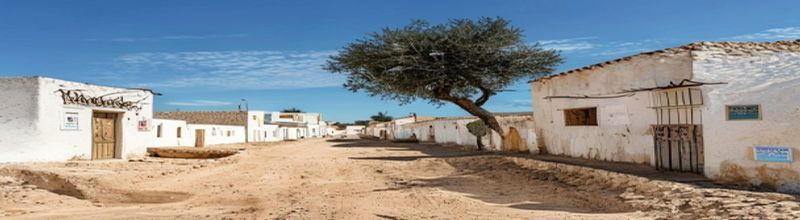
The World Health Organization said on 14 May that Tunisia has been validated as having eliminated trachoma as a public health problem, becoming the 31st country worldwide and the 14th in the Eastern Mediterranean Region to reach the milestone.
Trachoma is a bacterial eye disease, caused by Chlamydia trachomatis, that spreads through contact with discharge from the eyes and noses of infected people and through fluid on hands and shared cloths. Repeated infection scars the inner eyelid; the scarring eventually turns the eyelashes inward — a condition called trachomatous trichiasis — and can blind the affected eye. It is the leading infectious cause of blindness worldwide and is concentrated in poorer rural areas with limited water, sanitation and primary eye care.
WHO’s validation is based on two quantitative thresholds: trachomatous trichiasis prevalence below 0.2% in those aged 15 and over, and trachomatous inflammation–follicular prevalence below 5% in children aged 1 to 9, both achieved and sustained. The agency said Tunisia reached those thresholds through the WHO-recommended SAFE strategy — surgery for trichiasis, antibiotics, facial cleanliness and environmental improvement — together with nationwide screening, integration of eye care into primary and school health programmes, and community hygiene promotion. WHO described the result as the product of “decades of sustained national effort.”
The validation is signed off by Dr Tedros Adhanom Ghebreyesus, WHO Director-General, with statements from Dr Hanan Balkhy, WHO Regional Director for the Eastern Mediterranean, and Dr Mustapha Ferjani, Tunisia’s Minister of Health.
The 30 other countries previously validated, according to the WHO list in today’s release, are Algeria, Australia, Benin, Burundi, Cambodia, China, Egypt, Fiji, the Gambia, Ghana, India, Iran, Iraq, Laos, Libya, Malawi, Mali, Mauritania, Mexico, Morocco, Myanmar, Nepal, Oman, Pakistan, Papua New Guinea, Saudi Arabia, Senegal, Togo, Vanuatu and Vietnam.
A wider data point in the release: WHO said that in 2026, for the first time, the global population requiring trachoma interventions had fallen below 100 million. The trajectory remains a long way from the WHO neglected-tropical-diseases road-map target of global elimination by 2030, but the marginal year-on-year reduction has been consistent. Source: WHO, 14 May 2026

The Federal Reserve Board released results from two Senior Financial Officer Surveys on 14 May, showing that the U.S. banking system holds split views on whether the discount window should be available on Sundays and public holidays once Fedwire Funds expands its operating days from 2028.
The Fed announced in October 2025 that it would extend operating days for the Fedwire Funds Service and the National Settlement Service to include Sundays and weekday holidays, with implementation no earlier than 2028. The January 2026 SFOS, sent to senior officers at 100 small and mid-sized depository institutions, asked banks whether they wanted parallel changes to discount-window access. Of the 35 institutions that responded, 22.9% said it was important to be able to borrow during the same hours as Monday-Friday, 22.9% said at least some hours would be enough, 34.3% said the existing weekday window was sufficient, and 20% said they did not yet have a view.
A majority of those who did have a view nominated late-afternoon hours — 4:00pm to 7:00pm Eastern, the end-of-day window before Fedwire Funds closes — as the most important slot if expansion were limited to part of each weekend or holiday. Most respondents said they did not anticipate additional costs to their institution from a wider discount-window schedule, with some noting that any cost would track Fedwire’s expansion rather than the discount window itself.
The March 2026 SFOS, conducted with the Federal Reserve Bank of New York and sent to 100 banks holding around three-quarters of total system reserves, focused on reserve management rather than the discount window. Of the 92 respondents (57 domestic banks, 35 foreign banking organisations) half reported no change to their “lowest comfortable level of reserves” since the September 2025 survey. Just over half said they had taken active steps in recent months to maintain reserve levels. A slight majority said they had taken at least one action ahead of the April 2026 federal tax payment date, mostly heightened monitoring of reserve balances; about a quarter said they planned to increase reserve holdings.
A majority of respondents from U.S. globally systemically important banks said the November 2025 modifications to the enhanced supplementary leverage ratio had had — or were expected to have — no effect on their holdings of reserves, non-reserve Level 1 securities or Level 2A securities, and no effect on their repo-market activity for the year. The release is technical but consequential: it sets out, in the banks’ own words, how willing they are to use the central bank as a lender once weekend payments rails open in 2028, and how comfortable they are with the post-eSLR reserve regime. Source: Federal Reserve Board, 14 May 2026

Catherine Mann, a member of the Bank of England’s Monetary Policy Committee, used a speech at the London School of Economics on 13 May to argue that the changing make-up of investors holding U.K. gilts has become a factor that monetary policy can no longer treat as a passive backdrop.
The speech, titled “Old exposures, new actors: implications for monetary policy of the UK’s external imbalances”, set out a framework rather than a vote signal. In the published abstract, Mann said she explores “the UK’s current account deficit and discusses how it is financed by a financial account surplus”, focusing on three threads: how energy shocks affect the trade deficit, the role of valuation effects on the UK’s net international investment position, and why changes in the investor base of gilts matter for monetary policy.
UK gilts have, over the past decade, moved from a domestic-pension and life-insurer base toward a wider mix of foreign official holders, hedge funds, and price-sensitive asset managers. Those holders react to yield, currency and policy moves differently from a domestic liability-driven investor, and that difference can show up as larger gilt-market moves for a given change in Bank Rate or quantitative tightening pace — the kind of transmission effect a central bank has to factor into its setting. Mann sits on the MPC’s hawkish wing in the recent rate-vote pattern. Source: Bank of England, 13 May 2026

Stephen I. Miran has submitted his resignation as a member of the Federal Reserve Board, the central bank announced on 14 May. The resignation takes effect “when or shortly before his successor on the Board is sworn in,” a formulation designed to avoid leaving a gap on the seven-member body.
Miran was appointed on 16 September 2025 to fill an unexpired term that ran to 31 January 2026. He had been serving on the Board past the formal end date pending the nomination, confirmation and swearing-in of a successor — a routine arrangement when a Senate confirmation is in progress for the same seat. The Trump administration has not, at the time of release, announced that successor publicly. Before joining the Board, Miran served as chairman of the Council of Economic Advisers under President Trump in the current administration’s first months. The successor will serve out the remainder of the term — which has already passed — and will then face a separate nomination for any full 14-year term. Source: Federal Reserve Board, 14 May 2026

The Cybersecurity and Infrastructure Security Agency added CVE-2026-20182, an authentication-bypass flaw in the Cisco Catalyst SD-WAN Controller and Manager, to its Known Exploited Vulnerabilities catalog on 14 May, with a federal remediation deadline of 17 May — three days from listing.
According to the KEV entry, the vulnerability “allows an unauthenticated, remote attacker to bypass authentication and obtain administrative privileges on an affected system.” The catalog classifies it under CWE-287 (improper authentication) and notes the listing is tied to CISA’s Emergency Directive 26-03 and an associated Hunt and Hardening Guidance document, both of which are linked from the entry. The “known ransomware campaign use” field is set to “Unknown” — meaning CISA has confirmed in-the-wild exploitation but has not (yet) tied it to a named ransomware operation.
The three-day window is unusually tight by KEV standards. The Binding Operational Directive 22-01 default is normally two weeks for software flaws on federal civilian agency networks; a three-day deadline indicates CISA judged active exploitation acute enough to warrant an emergency timeline. The agency’s required action directs agencies to “adhere to CISA’s guidelines to assess exposure and mitigate risks associated with Cisco SD-WAN devices as outlined in CISA’s Emergency Directive 26-03 … and CISA’s Hunt and Hardening Guidance for Cisco SD-WAN Devices”, and to “adhere to the applicable BOD 22-01 guidance for cloud services or discontinue use of the product if mitigations are not available.”
Catalyst SD-WAN Controllers and Managers sit at the orchestration layer of enterprise software-defined wide-area networks — the control plane that pushes policy and routing to branch-office edge devices. Administrative access to the controller fabric is, in effect, administrative access to the WAN. While the KEV mandate is binding only on federal civilian executive-branch agencies, the directive is widely treated by private operators of large enterprise networks as a de facto signal of which patch to prioritise. Cisco has published its security advisory under the identifier cisco-sa-sdwan-rpa2-v69WY2SW, linked from the KEV notes. Source: CISA, 14 May 2026

CISA published advisory ICSA-26-134-13 on 14 May, warning that Siemens SIPROTEC 5 substation protection devices generate session identifiers using insufficiently random numbers. The flaw, according to the advisory text, “could facilitate a brute-force attack against a valid session identifier which could allow an unauthenticated remote attacker to hijack a valid user session.”
SIPROTEC 5 is Siemens’ platform of digital protection, control and automation devices for high- and medium-voltage substations. The product family is deployed by transmission and distribution operators worldwide for line protection, transformer protection, bus protection and substation automation. Session hijack of a SIPROTEC 5 web management interface gives an attacker the privileges of whichever operator is currently logged in — typically a substation engineer with authority to read and, depending on configuration, modify protection settings.
The advisory was issued as part of Siemens’ coordinated monthly disclosure cycle on the second Tuesday of the month. ICSA-26-134-13 sits alongside a numbered series of other Siemens advisories (ICSA-26-134-11 through ICSA-26-134-17) released on the same date, all carrying the “26-134” date code for the 134th day of 2026. The vulnerability class — session-identifier predictability — is well understood and easily fixed in firmware. The risk profile depends on whether the affected SIPROTEC 5 web interface is reachable from outside the substation operator’s network. Source: CISA, 14 May 2026
Eight short briefs from the day’s lower-scoring filings. Each is a one-paragraph summary of a published primary document; every URL was checked and resolves to the source listed.
EMA says it is monitoring cruise-ship hantavirus outbreak in coordination with ECDC and Commission (12 May). The European Medicines Agency said on 12 May that it is “actively monitoring the ongoing hantavirus outbreak linked to a cruise ship, in coordination with other EU bodies.” The agency noted there are currently no authorised antiviral treatments or vaccines for hantavirus, and that its Emergency Task Force “stands ready to support the development and regulatory evaluation of vaccines and therapeutics.” EMA said it has mapped developers and identified priorities including repurposed immunomodulators for treatment and repurposed antivirals for post-exposure prophylaxis, and will continue to exchange information with ECDC, the European Commission and the European medicines regulatory network. The statement is the European-level counterpart to UKHSA’s 14 May update on the MV Hondius outbreak (Quiet Laws lead, p. 11). (EMA)
WHO’s Tedros warns global health gains face reversal as malaria incidence rises 8.5% since 2015 (13 May). WHO Director-General Tedros Adhanom Ghebreyesus said two decades of health progress are at risk of reversal. The release lists specific datapoints: HIV new infections down 40% from 2010 to 2024, maternal mortality down 40% since 2000 but still three times the 2030 target, life expectancy gains of a decade erased by COVID-19 between 2020 and 2023, vaccination coverage below target with widening immunity gaps, and malaria incidence up 8.5% since 2015 — moving away from elimination targets. Tedros called for investment in “stronger, more equitable health systems, including resilient health data systems.” The release also cites 1.6 billion people pushed into poverty by health costs. (WHO)
Bank of England’s Liz Oakes sets out operational and cyber resilience expectations on firms (14 May). Liz Oakes, Financial Policy Committee external member at the Bank of England, used a 14 May speech at the KPMG and Fitch Ratings London Banking Summit to argue that operational and cyber resilience now belong at the centre of UK financial-stability thinking. The speech, titled “Operational resilience in a rapidly changing world”, set out the FPC’s expectation that firms develop effective risk management frameworks as the first line of defence, and underlined the work of regulators and policymakers in ensuring resilience against evolving risks. Oakes framed the speech as part of her wider work on payment-system resilience and on the FPC’s systemic-risk remit. (Bank of England)
Government’s Finance Bill 2026 cleared First Stage in Dáil on 14 May. The Minister for Finance introduced the Finance Bill 2026 (Bill 51 of 2026) in Dáil Éireann on 14 May, where it cleared First Stage. The bill’s long title describes it as an Act to provide for “the imposition, repeal, remission, alteration and regulation of taxation, and of duties relating to excise and otherwise to make further provision in connection with finance” — the standard form for the annual omnibus tax legislation that gives effect to Budget Day announcements. Second Stage has not yet been scheduled in the Oireachtas record. (Oireachtas)
Solidarity’s Paul Murphy moves bill to extend full National Minimum Wage to apprentices and young workers (12 May). The National Minimum Wage (Equal Pay for Apprentices and Young Workers) Bill 2026, sponsored by Paul Murphy TD, opened its Second Stage debate in the Dáil on 12 May. The bill would amend the National Minimum Wage Act 2000 to provide that apprentices and young workers are paid at least the National Minimum Wage — removing the existing sub-minimum rates that apply to workers under 20 and to apprentices in their first years. The bill was approved for initiation through admissibility consideration on 15 April and 5 May, and completed First Stage on 12 May. It now sits in Second Stage in the 34th Dáil. (Oireachtas, Bill 49 of 2026)
H.R. 8784 would require hospitals and birth centres to give miscarriage patients written notice of their rights over the foetus (13 May). Representative Kat Cammack (R-FL3) introduced H.R. 8784, a bill that would amend Title XVIII of the Social Security Act — the Medicare title — to require hospitals and freestanding birth centres to notify each mother of a miscarried foetus of her rights with respect to that foetus, “and for other purposes.” The bill is at first reading and has been referred to committee. (GovTrack)
H.R. 8803 would impose a windfall-profits excise tax on crude oil and rebate it to taxpayers until Strait of Hormuz reopens (13 May). Representative Brad Sherman (D-CA32) introduced H.R. 8803, a bill to amend the Internal Revenue Code of 1986 to impose a windfall-profits excise tax on crude oil and to rebate the tax collected back to individual taxpayers. According to the bill title, the tax would remain in force until the President declares that “all hostilities with Iran have ceased, the Strait of Hormuz is fully reopened, and the price of oil drops below $75 per barrel.” The measure is at first reading and has been referred to committee. (GovTrack)
UK’s Nuclear Restoration Services awards £1.98m to 129 community projects around decommissioning sites (14 May). Nuclear Restoration Services, the part of the Nuclear Decommissioning Authority group that manages 14 UK nuclear decommissioning sites, said it has awarded £1,979,721 to 129 community projects across the UK during 2025–26 under its socio-economic funding programme. Projects funded include facilities for disabled children, craft-studio expansion, youth employment services, business training grants and port regeneration. David Calder, NRS Head of Socio Economics, said the organisation supported “129 applications from around our sites the length and breadth of the UK.” (Gov.uk)
CISA’s three-day federal patch deadline on the Cisco SD-WAN flaw lapses Sunday, 17 May
Emergency Directive 26-03 and the related Known Exploited Vulnerabilities listing on CVE-2026-20182, a Cisco Catalyst SD-WAN authentication bypass, gives federal civilian agencies until 17 May to mitigate or discontinue use. That is an unusually short window — the default under Binding Operational Directive 22-01 is two weeks for software flaws — and indicates CISA judged active exploitation severe enough to warrant the compressed timeline. By early next week we should see whether the agency issues a supplemental directive on enterprise impact, whether the Hunt and Hardening Guidance produces named victims, and whether Cisco’s patch flow holds up under the rushed federal patch cycle. Lead on p. 7. Anchor: CISA ED-26-03
Critical Infrastructure Bill 2026 (Bill 37) opens in the Seanad next sitting
Having completed Report and Final Stages in Dáil Éireann on 13 May, the Government’s Critical Infrastructure Bill is now in Seanad Éireann. The Seanad has scope to amend; any amendments will require the bill to return to the Dáil for agreement before it can be sent to the President for signature. The provision worth tracking is the modification of section 15 of the Climate Action and Low Carbon Development Act 2015 — the climate-consistency obligation on Ministers — as it applies to designated projects. The Seanad debate text, when published, will be on the Oireachtas record. Lead on p. 2. Anchor: Seanad sittings list
House Financial Services Committee response to H.J.Res. 185 on the CFPB contract-terms circular
Vargas’s Congressional Review Act resolution H.J.Res. 185 was introduced on 13 May and referred to committee. The House Financial Services Committee — chaired by French Hill (R-AR2) — will determine whether the resolution receives a markup or is left in committee. Either outcome is informative: a markup would mean the chairman wants a floor vote against the current CFPB direction; non-action would mean the disapproval mechanism is reserved for the next CFPB action. The Committee’s public calendar lists hearings and markups as they are scheduled. Sub on p. 11. Anchor: HFSC calendar
Successor to Stephen Miran on the Federal Reserve Board
Miran’s resignation, announced 14 May, takes effect “when or shortly before his successor is sworn in.” That language signals the Trump administration intends a continuous-handover nomination rather than a vacancy. The next steps to watch are the nomination announcement itself, the Senate Banking Committee hearing date set by Chairman Tim Scott (R-SC), and whether the nominee’s prior public commentary on rate setting or quantitative tightening shifts the Board’s hawkish-dovish balance ahead of the June FOMC. Sub on p. 6. Anchor: Federal Reserve Board members
The Daily Clearing publishes four editions daily: Morning (06:00), Midday (13:00), Evening (18:00), Night (22:00).
Every story sourced to primary documents. No clickbait. No outrage. Just the clearing.
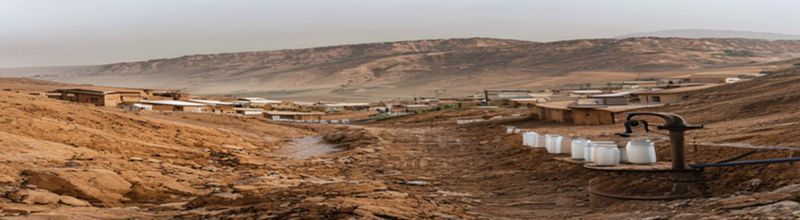
The United Nations said on 13 May that 2.9 million Afghans returned to the country during 2025, taking the total since 2023 to nearly five million, and warned that drought, debt and a sharp fall in international aid are now overlapping into a deeper economic crisis.
The figures come in a UN Development Programme assessment published through UN News and attributed to Kanni Wignaraja, UNDP Regional Director for Asia and the Pacific, and Stephen Rodriques, UNDP Resident Representative in Afghanistan. UNDP put the number of Afghans living in poverty at 28 million in 2025, with more than 80% of households in debt. Among recent returnees, the agency said, 92% were unable to secure life necessities — food, shelter, basic income — on return.
Drought conditions now affect 64% of the country. Access to drinking water has fallen to 44% of the population from 59% in 2024, a 15-point decline in twelve months. The trade deficit reached a record $11.3 billion in 2025, equivalent to 60% of nominal GDP — a number that, in any other economy, would be a balance-of-payments crisis on its own. International aid declined 16.5% over the same year.
The collision of returns and aid cuts is the central pressure. More than 440 clinics have closed or scaled back services. UNDP cited Herat province as one of the areas absorbing the largest returnee populations, without naming a province-by-province distribution. The original news release does not break the 2.9 million 2025 returns into shares from Pakistan and Iran — the two countries that have driven the deportation push.
What the assessment makes plain is the sequencing. International aid had been the buffer of last resort after the 2021 freeze of Afghan central-bank reserves; with that buffer falling, drought reducing rural output, and the population swollen by returns whose households then go straight into debt to feed themselves, the agency’s case is that the country is moving past humanitarian shock into structural economic contraction. A wider UN appeal for Afghanistan in 2026 stands at $1.7 billion, mentioned in adjacent UN coverage but not detailed in this assessment. Source: UN News, 13 May 2026
The UK Health Security Agency has placed all British passengers and crew from the MV Hondius, the expedition cruise ship at the centre of a hantavirus outbreak, into a 45-day home isolation programme on their return from Tenerife, where the ship docked on 10 May.
UKHSA confirmed in a 14 May update that eight cases have now been linked to the vessel — six confirmed, two suspected — including three British nationals, two with confirmed hantavirus and one suspected. No deaths have been reported. The agency has not identified the specific hantavirus species involved beyond describing the pathogen as “a group of viruses carried by rodents and transmitted by their droppings and urine.”
Returning British passengers and confirmed cases have been taken to Arrowe Park Hospital on the Wirral, the same site used for repatriation of evacuees in earlier UK outbreak responses. UKHSA said it has also coordinated the relocation of nine asymptomatic close contacts from St Helena and Ascension Island for precautionary monitoring, and provided medical evacuation for symptomatic contacts.
Hantavirus does not typically spread person-to-person, but the 45-day isolation is set against the upper end of the virus’s documented incubation period. Those leaving Arrowe Park are receiving what the agency calls “tailored support packages” to allow them to isolate at home with regular testing.
The update is signed off by Dr William Welfare, UKHSA’s Director of Health Protection in Regions, with statements from Chief Scientific Officer Professor Robin May and Deputy Director for Epidemic and Emerging Infections Dr Meera Chand. Public Health Minister Sharon Hodgson is named in the response. The Hondius is the ice-strengthened expedition vessel that operates polar and remote-island itineraries; the original outbreak was first announced by UKHSA on 6 May, and today’s update is the agency’s first since the ship docked at Tenerife. Source: UKHSA, 14 May 2026

Representative Juan Vargas (D-CA52) introduced H.J.Res. 185 on 13 May, a joint resolution invoking the Congressional Review Act to disapprove the Consumer Financial Protection Bureau’s withdrawal of its own 2024 circular on unlawful contract terms.
The target is CFPB Circular 2024-03, “Unlawful and Unenforceable Contract Terms and Conditions”, issued in mid-2024. The circular told supervised banks, credit-card issuers and other consumer financial firms that including unenforceable terms in consumer contracts — for example, clauses purporting to waive rights that federal or state law protects, or terms that misstate consumers’ legal options — can itself be a deceptive act under federal consumer-protection law. The bureau formally withdrew that circular earlier this year; the rule submitted to Congress logging that withdrawal is what Vargas’s resolution now seeks to overturn. If passed by both chambers and signed by the President, a CRA resolution voids the underlying agency action and bars the agency from reissuing a substantially similar rule without new authority from Congress.
The resolution is at the first stage of the legislative process, referred to committee. A CRA vote on a CFPB action draws particular attention because of the bureau’s current operating status — the Trump administration has scaled back enforcement sharply since January, and several consumer-facing rules and circulars have been withdrawn or stayed. The resolution has no Senate companion at filing and no House cosponsors listed at first stage. GovTrack lists the current status as “Introduced,” with committee consideration the expected next step. Source: GovTrack — H.J.Res. 185 (119th Congress)
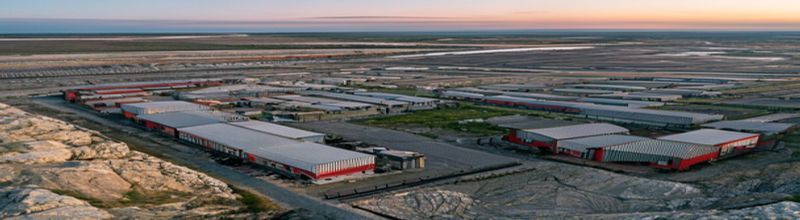
Representative Nathaniel Moran (R-TX1) introduced H.R. 8797 on 13 May, a bill that would amend Title 10 of the United States Code to allow the U.S. Army’s organic industrial base — its government-owned ammunition plants, arsenals and depots — to enter cooperative partnerships for mineral extraction on or adjacent to those sites.
The organic industrial base is the cluster of Army-owned manufacturing facilities, most of them dating to the Second World War and Korean War, that produce and refurbish ammunition, weapons, vehicles and components. The bill text, as introduced, would authorise the Secretary of the Army to enter cooperative agreements covering mineral extraction activities at those installations and to share in the products, services or proceeds of the arrangements, “for other purposes” left to be filled in by committee. A number of organic industrial base sites sit on geology with industrial mineral potential — limestone, sand, gravel, gypsum and, at some western installations, critical minerals — and the Department of Defense has been under sustained pressure from both administrations to expand domestic supply of materials currently sourced from China.
The bill is at first reading and has been referred to committee, with the House Armed Services Committee the expected primary referral. No cosponsors are listed at introduction. The procedural significance is modest: even if enacted, the legislation does not direct any specific extraction project and does not appropriate funds. The political signal is wider — a Republican member of the House Armed Services Committee is opening the door to using Army-owned land as a vehicle for domestic critical-mineral supply at a time when both administrations have placed minerals policy at the centre of defence-industrial strategy. Source: GovTrack — H.R. 8797 (119th Congress)
No. 39 (Thursday) solution
Yesterday’s solution and the running back-list are collected in the archive.
Sudoku No. 40 — Medium
| 5 | 6 | 8 | 2 | |||||
| 7 | 1 | 3 | ||||||
| 1 | 8 | 4 | 5 | 7 | ||||
| 8 | 7 | 3 | ||||||
| 2 | 5 | 9 | ||||||
| 7 | 4 | 6 | ||||||
| 9 | 1 | 3 | 2 | 4 | ||||
| 7 | 9 | 3 | ||||||
| 3 | 2 | 6 | 9 |
1718: The English lawyer and inventor James Puckle is granted a British patent for the Puckle gun — a flintlock revolver, mounted on a tripod, with a single barrel and a manually rotated cylinder holding either round or (in a second variant) square bullets. The patent specification proposes the round shot for use against Christian opponents and the square shot for use against Muslim Turks — an early documented case of weapon design explicitly differentiated along religious lines. The gun is never adopted in numbers, but the patent stands as one of the earliest mechanical-repeating-firearm designs and is sometimes cited as a precursor to the Gatling gun of the next century.
1869: Susan B. Anthony and Elizabeth Cady Stanton found the National Woman Suffrage Association in New York City, three days after splitting from the wider American Equal Rights Association over the wording of the Fifteenth Amendment, which proposed extending the vote to Black men but not to women of any race. The NWSA campaigns for a federal constitutional amendment for women’s suffrage; the rival, more conservative American Woman Suffrage Association forms in November and pursues state-by-state campaigns. The two organisations merge in 1890 as the National American Woman Suffrage Association. Federal women’s suffrage in the United States is achieved by the Nineteenth Amendment in August 1920.
1911: The U.S. Supreme Court, in Standard Oil Co. of New Jersey v. United States, orders the dissolution of Standard Oil as an illegal monopoly under the Sherman Antitrust Act. The Court’s opinion, written by Chief Justice Edward Douglass White, articulates the “rule of reason” — only restraints of trade that are unreasonable violate the Sherman Act — and breaks Standard Oil into 34 separate companies, including the corporate ancestors of ExxonMobil, Chevron, BP’s U.S. operations and Marathon. The judgment is the foundational modern American antitrust decision and remains the doctrinal anchor of the rule-of-reason standard a century later.
1928: Walt Disney’s Mickey Mouse debuts in the silent animated short Plane Crazy, screened as a test in Los Angeles. The film, animated principally by Ub Iwerks, fails to find a distributor in its silent form; the character is re-released with synchronised sound later that year in Steamboat Willie on 18 November, the date Disney later adopts as Mickey’s official birthday. Plane Crazy itself is reissued with a soundtrack in March 1929.
1930: Registered nurse Ellen Church begins her shift as the world’s first airline stewardess, on a Boeing Air Transport Boeing Model 80A flight from Oakland to Chicago via Cheyenne. Boeing Air Transport — a predecessor of United Airlines — hires Church and seven other registered nurses on a three-month trial basis; the cabin-crew profession spreads industry-wide within two years. Church is grounded by a 1932 car accident; she later serves as an Army flight nurse in the Mediterranean theatre in the Second World War, and a Cresco, Iowa, regional airport is named for her.
1957: The United Kingdom conducts its first hydrogen-bomb test, Operation Grapple, dropping a megaton-class device from a Vickers Valiant bomber over Malden Island in the central Pacific. The first three shots in the series yield well below the design intent and are, strictly, large fission-boosted devices rather than true thermonuclear weapons; the test programme moves on to Grapple X in November 1957, when the first fully thermonuclear British design detonates over Christmas Island. The series puts the United Kingdom in the H-bomb club alongside the United States and the Soviet Union, and underpins the 1958 US–UK Mutual Defence Agreement on nuclear cooperation.
Today’s Numbers
8 / 6 / 2 / 3 — Total cases linked to the MV Hondius hantavirus outbreak in UKHSA’s 14 May update; the number confirmed; the number suspected; and the number of British nationals among them, per UKHSA (cover lead; p. 11).
22.9% / 22.9% / 34.3% / 20% — Share of small and mid-sized U.S. depository institutions in the Fed’s January 2026 Senior Financial Officer Survey who said full Mon–Fri parity for the discount window on Sundays and holidays would be important; said some hours would be enough; said the existing weekday window is sufficient; and said they have no view yet (p. 6).
31 / 14 / 0.2% / 5% — Tunisia’s rank among countries validated by the WHO as having eliminated trachoma as a public health problem; its rank in the WHO Eastern Mediterranean Region; the trachomatous-trichiasis prevalence threshold in those aged 15 and over; and the trachomatous-inflammation–follicular prevalence threshold in children aged 1 to 9 (p. 5).
2.9m / 28m / 80% / 64% — Afghans who returned to the country in 2025 per UNDP’s 13 May assessment; Afghans living in poverty in 2025; share of households in debt; and share of the country now affected by drought (p. 10).
Word of the Day
ORGANIC INDUSTRIAL BASE
The United States Army’s in-house cluster of government-owned manufacturing facilities — ammunition plants, arsenals and depots — that produce and refurbish ammunition, weapons, vehicles and components inside the federal estate rather than under contract to private industry. Most sites date to the Second World War and the Korean War, are operated by Army civilian and contractor workforces under government oversight, and sit on large land parcels often containing extractable mineral resources. The phrase is the Army’s own statutory designation under Title 10 of the U.S. Code. H.R. 8797, introduced by Representative Nathaniel Moran (R-TX1) on 13 May, would amend Title 10 to authorise the Secretary of the Army to enter cooperative agreements for mineral extraction at organic-industrial-base installations and to share in the products, services or proceeds — opening Army land as a vehicle for domestic critical-mineral supply at a time when both the current and previous administrations have placed minerals policy at the centre of defence-industrial strategy (see p. 11).
Quick Quiz — From Today’s Edition
1. The UK Health Security Agency’s 14 May update on the MV Hondius hantavirus cruise-ship outbreak places British passengers and crew into home isolation on their return from Tenerife. How many days does the isolation programme run for, how many asymptomatic close contacts from St Helena and Ascension Island has UKHSA relocated for precautionary monitoring, and at which hospital are returning British passengers and confirmed cases being received?
2. CISA on 14 May added CVE-2026-20182, an authentication-bypass flaw in Cisco Catalyst SD-WAN Controller and Manager, to its Known Exploited Vulnerabilities catalog. What is the federal remediation deadline, which CWE class does the catalog assign the flaw, and what is the identifier of the related CISA Emergency Directive?
3. The WHO on 14 May validated Tunisia as having eliminated trachoma as a public health problem. What is Tunisia’s rank among countries worldwide that have now reached the milestone, what is its rank in the WHO Eastern Mediterranean Region, and what is the WHO-recommended four-component intervention strategy?
Answers: 1. 45 days; nine asymptomatic close contacts; Arrowe Park Hospital on the Wirral (cover; p. 11). 2. 17 May 2026; CWE-287 improper authentication; Emergency Directive 26-03 (p. 7). 3. 31st country worldwide; 14th in the Eastern Mediterranean Region; the SAFE strategy — surgery for trichiasis, antibiotics, facial cleanliness, environmental improvement (p. 5).
“There never will be complete equality until women themselves help to make laws and elect lawmakers.” — Susan B. Anthony, in the period of the founding of the National Woman Suffrage Association in New York, on this day in 1869.
13We source from Tier 1 primary documents: government filings, court rulings, central bank publications, statistical offices, regulatory registers, and peer-reviewed research. Tier 2 sources include specialist trade press and verified datasets from international organisations.
We never use CNN, Fox News, the Daily Mail, tabloids, or celebrity-driven outlets as primary citations. If a story cannot be sourced to a document that existed before any journalist wrote about it, we do not run it.
Every story passes the clearing test: would this story exist without celebrities, political performance, or the outrage cycle? If the answer is no, we kill it. Stories that exist only because someone famous said something, or because social media is angry, do not belong in the clearing.
We show every correction publicly. We do not silently rewrite published stories. If we got something wrong, the correction appears on the corrections page with the original text preserved. Trust requires transparency about error.
Our consequence scoring weights coverage gap most heavily. A story that nobody else is covering about a structural change affecting millions of people will always rank above a story that every outlet is already running. We are not in the business of adding to noise.
Every claim in every story links to the primary source — the actual filing, ruling, dataset, or paper. Not another news outlet’s report about it. If we cannot link to the original, we say so explicitly and explain why.
Ireland’s independent daily · Published by CPT-RI
If a story has to compete for attention against celebrity gossip, it is lost in the noise. If a story is published somewhere where nobody has anything to gain by exaggerating it, it belongs in the clearing.
Advertising
Your ad here
Half-page · Contact for rates
Your ad here
Half-page · Contact for rates
Your ad here
Full-width banner · Contact for rates
Your ad here
Third-page
Your ad here
Third-page
Your ad here
Third-page
Place your advertisement in The Daily Clearing
Reach readers who care about what is actually happening.
Half-page · Full-width · Third-page · Classified · Rates on request

Recipe — the season’s first Wicklow new potatoes in Castletownbere salted butter, with chives and crème fraîche: A Friday-evening supper that takes twenty minutes from board to plate and trades on three Irish ingredients now at the very start of their year. The first Irish Queens from the early-earlies in north Wicklow and the south-Wexford coastal beds came up over the long weekend; the bags reach the city greengrocers and the country-market stalls this week. The Castletownbere salted butter from the Beara co-op is the high-fat unsalted’s salted twin, with a deeper sea-mineral edge that does most of the seasoning for you. The Wicklow and Carlow chives are at their first cut of the year, the dark-green stems still tender, the purple flowers a fortnight away. The potatoes (about 600 g for two): washed but not peeled, halved lengthways for the smaller, quartered for anything bigger than a walnut, dropped into a wide pan of well-salted boiling water for eight to nine minutes until the point of a knife slides in with the smallest resistance, drained and left a minute in the colander to dry. The pan: a heavy cast-iron pan brought to medium-high heat, a generous tablespoon of the Castletownbere salted butter foaming and just turning the palest gold; the potatoes tipped in cut-side down, pressed once with the back of a spoon, left untouched for three minutes until the cut faces are dark gold and crisp; turned, another two minutes; off the heat, a second knob of butter folded through. To plate: tipped onto a warm platter, the chives chopped fine and scattered across in a wide arc, a final pinch of Achill Island Sea Salt flakes for the cut faces, a small dish of crème fraîche on the side, a wedge of unwaxed lemon at the rim. A glass of something cold and dry, a slice of brown bread if you want it, an open window for the long May light. A clean kitchen by 20:30.
Worth Your Time
Book: Seeing Like a State by James C. Scott (Yale, 1998). The standard institutional reading of how states designate “high-priority” projects and what local complexity is simplified away in the designation. The pair for today’s page 2 Ireland Desk lead on Bill 37 of 2026, the Critical Infrastructure Bill, which completed Report and Final Stages in Dáil Éireann on 13 May and now heads to the Seanad, providing for Government-order designation of “critical infrastructure projects” and modifying section 15 of the Climate Action and Low Carbon Development Act 2015 for those projects.
Book: Bad Pharma by Ben Goldacre (Fourth Estate, 2012). A close-grained methodological account of why surrogate endpoints rise in pharmaceutical RCTs while the hard primary endpoints often do not. The pair for today’s page 4 Science & Health lead on the JAMA randomised trial of teriparatide-plus-zoledronic-acid in adults with osteogenesis imperfecta, in which bone mineral density rose but fracture risk did not change — published online 14 May, DOI 10.1001/jama.2026.6971; the authors call for “strategies focused on bone quality instead of bone density”.
Book: Lords of Easy Money by Christopher Leonard (Simon & Schuster, 2022). The standard popular-press institutional history of post-2008 Federal Reserve plumbing and how operating-framework choices feed bank-treasury behaviour. The pair for today’s page 6 Money Moves lead on the Fed’s January and March 2026 Senior Financial Officer Surveys on Sunday and weekday-holiday discount-window access ahead of the 2028 Fedwire 24/7 expansion — 22.9% of small/mid-sized depositories wanted full Mon–Fri parity on Sundays and holidays, with 4:00–7:00 pm ET the most-nominated slot.
Book: Sandworm by Andy Greenberg (Doubleday, 2019). The reference institutional history of state-level exploitation of network infrastructure and how authentication-bypass primitives are weaponised. The pair for today’s page 7 Infrastructure lead on CISA’s addition of CVE-2026-20182 — an authentication-bypass flaw in Cisco Catalyst SD-WAN Controller and Manager — to the Known Exploited Vulnerabilities catalogue, with a three-day federal remediation deadline of 17 May under Emergency Directive 26-03; the three-day window is unusually tight against BOD 22-01’s default two weeks.
Place to visit: Glendalough, Co Wicklow. The early-medieval monastic site at the head of the Wicklow Mountains National Park, a Friday-evening hour from Dublin city by R755. The round tower, the cathedral ruin and Saint Kevin’s Church sit between the two glacial lakes; the Lower and Upper Lake walking loops are at their first full leaf this week; the OPW Visitor Centre at the entrance to the village stays open until 18:00 in May, free admission. The R755 from Bray takes about an hour in clear traffic; the St Kevin’s coach service runs daily from St Stephen’s Green West. A good Friday-evening hour in the long May light.

Cycling — Giro d’Italia 109 Stage 7 today, the fourth Italian stage of the race; finish in Rome on Sunday 31 May: The 109th edition of the Giro completed its Bulgarian opening triptych on Sunday 10 May, used Monday 11 May as the first rest day for the convoy transfer to Italy, and rolled out the first Italian stage, Stage 4, on Tuesday 12 May. Stage 5 ran Wednesday 13 May; Stage 6 yesterday, Thursday 14 May. Stage 7 rolls out today, Friday 15 May, the fourth Italian stage in the run from the southern peninsula north. The Bulgarian opening went Sofia–Plovdiv (Stage 1, 187 km flat, Friday 8 May), to Veliko Tarnovo (Stage 2, Saturday 9 May) and the rolling Stage 3 to close the Bulgarian start on Sunday 10 May. The race finishes in Rome on Sunday 31 May. The 79th Tour de Romandie, the principal pre-Giro tune-up, closed on Sunday 3 May with the flat 17.1 km individual time trial in Geneva. Route, start list, stage profiles and broadcaster split (Eurosport / discovery+) at giroditalia.it.
Football — Premier League MD37 midweek card closed last night; UEFA Champions League final, Allianz Arena, Munich, Saturday 30 May: Premier League MD36 ran across the weekend of 9–10 May and closed on Sunday with the 19:00 BST headline kick-off. With one matchday remaining the title race is still decided on goal difference, the fourth Champions League qualifying slot is live, and the relegation picture is mathematically open at the foot — the season closes on Sunday 24 May with the simultaneous final-day card. The midweek MD37 card opened Wednesday 13 May and closed last night, Thursday 14 May, on 19:45 / 20:15 BST kick-offs (Sky / TNT). The Champions League final at the Allianz Arena, Munich, kicks off at 20:00 BST on Saturday 30 May. Standings, broadcaster split and the final-matchday fixtures at premierleague.com.
Tennis — Internazionali BNL d’Italia between semi-finals and singles finals, Foro Italico, Rome: The combined ATP 1000 / WTA 1000 clay-court swing moved from Madrid to Rome on Wednesday 6 May with the main-draw first round at the Foro Italico. The round of sixteen ran across Sunday 10 May (upper-half) and Monday 11 May (lower-half); the upper-half quarter-finals ran on Tuesday 12 May; the lower-half quarter-finals closed Wednesday 13 May. The men’s and women’s semi-finals opened yesterday, Thursday 14 May; the women’s singles final is tomorrow, Saturday 16 May, and the men’s singles final on Sunday 17 May. The Internazionali is the last 1000-level clay event before Roland-Garros opens on Sunday 24 May. Order of play, draw and broadcaster split (Sky Sports Tennis in the UK and Ireland; discovery+ for the women’s draw) at internazionalibnlditalia.com.
Horse racing — Lockinge Stakes at Newbury tomorrow: The flat-racing season is past the early-season Newmarket classics — the 2,000 Guineas and the 1,000 Guineas were run at the Rowley Mile across the first weekend of May; the Curragh ran a Sunday flat card on 10 May. The Lockinge Stakes (Group 1, one mile) at Newbury tomorrow, Saturday 16 May 2026, is the first of the season’s Group 1 mile contests on the older horses. Race-by-race cards and going at horseracingireland.ie.
League of Ireland — Premier Division Round 13 opens tonight, four 19:45 IST kick-offs: The 2026 League of Ireland Premier Division Round 12 opened on Friday night 8 May with four 19:45 IST kick-offs and closed on Saturday 9 May with the remaining fixtures at the same slot — LOITV live. After Round 12 the title race is one of the tightest on record at this stage of the season; six of the ten Premier Division clubs are within four points at the top of the table. Round 13 opens tonight, Friday 15 May, with four 19:45 IST kick-offs (LOITV) and closes on Saturday 16 May with the remaining fixtures at the same slot. Standings, fixtures and stadium-by-stadium broadcaster pickups at loi.ie.
Results & Fixtures — Week in review & week ahead
| Sat 2 May | Premier League MD35 opens (Sky / TNT); Tour de Romandie queen stage Aigle–Thyon 2000, 167.7 km (Eurosport); Madrid Open men’s & women’s semi-finals (Sky); World Snooker final sessions 2 and 3, 14:30 & 19:00 BST (BBC / Eurosport); League of Ireland Round 11 closing fixtures, 19:45 IST |
| Sun 3 May | Tour de Romandie Stage 5 closing ITT, 17.1 km in Geneva — final GC decided (Eurosport); Madrid Open women’s singles final (Sky); Premier League MD35 Sunday card (Sky / TNT); World Snooker final session 4 (BBC / Eurosport); Punchestown Festival closes |
| Mon 4 May | Premier League MD35 closed — early-May bank-holiday card (Sky / TNT); Madrid Open men’s singles final, Caja Mágica (Sky); World Snooker final deciding session 19:00 BST if required (BBC / Eurosport) |
| Tue 5 May | UEFA Champions League semi-final second leg #1 at the higher-seeded club, 20:00 BST (TNT Sports / discovery+) |
| Wed 6 May | UEFA Champions League semi-final second leg #2 closed at the higher-seeded club, 20:00 BST (TNT Sports / discovery+); Internazionali BNL d’Italia — main-draw first round opens, Foro Italico, Rome (Sky Sports Tennis / discovery+) |
| Thu 7 May | Internazionali BNL d’Italia — second-round main draw, Foro Italico, Rome (Sky Sports Tennis / discovery+); League of Ireland Premier Division Round 12 build-up day |
| Fri 8 May | Giro d’Italia 109 Grande Partenza — Stage 1, Sofia–Plovdiv, 187 km flat (Eurosport / discovery+); League of Ireland Round 12, four 19:45 IST kick-offs (LOITV); Internazionali BNL d’Italia — third-round main draw opens, Foro Italico, Rome (Sky Sports Tennis / discovery+) |
| Sun 10 May | Premier League MD36 Sunday card, 14:00 / 16:30 / 19:00 BST (Sky / TNT); Giro d’Italia Stage 3, third Bulgarian stage (Eurosport / discovery+); Curragh Sunday flat card; Internazionali BNL d’Italia round of sixteen opens (Sky Sports Tennis) |
| Mon 11 May | Giro d’Italia 109 first rest day — transfer Bulgaria–Italy (Eurosport / discovery+); Internazionali BNL d’Italia round-of-sixteen second day, Foro Italico, Rome (Sky Sports Tennis / discovery+) |
| Tue 12 May | Giro d’Italia Stage 4 — first Italian stage after the Bulgarian opening (Eurosport / discovery+); Internazionali BNL d’Italia quarter-finals upper half, Foro Italico (Sky Sports Tennis / discovery+) |
| Wed 13 May (yesterday) | Premier League MD37 midweek card opens, 19:45 / 20:15 BST (Sky / TNT); Giro d’Italia Stage 5 — second Italian stage (Eurosport / discovery+); Internazionali BNL d’Italia quarter-finals lower half (Sky Sports Tennis / discovery+) |
| Thu 14 May (yesterday) | Premier League MD37 midweek card closed, 19:45 / 20:15 BST (Sky / TNT); Internazionali BNL d’Italia semi-finals opened, Foro Italico (Sky Sports Tennis / discovery+); Giro d’Italia Stage 6 — third Italian stage (Eurosport / discovery+) |
| Fri 15 May (today) | League of Ireland Premier Division Round 13 opens, four 19:45 IST kick-offs (LOITV); Giro d’Italia Stage 7 — fourth Italian stage (Eurosport / discovery+); Internazionali BNL d’Italia rest day between semi-finals and singles finals, Foro Italico (Sky Sports Tennis / discovery+) |
| Sat 16 May | Lockinge Stakes (Group 1, 1m) — Newbury (ITV); Internazionali BNL d’Italia women’s singles final (Sky Sports Tennis / discovery+); Premier League MD37 Saturday card; League of Ireland Round 13 closing fixtures, 19:45 IST (LOITV) |
| Sat 30 May | UEFA Champions League final — Allianz Arena, Munich, 20:00 BST (TNT Sports / discovery+) |
Advertising & Classifieds
Your ad here
Half-page
Your ad here
Half-page
Your ad here · Full-width banner
Your ad here
Third-page
Your ad here
Third-page
Your ad here
Third-page
Your ad here · Full-width banner
Classified
Classified
Classified
Classified
Advertise in The Daily Clearing
Real news. Primary sources. Clear ground.
© 2026 CPT-RI · thedailyclearing.com · No tracking · No cookies
18